SJ
Steve Jobs
Apple · NeXT · Pixar · 1955–2011
Born February 24, 1955 · Died October 5, 2011
Adopted at birth in San Francisco in 1955, Steve Jobs founded Apple Computer with Steve Wozniak and Ronald Wayne on 1 April 1976 to sell Wozniak’s Apple I. The Apple II and the December 1980 IPO made them rich; the 1984 Macintosh made them famous; a power struggle with John Sculley pushed Jobs out in September 1985. In exile he built NeXT and bought Lucasfilm’s graphics division for $10 million, turning it into Pixar and Toy Story. Apple bought NeXT back in 1996, and from 1997 he rebuilt the company around the iMac, iPod, iTunes Store, iPhone, and iPad. He resigned as CEO in August 2011 and died that October, aged 56.
Contents
Career highlights
- 1955Born 24 February in San Francisco to Joanne Schieble and Abdulfattah Jandali, and adopted by Paul and Clara Jobs — who only got the final papers signed by promising his birth mother that he would go to college.
- 1972Enrolled at Reed College in September, dropped out after one semester without telling his parents, and stayed on campus as a drop-in for 18 months auditing Robert Palladino’s calligraphy class; he took a technician’s job at Atari in 1974, then travelled through India for seven months with his Reed friend Daniel Kottke and came back with a shaved head and a lifelong interest in Zen.
- 1976Co-founded Apple Computer Company with Wozniak and Ronald Wayne on 1 April in his parents’ Los Altos house; Paul Terrell’s Byte Shop ordered 50 assembled Apple I boards at $500 each, and the machine went on sale that July at $666.66.
- 1977Presented the Apple II at the first West Coast Computer Faire on 16 April, backed by Mike Markkula, who put in his own money and secured a $250,000 line of credit in return for a one-third stake and wrote the business plan.
- 1979Visited Xerox PARC twice in November and December, after Xerox took the right to buy $1 million of Apple’s pre-IPO stock in exchange for the access, and saw the Alto’s mouse-driven graphical interface.
- 1980Took Apple public on 12 December at $22 a share, raising over $100 million — the largest IPO since Ford in 1956 — and creating some 300 millionaires in a day. Massachusetts regulators barred their residents from buying it as too risky.
- 1984Launched the Macintosh on 24 January at $2,495, two days after Ridley Scott’s $1.5 million ‘1984’ commercial aired once during Super Bowl XVIII.
- 1985Stripped of operational duties in Sculley’s April reorganisation, resigned from Apple on 17 September and founded NeXT with five senior Apple staff; the NeXT machine that followed was what Tim Berners-Lee used at CERN in 1990 to build the first web browser and server.
- 1986Funded the spinout of Lucasfilm’s computer graphics division for $10 million and renamed it Pixar. He bought it as a hardware business; it sold almost no hardware.
- 1995Pixar released Toy Story on 22 November, the first entirely computer-animated feature film, with Jobs as executive producer; the company went public the following week and closed at nearly double its offer price, valuing it at roughly $1.5 billion — the largest IPO of the year.
- 1997Returned when Apple bought NeXT for about $400 million; announced Microsoft’s $150 million investment and a Mac Office commitment at Macworld Boston on 6 August, to boos from the hall, and was named interim CEO on 16 September.
- 1998Introduced the iMac on 6 May at $1,299 — Apple’s first ‘i’ product, designed by Jony Ive — and shipped it on 15 August.
- 2001Introduced the iPod on 23 October, ‘1,000 songs in your pocket’ on a 5GB drive; the iTunes Music Store followed on 28 April 2003 with over 200,000 songs at 99 cents from all five major labels.
- 2003Diagnosed with a pancreatic neuroendocrine tumour. He refused surgery for nine months in favour of diet and alternative treatment — a decision he later told Walter Isaacson he regretted — before a Whipple procedure in July 2004 and a liver transplant in Memphis in April 2009.
- 2007Introduced the iPhone at Macworld on 9 January as three products in one — a phone, a widescreen iPod, and an internet communicator; it went on sale 29 June, and Apple dropped ‘Computer’ from its name.
- 2010Introduced the iPad on 27 January at $499, creating the tablet category that had defeated every previous attempt at it.
- 2011Resigned as CEO on 24 August, recommending Tim Cook as his successor, and died at home in Palo Alto on 5 October of respiratory arrest following a relapse of his pancreatic tumour, aged 56.
Lessons for founders
- Follow curiosity you cannot yet justify. Having dropped out of Reed in 1972, Jobs sat in on a calligraphy class purely because the campus signage was beautiful. Ten years later it became the Macintosh’s multiple typefaces and proportional spacing. As he put it at Stanford in 2005: ‘You can’t connect the dots looking forward. You can only connect them looking backwards.’
- Being thrown out can be the thing that saves you. Jobs resigned from Apple on 17 September 1985 after losing a board fight with John Sculley. In the next five years he started NeXT and bought what became Pixar. He later called it the best thing that could have happened: ‘The heaviness of being successful was replaced by the lightness of being a beginner again.’
- Take the deal that keeps you alive, even from the enemy. At Macworld Boston on 6 August 1997, with Apple months from insolvency, Jobs put Bill Gates on a giant screen and announced a patent cross-licence, Internet Explorer as the default Mac browser, a Microsoft Office commitment, and a $150 million Microsoft investment in non-voting stock. The hall booed. Apple survived.
- Cannibalise your own product before a competitor does. Isaacson records the rule in Jobs’s own words — ‘If you don’t cannibalize yourself, someone else will’ — and it is why the iPhone was allowed to eat iPod sales in 2007 and the iPad to eat laptop sales in 2010. It is also the argument of the one business book Isaacson says deeply influenced him, The Innovator’s Dilemma.
- Buy the capability, then wait nine years for it. In 1986 Jobs paid $10 million for Lucasfilm’s computer graphics division, intending to sell rendering hardware. It sold almost none. Toy Story did not arrive until November 1995, and the IPO the week after it opened valued Pixar at about $1.5 billion. The patience, not the purchase, was the decision.
- Own the platform your comeback will run on. NeXT sold barely 50,000 workstations and pivoted to software in 1993. But Apple bought it in December 1996 for roughly $400 million specifically for NeXTSTEP, which became Mac OS X and, later, the foundation under iOS. The failed company was the asset.
- Introduce a product by naming what it replaces. The 9 January 2007 iPhone announcement did not open with specifications. It described ‘three products — a revolutionary mobile phone, a widescreen iPod with touch controls, and a breakthrough Internet communications device — into one small and lightweight handheld device.’ The audience understood the category before seeing the object.
- Sell customers rights, not restrictions. The iTunes Music Store launched on 28 April 2003 with unlimited CD burns, unlimited iPods, and 99-cent tracks from all five majors, at a moment when the industry’s instinct was subscription lock-in. Jobs’s framing: ‘Consumers don’t want to be treated like criminals and artists don’t want their valuable work stolen.’
- Use mortality as a decision tool, not a fear. From age 17 Jobs asked himself each morning whether he would want to do that day’s work if it were his last. He told Stanford in June 2005, a year after his first cancer surgery, that ‘remembering that I’ll be dead soon is the most important tool I’ve ever encountered to help me make the big choices in life.’
Jobs's Operating Principles
- Focus is about saying no.On returning to Apple in 1997, Jobs killed 70% of the product line and drew a 2×2 grid — consumer/pro and desktop/portable — telling engineers, 'You've got to pick four things and that's it.' He later reflected: 'People think focus means saying yes to the thing you've got to focus on. But that's not what it means at all. It means saying no to the hundred other good ideas.'
- Stay hungry, stay foolish.The closing line of his 2005 Stanford commencement address, borrowed from the final issue of the Whole Earth Catalog. Jobs described it as a wish for himself and the graduates: to never be satisfied and to always have the courage to follow their intuition.
- Real artists ship.A maxim Jobs repeated to the Macintosh team when they were tempted to keep polishing indefinitely. The point was that a great product in the world beats a perfect product that never leaves the lab. The original Mac shipped on 24 January 1984 after a 36-month crunch.
- Design is not just what it looks like and feels like. Design is how it works.Jobs interrupted a reporter who asked whether he thought the Mac was 'cute.' He insisted design runs all the way down to the circuit board, which on the original Macintosh was laid out beautifully — even though users would never see it — because the engineers who did see it would know they were building something great.
- Put a dent in the universe.Jobs's phrase for the ambition that drove him. He told John Sculley in 1983 when recruiting him from Pepsi: 'Do you want to sell sugar water for the rest of your life, or do you want to come with me and change the world?'
- Simplicity is the ultimate sophistication.Jobs admired the Bauhaus aesthetic and brought it to computing: the iPod's click wheel, the iPhone's single home button. His design meetings often ended with him demanding, 'Simplify.' He told his biographer: 'It takes a lot of hard work to make something simple, to truly understand the underlying challenges and come up with elegant solutions.'
On the Founders podcast16×
- #5Steve Jobs by Isaacson
- #19Becoming Steve Jobs
- #76The Early Years of Apple
- #77The NeXT Years
- #204Inside Steve's Brain
- #214The Exclusive Biography
- #235The Pixar Story
- #249In His Own Words
- #265Becoming Steve Jobs, reread
- #281Working with Steve Jobs
- #299Make Something Wonderful
- #349How Steve Jobs Kept Things Simple
- #350How to Sell Like Steve Jobs
- #390Rare Steve Jobs Interview
- #398In His Own Words: Make Something Wonderful
- #420Steve Jobs in Exile
Read about them16
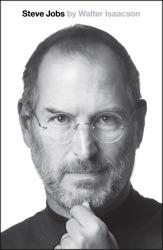
The authorised life, commissioned by Jobs himself in 2009 and built from more than forty interviews with him plus over a hundred with colleagues, family, and rivals. Jobs did not ask to read it before publication; the result is unusually unsparing about his cruelty as well as his judgement. source ↗
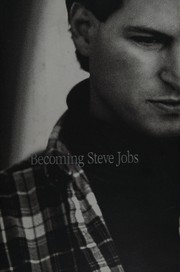
Schlender covered Jobs as a reporter for twenty-five years and draws on his own tapes. The argument is that the exile years — NeXT, Pixar, fatherhood — are where the reckless founder of 1985 became the operator who ran Apple after 1997, and that most accounts skip that transformation. source ↗

A book-length treatment of the twelve years between the 1985 ouster and the 1997 return, with a foreword by NeXT co-founder Dan’l Lewin and an afterword by Ed Catmull. The period usually gets a chapter; here it gets four hundred pages. source ↗
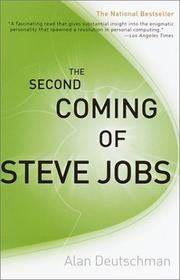
Written in 2000 by a Vanity Fair and GQ journalist, before the iPod settled the question of whether the turnaround would hold. Its value now is that it reports the NeXT and early-return years without knowing how the story ends. source ↗
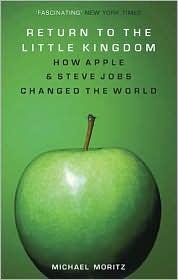
Moritz was the Time reporter given the run of Apple in 1981–82, before anyone was managing the legend; he later became a partner at Sequoia. This is the 2010 reissue of that contemporaneous account, with new framing chapters. source ↗
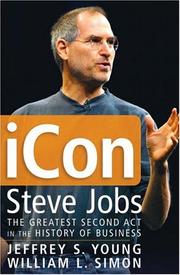
The unauthorised 2005 account that Jobs disliked enough to pull all Wiley titles from Apple’s retail stores. Young had already written a 1987 Jobs biography; this one covers the ouster, NeXT, Pixar, and the return through the iPod. source ↗
Written in 1993, at the moment NeXT abandoned hardware after selling only about 50,000 machines. A hostile, close-range account of a venture that looked like a failure and turned out to be the operating system Apple bought back four years later. source ↗
Kahney, longtime editor of Cult of Mac, organises the material by trait rather than chronology — focus, design, control, elitism — and argues the contradictions are the method rather than noise around it. The subject of Founders #204. source ↗
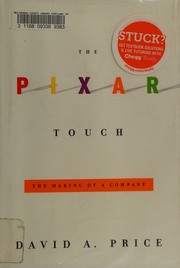
The corporate history of Pixar from its 1979 origins in Lucasfilm’s computer division through Toy Story to the $7.4 billion Disney sale. Jobs is the financier and eventual chairman here, not the protagonist, which is the point. source ↗
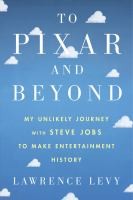
Levy was hired by Jobs as Pixar’s CFO in 1994 and built the strategy that took it public a week after Toy Story opened. A first-hand account of the deal-making, from inside the room. The subject of Founders #235. source ↗
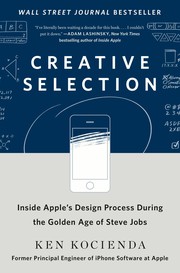
Kocienda built the iPhone’s autocorrecting keyboard. The book is a demo-by-demo account of how Apple actually decided things — small teams, working prototypes, and Jobs in the room as the taste function. The subject of Founders #281. source ↗
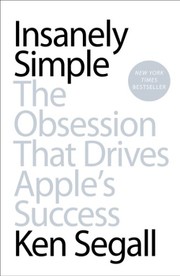
Segall was the creative director on ‘Think Different’ and the man who talked Jobs out of calling the 1998 machine the MacMan. He treats simplicity as an operating discipline — small groups, brutal cuts, plain language — rather than an aesthetic. The subject of Founders #349. source ↗
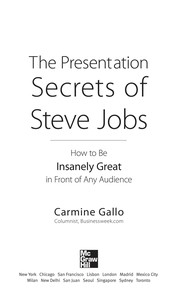
A reverse-engineering of the Macworld keynotes into a repeatable structure: headline first, one villain, three points, a demo, and a number the audience can carry out of the room. The subject of Founders #350. source ↗
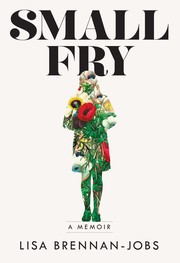
A memoir by the daughter whose paternity Jobs denied until a DNA test, and after whom the Lisa computer was named. Neither indictment nor rehabilitation — it is a writer’s book about a childhood, and the most uncomfortable thing on this shelf. source ↗
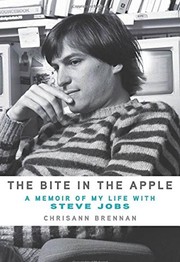
Brennan met Jobs at Homestead High, was with him through Reed and the founding of Apple, and is Lisa Brennan-Jobs’s mother. Her account covers the years no business biographer had access to. source ↗
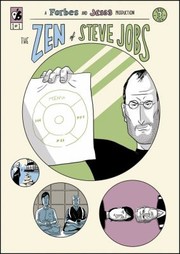
A graphic-novel treatment of Jobs’s relationship with Kōbun Chino Otogawa, the Zen priest who married him in 1991. It is an interpretation rather than a reconstruction, and says so. source ↗
In their own words1
A free digital collection of Jobs’s speeches, interviews, emails, and correspondence from 1976 to 2011, published by the Steve Jobs Archive with an introduction by Laurene Powell Jobs. No ISBN is listed because there is no trade print edition. source ↗
What they recommend30
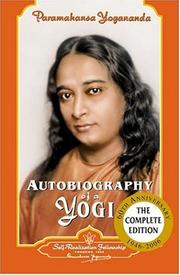
Given to every guest at his memorial, on his own instructionsJobs planned the October 2011 memorial in detail — speakers, performers, caterer — and arranged for each departing guest to receive a copy of Yogananda’s book in a plain brown box. Marc Benioff read the parting message as: ‘Actualize yourself.’ source ↗
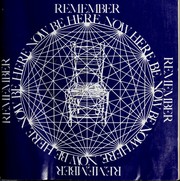
Named the most influential of the spiritual books he read"It was profound. It transformed me and many of my friends." source ↗
Read alongside his Zen practice under Kōbun Chino OtogawaSuzuki’s lectures were part of the Buddhist study Jobs took up after returning from India in 1974; he then found Suzuki’s disciple Kōbun Chino Otogawa running a zendo in Los Altos and, as he told Isaacson, ‘Zen has been a deep influence in my life ever since.’ source ↗
Among the books he read at Reed and afterNamed in the reporting on Isaacson’s biography as one of the small set of Eastern texts Jobs worked through with Daniel Kottke in the Reed years, alongside Suzuki and Yogananda. source ↗
The book that made him a vegetarian at Reed"That was the time when every college student in the country read Be Here Now and Diet for a Small Planet." source ↗
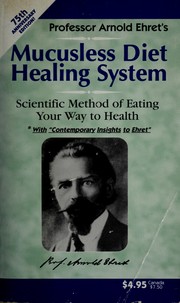
Source of the fruitarian phase he was in when he named AppleEhret’s 1920s system, which held that the body runs on fruit and air, is the source of the fruit-only regimes Jobs kept returning to. He told Isaacson he was ‘on one of my fruitarian diets’ when he proposed the name Apple. source ↗
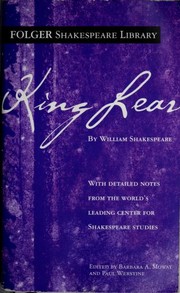
Named as the turning point in his reading, aged about 15"I started to listen to music a whole lot, and I started to read more outside of just science and technology — Shakespeare, Plato. I loved King Lear." source ↗
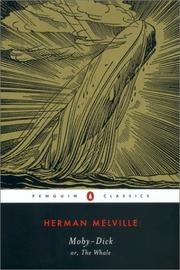
Named by Isaacson among his favourites from the same period"Isaacson draws a connection between Captain Ahab, who's one of the most driven and willful characters in literature, and Jobs." source ↗
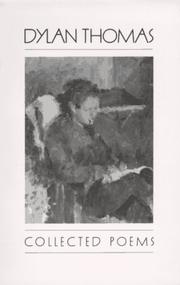
Named by Isaacson among his favourites from the same periodThe other half of the late-high-school reading — the one that is verse rather than epic, and the harder of the two to square with the engineer Jobs was also becoming. source ↗
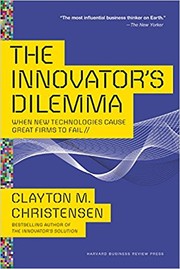
The only business book Isaacson says deeply influenced him"It's important that we make this transformation, because of what Clayton Christensen calls 'the innovator's dilemma,' where people who invent something are usually the last ones to see past it, and we certainly don't want to be left behind." source ↗
Source of ‘Stay hungry. Stay foolish.’"When I was young, there was an amazing publication called The Whole Earth Catalog, which was one of the bibles of my generation. It was created by a fellow named Stewart Brand, not far from here in Menlo Park." source ↗
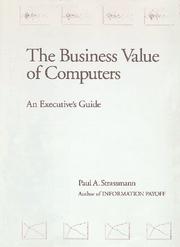
Recommended in his 1992 MIT Sloan Distinguished Speaker Series lecture"He wrote a book, though, before he got this job called The Business Value of Computers. It's rather thick, and it's not good bedtime reading. But you can plow through it, and there's some incredible stuff in it." source ↗
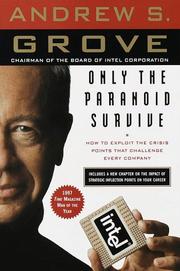
Jacket endorsement printed in the book"You must learn about Strategic Inflection Points, because sooner or later you are going to live through one."source lost
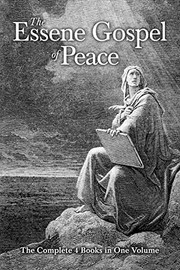
On Daniel Kottke's list of books he and Jobs read together 1972–74, presented at the 2015 Dent Conference source ↗
On Daniel Kottke's list of books he and Jobs read together 1972–74, presented at the 2015 Dent Conference source ↗
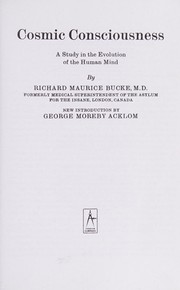
On Daniel Kottke's list of books he and Jobs read together 1972–74, presented at the 2015 Dent Conference source ↗
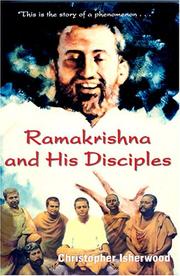
On Daniel Kottke's list of books he and Jobs read together 1972–74, presented at the 2015 Dent Conference source ↗

On Daniel Kottke's list of books he and Jobs read together 1972–74, presented at the 2015 Dent Conference source ↗
On Daniel Kottke's list of books he and Jobs read together 1972–74, presented at the 2015 Dent Conference source ↗
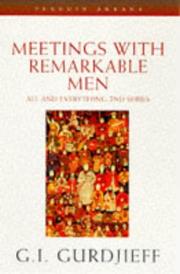
On Daniel Kottke's list of books he and Jobs read together 1972–74, presented at the 2015 Dent Conference source ↗
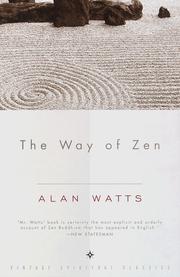
On Daniel Kottke's list of books he and Jobs read together 1972–74, presented at the 2015 Dent Conference source ↗
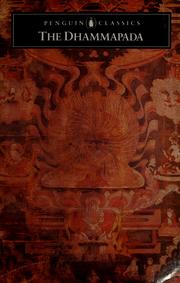
On Daniel Kottke's list of books he and Jobs read together 1972–74, presented at the 2015 Dent Conference source ↗
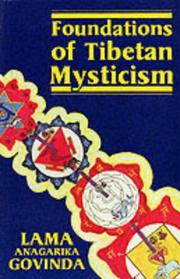
On Daniel Kottke's list of books he and Jobs read together 1972–74, presented at the 2015 Dent Conference source ↗
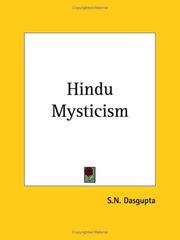
On Daniel Kottke's list of books he and Jobs read together 1972–74, presented at the 2015 Dent Conference source ↗
On Daniel Kottke's list of books he and Jobs read together 1972–74, presented at the 2015 Dent Conference source ↗
On Daniel Kottke's list of books he and Jobs read together 1972–74, presented at the 2015 Dent Conference source ↗
On Daniel Kottke's list of books he and Jobs read together 1972–74, presented at the 2015 Dent Conference source ↗
On Daniel Kottke's list of books he and Jobs read together 1972–74, presented at the 2015 Dent Conference source ↗
On Daniel Kottke's list of books he and Jobs read together 1972–74, presented at the 2015 Dent Conference source ↗
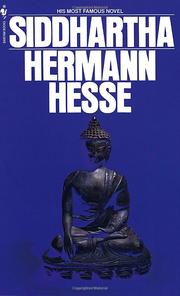
Listed on Daniel Kottke's Spirit Bookshelf source ↗
Similar taste
Founders who share the most book recommendations with Steve:
Sources21
- ‘You’ve got to find what you love,’ Jobs says — 2005 Stanford Commencement Address — Stanford Report
- Steve Jobs — Wikipedia
- History of Apple Inc. — Wikipedia
- Apple@50 Timeline — Computer History Museum
- Apple’s 1980 IPO — Morgan Stanley (Our History)
- Pixar: The Early Days — Steve Jobs Archive
- Microsoft and Apple Affirm Commitment To Build Next Generation Software for Macintosh — Microsoft (Source)
- iMac At 20: 10 iMac Facts And History In Pictures — Macworld
- Apple Presents iPod — Apple Newsroom
- Apple Launches the iTunes Music Store — Apple Newsroom
- Apple Reinvents the Phone with iPhone — Apple Newsroom
- Apple Launches iPad — Apple Newsroom
- Letter from Steve Jobs — Apple Newsroom
- Apple Media Advisory — Apple Newsroom
- Steve Jobs’ last gift — CNN Money
- Pop culture that shaped Steve Jobs’ penchant for design and innovation — 9to5Mac
- These Were Steve Jobs’ Favorite Books and Bands — Cult of Mac
- Steve Jobs’ Faith, Now an Open Book — HuffPost / Religion News Service
- Steve Jobs, the barefoot student — The Telegraph
- Book Review: Apple’s Dilemma — Chief Investment Officer
- Open Library — Internet Archive