Founder connections
- Ben HorowitzPublisher endorsement
“A great book on strategy”
Profile Books prints Horowitz’s endorsement.Source - Marc AndreessenRecommendation
“And so that is also a very good book we recommend.”
Andreessen recommends Grove’s book in his interview with Tim Ferriss.Source - Steve JobsPublisher endorsement
“You must learn about Strategic Inflection Points, because sooner or later you are going to live through one.”
The publisher attributes this endorsement to Jobs as CEO of Pixar.Source - Charlie MungerRecommended readingIncluded in the recommended reading in Poor Charlie’s Almanack; the text explicitly identifies it as on Charlie’s recommended book list.Source
Summary
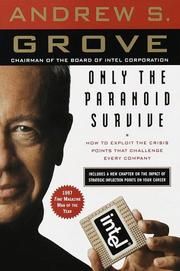
Andrew Grove explains how large changes in competition, technology, or regulation can overturn the assumptions behind a business. He calls these turning points strategic inflection points and uses his experience at Intel to show how difficult they can be to recognize while they are happening.
The examples include Intel's shift away from memory chips and its handling of the Pentium processor flaw. Grove examines the gap between a company's internal view and what customers or competitors see. He also considers how people can prepare their careers for changes that their employers may not survive.
Why read it Our view
Read this when success with your current approach makes a change hard to accept. The useful question is not whether you can predict every threat. It is whether your team can notice evidence that the rules have changed and respond before its old strengths become liabilities.
Grove's account of the Pentium flaw also gives a practical reason to listen beyond your own technical judgment. Customers can judge a problem differently from the people who built the product. Consider who gets heard in your company and what would make you change course.
Decisions from the book
Changing the Pentium replacement policy
- Decision: Whether to restrict chip replacements to users Intel judged likely to encounter the flaw.
- Action: On December 19, Intel offered a replacement to anyone who wanted one and expanded its service operation.
- Outcome: It handled replacements on a large scale and took a $475 million write-off for parts and discarded material.