Charlie Munger
Lawyer turned investor, Warren Buffett’s partner for six decades. Charlie Munger (born 1 January 1924 in Omaha) reached Harvard Law without a college degree, graduated magna cum laude in 1948, and practised in Los Angeles until a 1959 Omaha dinner introduced him to Buffett. In 1962 he co-founded what became Munger, Tolles & Olson and opened Wheeler, Munger & Co., which compounded 19.8% a year gross over fourteen years against 5% for the Dow. He became Berkshire Hathaway’s vice chairman in 1978 and chaired Wesco Financial and the Daily Journal, but his largest act was moving Buffett off cheap assets and onto great businesses — the shift that led Buffett to call him Berkshire’s architect.
Contents
- 1924Born 1 January in Omaha, Nebraska, to a lawyer father and a grandfather who sat as a federal district judge.
- 1948Graduated magna cum laude from Harvard Law School — admitted with no college degree, over faculty objection, through the intervention of family friend Roscoe Pound, after the Army Air Corps had sent him to Caltech to be made a meteorologist.
- 1953Divorced after eight years of marriage; soon afterwards learned his young son Teddy was terminally ill with leukaemia, and would visit the hospital and then walk the streets of Pasadena in tears.
- 1959Met Warren Buffett at a dinner in Omaha arranged by the family of Dr Ed Davis; Buffett was 29, Munger 35, and by the end of the evening the table had become a two-way conversation about business and history.
- 1962Co-founded the law firm Munger, Tolles & Hills in February with Roy Tolles, Rod Hills, Dick Esbenshade and Fred Warder, and in the same year opened the investment partnership Wheeler, Munger & Co. with Jack Wheeler.
- 1965Left law practice after only three years at his own firm, directing his share of the capital to the estate of his late partner Fred Warder — and told Buffett to abandon Ben Graham’s method and buy wonderful businesses at fair prices instead.
- 1972Backed the $25 million purchase of See’s Candies through Blue Chip Stamps — a business then earning about $4 million pre-tax, and the first genuinely high-quality company the Buffett–Munger side ever bought.
- 1975Closed out Wheeler, Munger after back-to-back falls of 31.9% and 31.5% in 1973–74 and a 73.2% rebound in 1975; the fourteen-year record was 19.8% compounded gross (13.7% net) against 5% for the Dow.
- 1977Took control of the Daily Journal Corporation, the Los Angeles legal newspaper he would chair unpaid for the next forty-five years.
- 1978Became vice chairman of Berkshire Hathaway, the role he held until his death; his Wheeler, Munger stakes in Blue Chip Stamps and Diversified Retailing had converted into Berkshire stock, which ended 1975 at $38 a share.
- 1986Gave the Harvard School commencement address on 13 June, inverting Johnny Carson’s theme into seven prescriptions for a guaranteed miserable life — Carson’s chemicals, envy and resentment, plus four of his own ending in the refusal to think backward.
- 1994Delivered ‘A Lesson on Elementary, Worldly Wisdom as It Relates to Investment Management and Business’ at USC Business School, the talk that put the latticework of mental models into circulation.
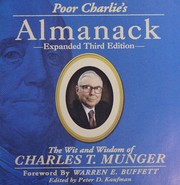
- 2005Poor Charlie’s Almanack was published, edited by his Daily Journal board colleague Peter Kaufman; for it, at 81, Munger fused three talks on human misjudgment given between 1992 and 1995 into one and rewrote them from memory, unassisted by research.
- 2011Berkshire bought in the roughly 20% of Wesco Financial it did not already own, ending the chairmanship he had held since 1984.
- 2013Gave the University of Michigan $110 million for a graduate residence — the largest gift in the university’s history at the time, and one of a string of designed-by-Munger buildings he funded.
- 2022Stepped down as chairman of the Daily Journal on 22 March, when the board elected Steven Myhill-Jones in his place; Munger stayed on as a director.
- 2023Stripe Press issued a new, expanded edition of Poor Charlie’s Almanack in November; he died on 28 November at a California hospital, weeks short of his hundredth birthday.
- Invert. Always invert. At the Harvard School commencement on 13 June 1986 Munger borrowed the great algebraist Jacobi’s standing instruction — ‘Invert, always invert’ — and gave the graduates prescriptions for guaranteed misery rather than advice on happiness. The method is the whole man: work out how the venture fails, then refuse to do those things.
- Hang what you know on a latticework of models from every discipline. In the 1994 USC Business School talk he put it flatly: ‘If the facts don’t hang together on a latticework of theory, you don’t have them in a usable form. You’ve got to have models in your head.’ Students who only remember and pound back what they remember, he said, ‘fail in school and fail in life.’
- Learn the standard ways your own brain misfires. Across three talks in 1992–95, rewritten from memory at 81 for Poor Charlie’s Almanack, Munger catalogued twenty-five causes of human misjudgment — from Reward and Punishment Superresponse to the Lollapalooza effect of several biases firing at once. He had taken no psychology course; he read three textbooks and built the checklist himself.
- Buy a great business at a fair price, not a fair business at a great price. Buffett’s 2023 shareholder letter quotes the 1965 instruction verbatim: ‘add to it wonderful businesses purchased at fair prices and give up buying fair businesses at wonderful prices. In other words, abandon everything you learned from your hero, Ben Graham.’ Buffett’s own verdict on how long he took to act on it, in the same letter: ‘With much back-sliding I subsequently followed his instructions.’
- Once you own a few great companies, sit on your ass. Poor Charlie’s Almanack quotes him on when to sell: ‘If you buy something because it’s undervalued, then you have to think about selling it when it approaches your calculation of its intrinsic value. That’s hard. But if you can buy a few great companies, then you can sit on your ass. That’s a good thing.’ He did the arithmetic in the 1994 USC talk: 15% compounded for thirty years with one 35% tax at the end nets 13.3% a year, while paying that tax annually nets 9.75%. Duration, not activity, is where the edge lives.
- Play inside your circle of competence and accept that it barely widens. ‘Every person is going to have a circle of competence. And it’s going to be very hard to enlarge that circle,’ he told USC in 1994. His example was deliberately unglamorous — you will not win the world chess championship, but two-thirds of you could become the best plumbing contractor in Bemidji. Berkshire stayed out of high technology on exactly this reasoning.
- Kill envy and resentment; they buy you nothing. The 1986 Harvard School speech ranks envy alongside mind-altering chemicals for sheer quantity of misery produced, noting it was wreaking havoc long before it got bad press in the laws of Moses. Resentment gets the same treatment: ‘I cannot recommend it highly enough to you if you desire misery.’
- Run every decision on two tracks — the rational interests and the subconscious pull. ‘Personally, I’ve gotten so that I now use a kind of two-track analysis. First, what are the factors that really govern the interests involved, rationally considered? And second, what are the subconscious influences where the brain, at a subconscious level, is automatically doing these things — which, by and large, are useful but which often misfunction?’ One track is worked like a bridge problem; the other is a bias audit.
- Deserve what you want, and supply the assiduity. At the USC Gould School of Law commencement on 13 May 2007 he named the idea that had served him longest: ‘the safest way to try to get what you want is to try to deserve what you want.’ The companion virtue was work — ‘a lot of assiduity. I like that word because to me it means “Sit down on your ass until you do it.”’ What you maximise, he told the graduates, is a seamless web of deserved trust.
- Ingest chemicals to alter your mood or perception.The first of Johnny Carson’s three prescriptions, which Munger borrowed and expanded on at the opening of the speech. He added his own gloss — addiction can happen to any of us “through a subtle process where the bonds of degradation are too light to be felt until they are too strong to be broken” — and noted that two of his four closest boyhood friends died with alcohol a contributing factor.
- Feel envy.Carson’s second prescription. Munger called envy a co-leader with chemicals in “winning some sort of quantity prize for causing misery,” old enough to predate the laws of Moses, and recommended never reading a biography of Samuel Johnson, whose life shows envy can be outgrown.
- Nurse resentment.Carson’s third prescription, and the one Munger said had always worked for him exactly as it worked for Carson: “I cannot recommend it highly enough to you if you desire misery.” He quoted Johnson — life is hard enough to swallow “without squeezing in the bitter rind of resentment” — and, still speaking in the inverted register, told anyone who wants misery to refrain from the Disraeli compromise, the halfway measure of filing enemies’ names in a drawer and reviewing them later, which he offered as a partial cure for those who cannot quit resentment cold turkey.
- Be unreliable.Munger’s first original addition: “Do not faithfully do what you have engaged to do… If you will only master this one habit you will more than counterbalance the combined effect of all your virtues, howsoever great.”
- Learn only from your own experience, and stay as uneducated as you reasonably can.His second prescription: minimise what you learn “vicariously from the good and bad experience of others, living and dead,” and refuse to build on the best work done before yours — the inverse of Newton’s “stood on the shoulders of giants.”
- Go down and stay down after your first, second, or third severe reverse.His third prescription: treat an early setback as permanent instead of adapting to it, ignoring the model of Epictetus, whose self-written epitaph answers slavery and poverty with equanimity rather than collapse.
- Discount the rustic’s wisdom — never turn the question backward.Munger’s final prescription: ignore the logic behind “I wish I knew where I was going to die, and then I’d never go there” — the same backward method Carson used, and that the algebraist Jacobi summed up as “invert, always invert.” He then pointed to Einstein, who got special relativity by turning the problem round, and to Darwin, who gave priority attention to the evidence that would disconfirm his own best-loved theory.
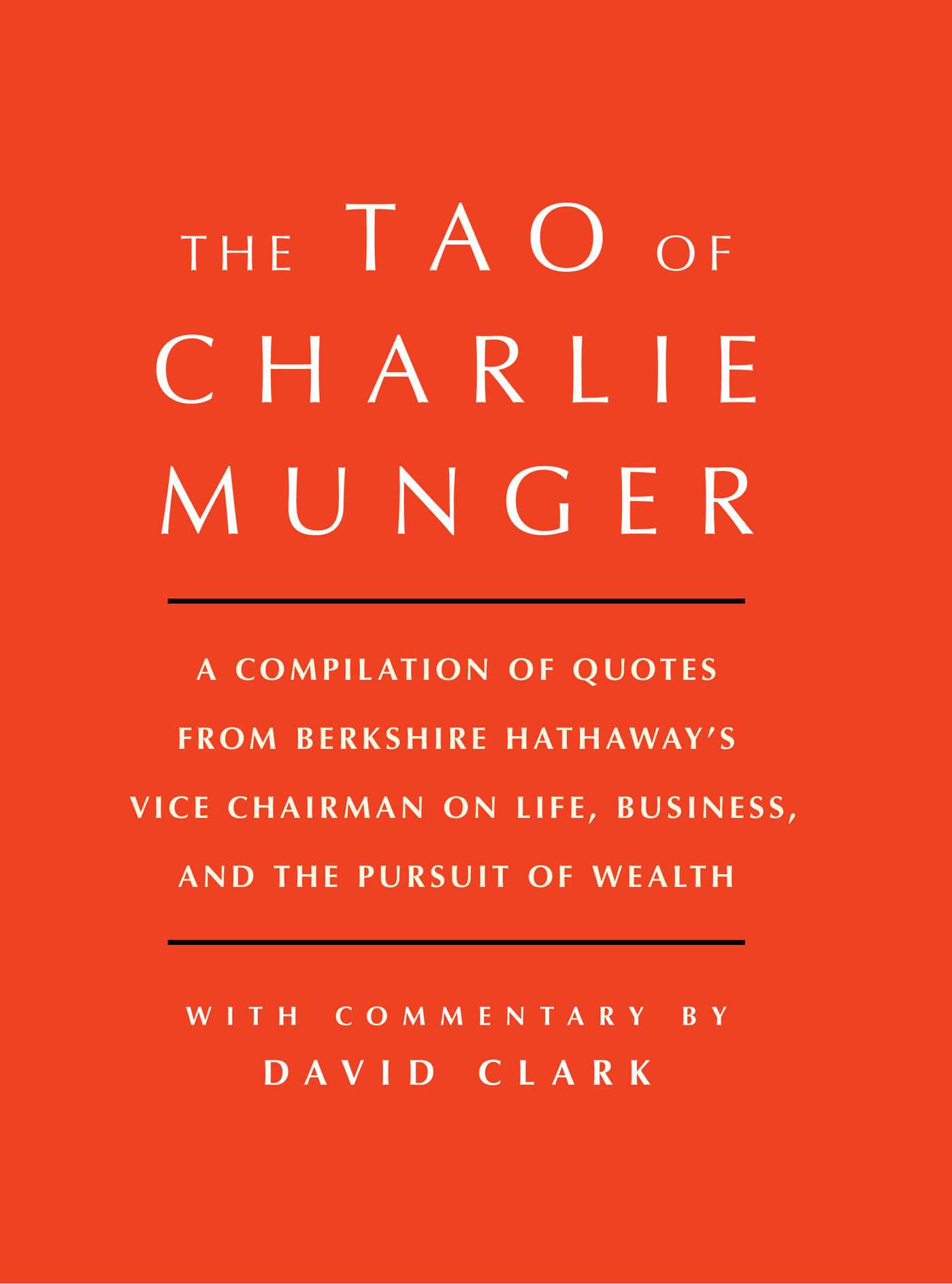
- #78The Tao of Charlie Munger
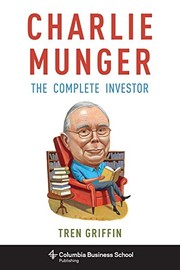
- #79The Complete Investor
- #90Poor Charlie’s Almanack
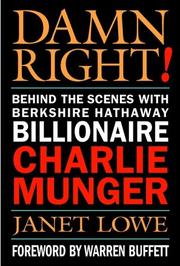
- #221Damn Right
- #286Warren Buffett and Charlie Munger
- #295I Had Dinner With Charlie Munger
- #329The New Poor Charlie’s Almanack
- #363Li Lu and Charlie Munger and Warren Buffett
- #380Buffett and Munger in Their Own Words
- Bonus (Reflections from My Dinner with Charlie Munger)

- 1986Harvard School Commencement SpeechDelivered 13 June 1986. Taking Johnny Carson’s lead, Munger declines to explain happiness and instead runs through seven reliable prescriptions for misery: Carson’s three — chemicals, envy, resentment — and four he adds himself, ending with the refusal to think backward.
- 1994A Lesson on Elementary, Worldly WisdomUSC Business School. The canonical statement of the latticework of mental models, the circle of competence, the tax arithmetic behind sitting on your ass, and why he and Buffett stayed out of technology.
- 2003Academic Economics: Strengths and Faults after Considering Interdisciplinary NeedsThe Herb Kay Undergraduate Lecture at UC Santa Barbara. Nine faults he finds in economics as taught, including its refusal to borrow from psychology and its inattention to second- and higher-order effects.
- 2007USC Gould School of Law Commencement AddressDelivered 13 May 2007. Deserve what you want; supply assiduity; maximise a seamless web of deserved trust — and if the proposed marriage contract runs to 47 pages, don’t sign.
- 2005The Psychology of Human MisjudgmentThree talks given 1992–95 fused and rewritten from memory at 81 for Poor Charlie’s Almanack. Twenty-five standard causes of misjudgment, ending in the Lollapalooza Tendency — several biases pushing the same way at once.
- 1997Letter to Wesco Shareholders, 1997An early example of the annual letters he wrote as Wesco chairman: plain segment-by-segment accounting of a small, deliberately odd conglomerate, with none of the promotional register the form usually attracts.
- 2002Letter to Wesco Shareholders, 2002Written through the aftermath of what Munger consistently capitalised as The Great Bubble, and blunt about the valuations reached during it.
- 2008Letter to Wesco Shareholders, 2008The financial-crisis letter, written by a chairman who had spent two decades warning about the sort of leverage that produced it.
- 2009Letter to Wesco Shareholders, 2009His last Wesco letter, dated 26 February 2010, and still carrying the standard warning he repeated for years: Wesco is not an equally-good-but-smaller version of Berkshire Hathaway, and each dollar of its book value is worth less.



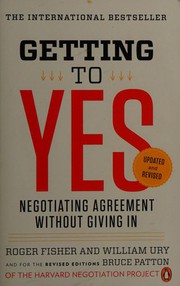
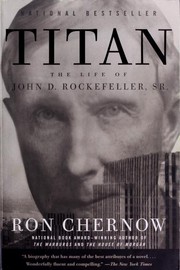
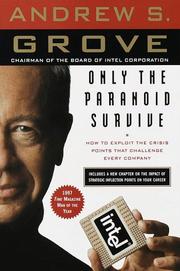




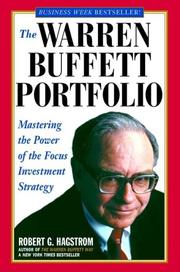

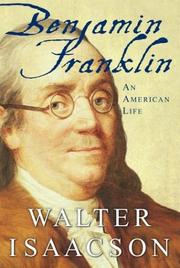
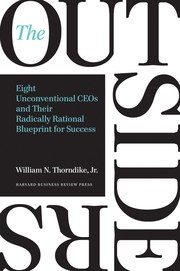
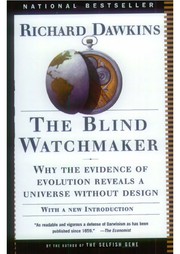
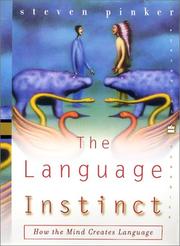
Founders who share the most book recommendations with Charlie:
Sources13
- News Release: Charlie Munger — Berkshire Hathaway Inc.
- 2023 Annual Letter to Shareholders — ‘Charlie Munger, The Architect of Berkshire Hathaway’ — Berkshire Hathaway Inc.
- Poor Charlie’s Almanack (web edition) — Stripe Press
- Letters to Shareholders from Charles T. Munger, Chairman — Wesco Financial / Berkshire Hathaway
- The Psychology of Human Misjudgment — Farnam Street
- A Lesson on Elementary, Worldly Wisdom — Farnam Street
- How to Guarantee a Life of Misery — Farnam Street
- 2007 USC Law School Commencement Address — jamesclear.com
- Daily Journal Corporation Form 8-K, 22 March 2022 — U.S. Securities and Exchange Commission
- Charlie Munger — Wikipedia
- Open Library — Internet Archive
- Charlie Munger: Book Recommendations That Will Make You Smarter — Farnam Street
- The Munger Bookshelf — Munger Archive