Mark Cuban
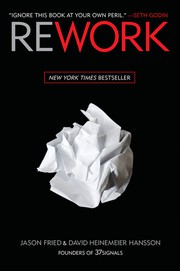
Self-made billionaire who has reinvented himself across four industries — software, internet radio, sports ownership, and (later) politics and pharmaceuticals — while keeping one consistent habit: reading. Born July 31, 1958, in Pittsburgh to a working-class family, Cuban took a university night class while still in high school, sold his first business (a chain of bar services) at 24, built MicroSolutions into a regional software powerhouse and sold it to CompuServe, then co-founded Broadcast.com, the streaming-audio company sold to Yahoo for $5.7 billion in 1999 at the peak of the dot-com boom. He bought the Dallas Mavericks in 2000, turning the league's laughingstock into a 2011 NBA champion, became a household name as a 'Shark Tank' investor, and launched Cost Plus Drugs in 2022 to attack pharmaceutical pricing. He is one of the most quotable book-recommenders in American business, and his reading list — from Ayn Rand to rework to the Victorian Internet — is the throughline of his career.
Contents
- 1958Born 31 July in Pittsburgh, Pennsylvania, to a family that had recently moved from Russia.
- 1974At 16, enrolled in a University of Pittsburgh night class while finishing high school, then transferred to Indiana University's Kelley School of Business.
- 1981Earned a BS in management from Indiana University.
- 1983Founded MicroSolutions, a systems-integration company; sold it to CompuServe in 1990 for $6 million.
- 1995Co-founded Broadcast.com (originally AudioNet), which streamed radio and audio over the internet.
- 1999Sold Broadcast.com to Yahoo for $5.7 billion in stock — one of the largest internet acquisitions of the dot-com era — making Cuban a billionaire at 40.
- 2000Bought the Dallas Mavericks for $285 million, then the NBA's worst team; the franchise won its first championship in 2011.
- 2011Joined ABC's 'Shark Tank' as a regular investor, where his blunt advice made him one of the show's best-known sharks.
- 2022Co-founded Cost Plus Drugs with Alex Oshmyansky to sell generic medications at low, transparent prices.
- Sales is the founder's first and most transferable skill. Cuban built his first fortune not on technology but on selling — the book that shaped his early career was Cold Calling Techniques. His own words on it are categorical: 'If you can't sell, you can't survive.' Every one of his businesses, from bar service to Broadcast.com to Shark Tank, has been a sales operation first.
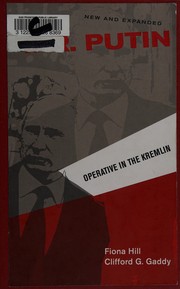
- Pay attention to the pattern of the market, not the noise. Cuban reads across history — the Victorian Internet, the Gospel of Wealth, Mr. Putin — because he believes markets repeat themselves. 'No business should ever take what they have for granted' is the Innovator's Dilemma lesson he cites; the telegraph, the NBA, and the AI wave all rhyme with each other.
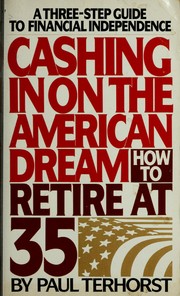
- Cash discipline buys freedom, and freedom wins deals. Cuban's go-to investment books (Andrew Tobias, Paul Terhorst's retire-at-35 plan) taught him to keep costs low and cash high, which let him buy the Mavericks in a distressed market and walk away from any deal he dislikes on Shark Tank. The frugality is the strategy.
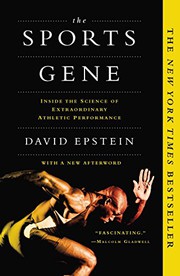
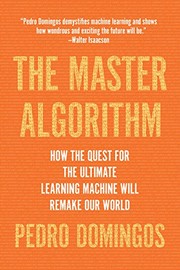
- Reading is a competitive advantage, so read constantly. Cuban reads several hours a day and treats it as the cheapest edge in business. His recommended shelf spans fiction (The Fountainhead, Call Me Ted) and hard analysis (The Master Algorithm, The Sports Gene) with no distinction between 'work' and 'life' reading — it is all input for the same operating system.
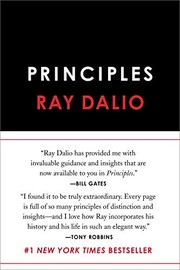
- Own the boring parts of a huge market. Broadcast.com won by being unglamorous infrastructure — streaming audio before anyone else thought it was a business. Principles and the Innovator's Dilemma both teach the same move from different angles: find the unglamorous niche the giants ignore, win it completely, then expand.
- Founders should be willing to be wrong and to change their minds. Cuban was famously skeptical of AI until The Master Algorithm convinced him otherwise — and he said so in public. His willingness to reverse on a big question ('I hadn't been convinced that it was prime time for AI. It is.') is itself a founder skill: conviction without ossification.
Founders who share the most book recommendations with Mark:
Sources5
- Mark Cuban (readthistwice) — ReadThisTwice
- Mark Cuban credits his success to these 7 books — CNBC Make It
- Mark Cuban: What's a book that changed your mind? — Entrepreneur
- Mark Cuban AMA — Reddit (via amatranscripts.com)
- Open Library — Internet Archive