Founder connections
- Mark CubanRecommendation
“No business should ever take what they have for granted”
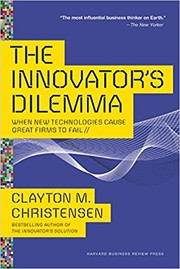
Cuban names this title when asked which book he always recommends.Source - Ben HorowitzReading list published by a16zAndreessen Horowitz includes The Innovator’s Dilemma by Clayton M. Christensen in a published list of four books from Horowitz’s reading list. The post does not establish completed reading or identify his edition.Source
- Jeff BezosInfluence, reported by Tom NicholasNicholas’s history of Christensen’s work, citing Brad Stone, describes Bezos and Amazon executives following Christensen’s ideas when developing the separate Kindle business.Source
- Jensen HuangPodcast book recommendationThe official notes for Huang’s September 23, 2026 interview on The Ezra Klein Show list The Innovator’s Dilemma among his book recommendations.Source
- Marc AndreessenRecommendationIn the Stripe Atlas AMA, Andreessen places this book with The Lean Startup and Zero to One as an influential startup trilogy, while stressing that their ideas are open to debate.Source
- Michael BloombergReported gifts to friends and colleaguesThe original 2012 report says Bloomberg gave this book to friends and colleagues. A gift is recorded separately from a completed reading or an account of how he used it.Source
- Steve JobsInfluence, reported through IsaacsonArt Diamond reproduces Isaacson’s account on page 532: Jobs invoked Christensen’s dilemma while discussing the shift from MobileMe to free syncing. This source does not establish that it was his only influential business book.Source
Summary
Clayton Christensen examines why successful companies can lose market leadership even when their managers follow accepted business practices. Established customers and profitable products can direct attention away from new technologies and smaller markets.
Published in 1997, the book uses company successes and failures to explain this problem and offers rules for responding to disruptive innovation. It asks managers to examine how the demands of the existing business affect which new ideas receive attention and resources.
Why read it Our view
Read it to examine which customers and ideas your business overlooks. For a founder, the useful question is how an established company's priorities may leave an opening. Treat the theory as a way to test your market assumptions, with care about whether a particular case fits it.
Library reading guides
Explore library guides that include this book.