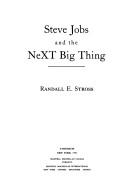
Written in 1993, at the moment NeXT abandoned hardware after selling only about 50,000 workstations, this is a close-range, critical account of an enterprise that looked like a failure and turned out to be the operating system Apple bought back four years later. Stross was given extraordinary access to NeXT's offices, meetings, and employees in the company's final years as a hardware maker, and he captures the atmosphere of a venture that was running on Jobs's charisma and little else. The tone is hostile — Stross clearly thinks NeXT is a vanity project — but the reporting is meticulous, and the book is the best source on how Jobs operated when he was down, not when he was winning. Written before the Pixar IPO and the Apple return, it reads as a contemporary document of a period that every later biography covers in retrospect.
This is the book to read when you are failing and need to see how Jobs handled the same thing. Stross's account of Jobs at NeXT is not flattering — he is depicted as a manager who overpaid for everything (the NeXT logo cost $100,000), insisted on a factory that looked like a cathedral (a $1.5 million staircase), and shipped a product that was beautiful and overpriced. But the book also captures his refusal to compromise on quality, even when it meant the company could not sell enough units. For founders, the question is where the line is between stubborn commitment to quality and self-destructive refusal to adapt, and Stross provides the raw data to think about that trade-off.
The deeper lesson of the book is that NeXT's failure as a hardware company concealed its value as a software company. The operating system, NeXTSTEP, was so well-engineered that Apple bought the entire company for $400 million specifically to get it. Founders should take from this that the asset you are building may not be the one you think you are building. Jobs thought he was building a computer company; he was actually building the operating system that would save Apple. The framing matters less than the substance.
Stross also documents Jobs's habit of making grand pronouncements about NeXT's prospects that were disconnected from reality. Founders who catch themselves predicting greatness during a downturn should read this book as a mirror, not inspiration.