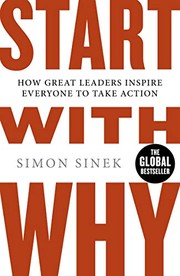
- Richard Branson — Listed in Richard Branson's own 'My Top 65 Books To Read In A Lifetime' published on Virgin.com source ↗
Simon Sinek's Start with Why introduces the Golden Circle — three concentric rings representing Why, How, and What — and argues that every great leader and organization operates from the inside out, starting with a clear sense of purpose. Sinek contrasts companies like Apple and Southwest Airlines, whose customers feel a deep sense of loyalty, with competitors who communicate only what they do and expect price or features to win. The book is an argument that people do not buy what you do; they buy why you do it.
Richard Branson included Start with Why on his list of 65 books to read in a lifetime, and it is easy to see why: the book's thesis — communicate the purpose of your company before the product — is embedded in how Branson built Virgin across industries that had nothing in common except the name and the promise. Sinek argues that customers, employees, and investors are drawn to a clear sense of purpose, not to feature lists or business models. Branson sold a bankrupt record label, an unproven airline, and a late-entry mobile provider all under one brand because the 'why' — challenging incumbents and making things better — was consistent even as the 'what' changed.
For a founder, the Golden Circle framework is a diagnostic tool as much as a communication tool. Sinek argues that most organizations reverse the order: they know what they do, they sort of know how they do it, but they cannot articulate why they exist beyond making money. When a founder can articulate a clear why — the cause, the belief, the reason the company exists that is bigger than profit — hiring becomes easier (people who share the belief self-select), marketing becomes sharper (the message is about purpose, not features), and product decisions become faster (does this move the why forward or not?).
The book's most famous example is Apple, but the underlying mechanism works for any category. Sinek uses the Wright brothers vs. Samuel Pierpont Langley — both had the same goal, the same technology, the same resources — but Langley was motivated by fame and money while the Wright brothers were driven by the belief that flight would change the world. The team with the stronger why attracted the better collaborators and persisted through failures that stopped Langley. For a founder facing early setbacks or talent competition, the lesson is that clarity of purpose is not soft; it is the hardest strategic advantage to copy.