EM
Elon Musk
Tesla · SpaceX · b. 1971
Born June 28, 1971
Engineer and serial founder. Elon Musk (born 1971 in Pretoria, South Africa) sold a BASIC game to a magazine at twelve, left for Canada at seventeen, and abandoned a Stanford physics PhD after two days to build Zip2, which Compaq bought in 1999 for $307 million. X.com, founded with the proceeds, merged into PayPal and sold to eBay in 2002 for $1.5 billion. He founded SpaceX that March and funded Tesla in 2004, nearly losing both in 2008 before Falcon 1 reached orbit on its fourth attempt. He is known less for invention than for driving down the unit cost of hard manufacturing — rockets, batteries, cars — by attacking the process rather than the part.
Contents
Career highlights
- 1971Born 28 June in Pretoria, South Africa, to Errol Musk, an electromechanical engineer, and Maye Haldeman, a Canadian-born model and dietitian.
- 1983At twelve, sold Blastar — a space shooter he wrote in BASIC — to PC and Office Technology magazine for about $500.
- 1989Left South Africa at seventeen on a Canadian passport obtained through his mother, avoiding apartheid-era conscription; entered Queen’s University in Kingston, Ontario the following year.
- 1992Transferred to the University of Pennsylvania, where he read for bachelor’s degrees in physics and economics.
- 1995Enrolled in a Stanford physics PhD and left after two days; founded Zip2 in Palo Alto with his brother Kimbal and Greg Kouri, selling online city guides to newspapers.
- 1999Compaq bought Zip2 for $307 million in cash in February; Musk took $22 million for his 7 percent and put $12 million of it into X.com in March.
- 2000X.com merged with Peter Thiel’s Confinity in March and took the name of its more popular product, PayPal; the board ousted Musk as CEO that September.
- 2002eBay bought PayPal for $1.5 billion in stock, paying Musk $176 million as its largest shareholder; he founded SpaceX in El Segundo, California on 14 March.
- 2004Put roughly $6.3 million into Tesla Motors’ Series A, becoming chairman and majority shareholder, and later product architect.
- 2008After three Falcon 1 failures between 2006 and 2008, the fourth flight reached orbit on 28 September — the first privately developed liquid-fuelled rocket to do so; with both companies close to insolvency, Musk took over as Tesla CEO in October.
- 2010Falcon 9 flew for the first time on 4 June, and Tesla went public on the Nasdaq later that month.
- 2012Dragon berthed with the International Space Station in May, the first commercial spacecraft to reach it; Model S deliveries began in June.
- 2015Announced Starlink in January; in December, Falcon 9 flight 20 landed its first stage — the first recovery of an orbital-class booster.
- 2018Falcon Heavy flew in February with Musk’s own Roadster as ballast; in August he tweeted that funding was ‘secured’ to take Tesla private at $420 a share, and settled SEC fraud charges in September for $20 million from him and $20 million from Tesla, giving up the chairmanship for three years.
- 2020Crew Dragon’s Demo-2 flight carried Doug Hurley and Bob Behnken to the ISS on 30 May — the first crewed orbital launch from American soil since the Shuttle retired in 2011.
- 2022Completed the $44 billion acquisition of Twitter on 27 October, renaming it X the following year.
- 2023Starship flew its first integrated test on 20 April and was destroyed four minutes in; Musk founded the AI company xAI that July.
Lessons for founders
- Reason from first principles, not by analogy. Told that orbital rockets simply cost what they cost, Musk priced the raw commodities — aluminium, titanium, copper, carbon fibre — and found them a small fraction of the finished vehicle. Falcon 1 was developed for roughly $90–100 million, against the industry’s assumption that a new launcher was a billion-dollar programme.
- Attack the process, not the part. His own five-step canon puts questioning the requirement first and automating last, because he had done it backwards. On the Model 3 battery line he sped up a robot, then optimised the glue, then finally asked what the fibreglass mats were for — and deleted both the mats and the $2 million of robotics that applied them.
- Vertically integrate to control cost and schedule. SpaceX builds engines, avionics and structures in-house rather than negotiating with legacy subcontractors on their timeline. The same instinct put Tesla into cell manufacturing and seat production — owning the supply chain beats managing it when the constraint is time.
- Set a deadline nobody believes, then work backwards from it. Falcon 9 reflight targets and Model 3 production ramps were set at numbers his own teams called impossible. The point was not accuracy — most slipped — but that an absurd target forces a team to discard the safe incremental plan and look for a different approach.
- The best part is no part. Before optimising a component, ask whether it should exist. Musk tells engineers that if they are not adding back at least ten percent of what they delete, they have not deleted enough — the discipline behind Starship’s tank wall doubling as its skin and Tesla’s repeatedly simplified wiring harness.
- Accept a real chance of ruin when the upside is asymmetric. By late 2008 Falcon 1 had failed three times and Tesla was weeks from payroll. Musk put what remained of his PayPal money into both rather than saving one, and closed Tesla’s rescue round days after Falcon 1’s fourth flight finally reached orbit.
- Stand at the bottleneck. During the Model 3 ramp he moved onto the battery pack line, the process that was choking the whole car. Problems that survive a status meeting rarely survive the founder physically standing next to them for a week.
- Learn the domain yourself before you hire for it. Musk had no aerospace background in 2001. He borrowed propulsion and astrodynamics textbooks from consultant Jim Cantrell — who reports he quoted passages back verbatim — and read Gordon on structures and Clark on propellants, so that he could judge his own engineers rather than defer to them.
- Fund the next product with the customers of the last one. The $109,000 Roadster paid to develop the Model S, which paid toward the Model 3; SpaceX sold Falcon 1 and Falcon 9 launches years before they flew. Each product is priced to finance the cheaper, larger-volume one behind it.
The Algorithm
- Make your requirements less dumb.Every requirement must carry the name of a person, never a department, and be questioned regardless of who set it — including Musk. He argues requirements from smart people are the most dangerous, because nobody challenges them.
- Try very hard to delete the part or process.Deletion comes before improvement. If you are not adding back at least one in ten deleted things, he says, you were too conservative and left waste in the design.
- Simplify or optimize.Third, not first. Musk calls optimising a thing that should not exist the most common error of a smart engineer — the reflex of people trained in school to answer the question rather than reject it.
- Accelerate.Only once the process is correct and lean is it worth speeding up. He spent months accelerating steps in the Tesla factory that he later realised should have been deleted outright.
- Automate.Last, always. Over-automating Nevada and Fremont meant tearing hundreds of robots back out of the Model 3 line — they cut a hole in the side of the building to remove the equipment.
On the Founders podcast5×
Read about them7
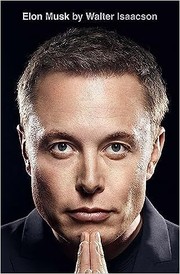
Two years of shadowing across Tesla, SpaceX and the Twitter takeover, written with Musk’s cooperation. It is the book that put ‘the Algorithm’ into general circulation, and the source most often cited for the five steps in Musk’s own phrasing. source ↗
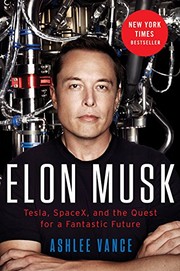
The first serious biography, built on roughly fifty hours of interviews plus access to colleagues and family, and the source for most of what is known about the Pretoria childhood, the Zip2 years and the near-death of both companies in 2008. source ↗
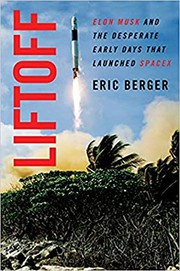
A reported history of SpaceX from founding to the fourth Falcon 1 flight, told largely through the engineers who lived on Omelek Island. Musk has publicly called it an accurate account of that period. source ↗
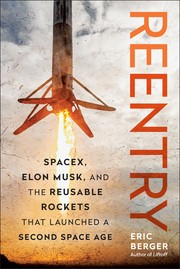
The sequel to Liftoff, covering Falcon 9, the road to booster recovery, Dragon and Starlink. Together the two books are the closest thing to a technical operating history of SpaceX. source ↗
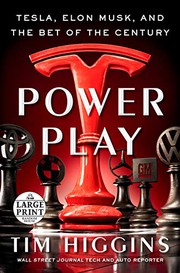
A Wall Street Journal reporter’s account of Tesla from the Eberhard-era Roadster through Model 3 production hell, heavy on boardroom conflict and the financing that repeatedly kept the company alive. source ↗
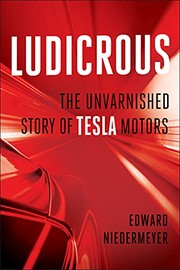
The sceptic’s counterweight on this shelf — an auto-industry analyst’s case that Tesla’s manufacturing and Autopilot claims outran its results. Kept deliberately, because a shelf of authorised accounts is not a record. source ↗
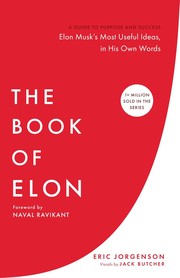
Musk’s own words on engineering, manufacturing and risk, compiled from talks, interviews and posts and arranged by theme rather than chronology. Not authorised, and its citations are numbered rather than linked — but it is the fullest first-person rendering of the Algorithm in print. source ↗
What they recommend13
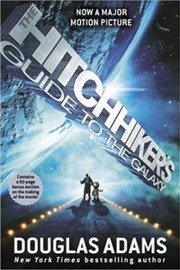
Named Adams his favourite philosopher"Everyone has their sort of favorite philosopher, but my favorite philosopher is Douglas Adams." source ↗
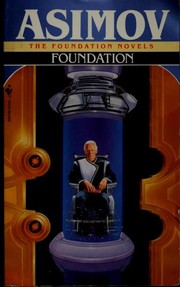
Named as a founding influence on SpaceX"Foundation Series & Zeroth Law are fundamental to creation of SpaceX" source ↗
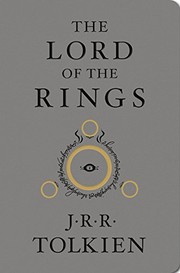
Cited as one of the childhood books that gave him a sense of obligationIn Tad Friend’s 2009 New Yorker profile Musk traces the sense that someone ought to be trying to save the world to the fantasy and science fiction he read as a bullied schoolboy in Pretoria. Rendered as a relationship rather than a quote because the profile is paywalled and the wording could not be checked against the original. source ↗
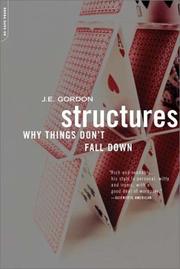
Named as part of his self-taught aerospace curriculum"It is really, really good if you want a primer on structural design." source ↗
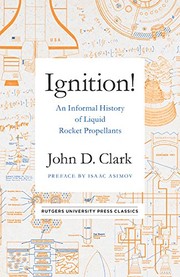
Recommended as a primer on propellants"a good book on rocket stuff…that’s a really fun one" source ↗
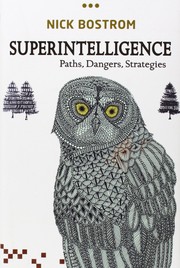
The recommendation that started his public AI-risk campaign"Worth reading Superintelligence by Bostrom. We need to be super careful with AI. Potentially more dangerous than nukes." source ↗
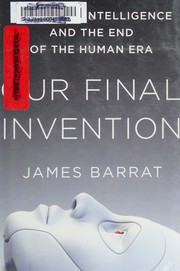
Recommended in the same 2014 thread as Bostrom"While on the subject of AI risk, Our Final Invention by @jrbarrat is also worth reading" source ↗
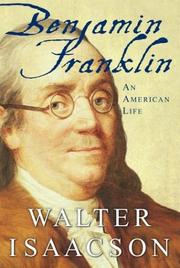
Named Franklin among the people he most admires"I would say, certainly, he’s one of the people I most admire. Franklin was pretty awesome." source ↗

Named as an influence in the same Foundation interviewListed alongside the Franklin biography when Musk was asked what shaped him. No verbatim sentence about this book survives in a fetchable source, so it is carried as a relationship rather than a quote. source ↗

Named SpaceX’s droneships after Culture starshipsIn January 2015 Musk announced that the autonomous spaceport droneships would be called Just Read the Instructions and Of Course I Still Love You — both General Contact Units from The Player of Games. A third, A Shortfall of Gravitas, followed. He has separately described himself as a utopian anarchist in the sense Banks meant. source ↗
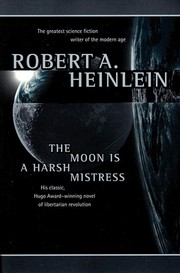
Named Heinlein's best book in the MIT AeroAstro Centennial Q&A"Yeah, it's funny you should mention that. I think that's Heinlein's best book, honestly." source ↗
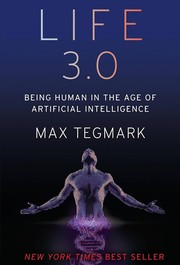
Recommended on X as essential reading on the future of AI"Worth reading Life 3.0 by @Tegmark. AI will be the best or worst thing ever for humanity, so let's get it right." source ↗
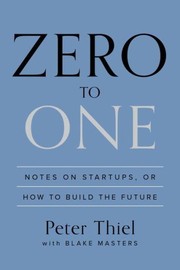
Jacket endorsement, reported by Business Insider among his favourite books"Peter Thiel has built multiple breakthrough companies, and 'Zero to One' shows how." source ↗
Similar taste
Founders who share the most book recommendations with Elon:
Sources18
- Elon Musk — Wikipedia
- Business career of Elon Musk — Wikipedia
- SpaceX — Wikipedia
- Elon Musk — Simple English Wikipedia
- Elon Musk | SpaceX, Tesla, xAI, X, & PayPal — Encyclopaedia Britannica
- Elon Musk explains his 5-step algorithm for running companies — Startup Archive
- The Algorithm — The Book of Elon Musk — elonmuskbook.org
- Selected passages from Isaacson’s Elon Musk biography — philmohun.com
- Ignition! — book page — Rutgers University Press
- Elon Musk: Artificial Intelligence Could Be Worse Than Nukes — NBC News
- Elon Musk recommends science fiction book series that inspired SpaceX — CNBC
- Why ‘Hitchhiker’s Guide’ author is Elon Musk’s ‘favorite philosopher’ — CNBC
- Billionaire Elon Musk credits his success to these 8 books — CNBC
- 5 ways a biography of Ben Franklin shaped Elon Musk’s world view — CNBC
- Elon Musk Names SpaceX Drone Ships in Honor of Sci-Fi Legend — Space.com
- Elon Musk’s mission to Mars — The Guardian
- Elon Musk: His Story in His Own Words — Fresh Dialogues / HuffPost
- Open Library — Internet Archive