Warren Buffett
Investor and chairman of Berkshire Hathaway. Warren Buffett (born 1930 in Omaha) studied under Benjamin Graham at Columbia, founded Buffett Partnership Ltd. in 1956, and from December 1962 bought into Berkshire at $7.50 a share — a dying textile maker he took control of in May 1965 and later called his worst investment. He turned its cash into insurance float (National Indemnity, 1967), then into whole businesses: See’s Candies for $25 million in 1972, The Washington Post in 1973, $1.02 billion of Coca-Cola from 1988, all of GEICO in 1996, BNSF for $34 billion in 2009. Per-share market value compounded 19.9% a year from 1965 to 2024. He handed the CEO job to Greg Abel on 1 January 2026.
Contents
- 1930Born 30 August in Omaha, Nebraska, son of Howard Buffett, a stockbroker who later served four terms in Congress.
- 1945As a teenager delivering The Washington Post, earned more than $175 a month — more than his teachers — and put $25 with a friend into a used pinball machine placed in an Omaha barber shop; the machines were sold in 1947 for $1,200.
- 1950Rejected by Harvard Business School, enrolled at Columbia specifically because Benjamin Graham taught there, taking an M.S. in economics in 1951.
- 1951After a Saturday conversation with Lorimer Davidson at GEICO’s Washington headquarters, put 65% of his $9,800 net worth into the stock — his first big exception to Graham-style cigar-butt investing.
- 1956Founded Buffett Partnership Ltd. in Omaha at 25, having spent two years as an analyst at Graham-Newman in New York; nearly all his net worth sat inside it.
- 1965Took control of Berkshire Hathaway at an early-May board meeting with 392,633 of 1,017,547 shares, having bought in from December 1962 at $7.50 and then refused Seabury Stanton’s $11.375 tender — an eighth of a point below the $11.50 they had agreed. “I became the dog who caught the car.”
- 1967Had Berkshire pay $8.6 million for National Indemnity, a small Omaha insurer — the source of the float that funded everything after it, and, he later argued, his most costly mistake for having bought it inside Berkshire rather than for his partners.
- 1972Blue Chip Stamps bought See’s Candies for $25 million after he balked at the family’s $30 million asking price; See’s was earning about $4 million pre-tax on $8 million of net tangible assets and has since returned $1.9 billion on $40 million of added investment.
- 1973Bought 1,727,765 shares of The Washington Post Company for a total cost of $9.7 million, a position Berkshire still held four decades later.
- 1985Closed Berkshire’s textile operation in July, twenty years after taking control — “stubbornness – stupidity? – has its limits.”
- 1988Bought 14,172,500 shares of Coca-Cola for $592.5 million and kept buying until 1994, ending with 93,400,000 shares at a cost of $1.024 billion; the same letter contains his longest attack on efficient-market theory.
- 1991Stepped in as interim chairman of Salomon Brothers in August, four years after putting $700 million of Berkshire’s money into its preferred stock, when trader Paul Mozer’s false Treasury-auction bids forced out John Gutfreund and nearly killed the firm.
- 1996Bought the rest of GEICO for $2.3 billion, 45 years after first owning the stock, and in June issued “An Owner’s Manual,” restating the 13 owner-related business principles he had first set down in 1983.
- 2006On 26 June irrevocably pledged 10 million Berkshire B shares to the Bill & Melinda Gates Foundation — 5% of the remaining balance each July, the first tranche alone lifting the foundation’s annual giving by about $1.5 billion.
- 2009Agreed on 3 November to buy the 77.4% of Burlington Northern Santa Fe he did not already own at $100 a share — a $34 billion investment inside a deal valued at $44 billion including debt, and “an all-in wager on the economic future of the United States.”
- 2025Announced at the 3 May annual meeting that he would ask the board to make Greg Abel — designated his successor back in 2021 — chief executive from 1 January 2026; the board voted unanimously the next day. In a Thanksgiving message on 10 November he wrote that he was “going quiet … Sort of.”
- 2026Stepped down as CEO on 1 January after 60 years, remaining chairman; Abel wrote the 2025 shareholder letter, signing it on 28 February 2026. Per-share market value had compounded 19.9% a year against the S&P 500’s 10.4% since 1965.
- Buy a wonderful business at a fair price, not a fair business at a wonderful price. The 1989 letter’s “Mistakes of the First Twenty-five Years” is where he formally recants Graham-style bargain hunting: “It’s far better to buy a wonderful company at a fair price than a fair company at a wonderful price.” The schooling was See’s Candies in 1972, bought at three times net tangible assets — a multiple that made him gulp — and worth $1.9 billion in pre-tax earnings since.
- Find the source of capital that costs you nothing to hold. The $8.6 million National Indemnity purchase in 1967 gave Berkshire insurance float — premiums held before claims are paid — which he could invest for his own account. Every acquisition after it was financed by underwriting discipline rather than by borrowing, which is why he told underwriters that “no” must be an important part of the vocabulary.
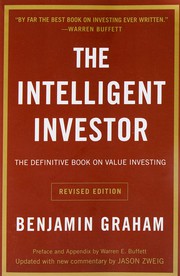
- Leave a margin of safety between what you pay and what you get. He bought Berkshire in December 1962 at $7.50 against $10.25 of per-share working capital and $20.20 of book value. He credits Chapters 8 and 20 of The Intelligent Investor with the whole framework — and the 1989 letter is equally clear that the cheap price did not save him from a terrible business.
- Never let pique make a capital-allocation decision. Stanton offered $11.375 after agreeing to $11.50. Buffett, irritated, refused to tender and bought control instead, sinking a quarter of his partners’ capital into a dying textile mill. He calls it “a monumentally stupid decision” and the direct cause of roughly $100 billion diverted from his partners to Berkshire’s legacy shareholders.
- Reputation is the only asset you cannot rebuild. His biennial memo to Berkshire managers, reprinted in the 2010 letter, says: “We can afford to lose money – even a lot of money. But we can’t afford to lose reputation – even a shred of reputation.” The test is whether an act would read well on the front page, written by an unfriendly but intelligent reporter. He had lived it at Salomon in 1991.
- Treat the market as a servant, not a guide. The 1987 letter introduces Ben Graham’s Mr. Market — a manic partner who quotes you a price every day — with the line “It is his pocketbook, not his wisdom, that you will find useful.” The 1988 letter turns the same argument on academics who mistook a frequently efficient market for an always efficient one.
- Define the edges of what you understand, then stay inside them. The 1977 letter states the four tests still used: a business you can understand, with favourable long-term prospects, run by honest and competent people, available at a very attractive price. Test one has cost him whole decades of technology returns, which he has consistently preferred to faking conviction.
- Write to owners as if the positions were reversed — and put your mistakes in the letter. The 13 owner-related principles set down in 1983 open with “Although our form is corporate, our attitude is partnership.” He has kept an annual mistakes section since 1989; the 2024 letter notes he used the words “mistake” or “error” 16 times between 2019 and 2023, while most large companies never used either, and follows Tom Murphy’s rule: praise by name, criticize by category.
- The compounding is in the holding, not the buying. He held The Washington Post from 1973 for four decades and has held Coca-Cola since 1988. From 1965 to 2024 Berkshire’s per-share market value compounded at 19.9% against the S&P 500’s 10.4% — a nine-point annual edge that turns into a 5,502,284% overall gain over 1964–2024 only because it ran for sixty years without interruption.
- Although our form is corporate, our attitude is partnership.Buffett and Munger think of shareholders as owner-partners and themselves as managing partners, not as custodians of a piece of paper whose price wiggles daily — a frame he says most long-term Berkshire holders have genuinely adopted.
- Most of our directors have a significant portion of their net worth invested in the company — we eat our own cooking.Buffett held more than 98% of his own net worth in Berkshire stock. The promise to shareholders is that their financial fortunes move in lockstep with his, mistakes included.
- Our long-term economic goal is to maximize Berkshire’s average annual rate of gain in intrinsic business value on a per-share basis.Berkshire measures itself by per-share progress rather than sheer size, while expecting that growth rate to keep slowing as its capital base enlarges.
- Our preference would be to reach our goal by directly owning a diversified group of businesses that generate cash and consistently earn above-average returns on capital.Failing that, the fallback is owning pieces of similar businesses through the insurance subsidiaries’ stock purchases — and a falling market helps both routes, which is why Buffett says Berkshire should neither panic nor mourn when it plummets.
- Consolidated reported earnings may reveal relatively little about our true economic performance, so we will also report to you the earnings of each major business we control.Buffett and Munger say they largely ignore the consolidated figure themselves and try to give shareholders the same picture of each business, including unconventional measures like insurance float, that they use to run it.
- Accounting consequences do not influence our operating or capital-allocation decisions.Given similar cost, Berkshire prefers $2 of earnings unreportable under standard accounting to $1 that is reportable — a preference for real look-through earnings over whatever GAAP happens to record.
- We use debt sparingly, and will reject interesting opportunities rather than over-leverage our balance sheet.Berkshire instead leans on two low-cost sources of leverage, deferred taxes and insurance float, which carry no covenants or due dates — debt’s benefit without its risk.
- A managerial ‘wish list’ will not be filled at shareholder expense.Berkshire will not diversify by buying whole businesses at control prices that ignore the economic cost to shareholders; the test for any acquisition is whether it raises per-share intrinsic value.
- We feel noble intentions should be checked periodically against results.The self-imposed test is whether every dollar of earnings retained has produced at least a dollar of market value, checked on a rolling five-year basis — a formulation Buffett later said he had written imprecisely, and corrected after a shareholder’s question at the 2009 annual meeting.
- We will issue common stock only when we receive as much in business value as we give.The rule covers every form of issuance, not just public offerings; Buffett points to the 1996 Class B offering, priced at fair value rather than at a discount, as the standard applied in practice.
- Regardless of price, we have no interest at all in selling any good businesses that Berkshire owns.Berkshire also resists dumping sub-par businesses as long as they generate some cash and their managers and labor relations are sound. Buffett calls the alternative ‘gin rummy’ management — discarding the weakest holding at every turn — and says he would rather accept worse overall results than practice it.
- We will be candid in our reporting to you, emphasizing the pluses and minuses important in appraising business value.The guideline is to tell shareholders what Buffett and Munger would want to know if the positions were reversed — no ‘big bath’ write-offs, no smoothing of results, and no earnings guidance that gives one shareholder an edge over another.
- Despite our policy of candor, we will discuss our activities in marketable securities only to the extent legally required.Good investment ideas are scarce and easily copied, so Berkshire will not discuss specific stocks — including ones it has sold or is rumored to be buying — while still discussing its broader investment philosophy openly.
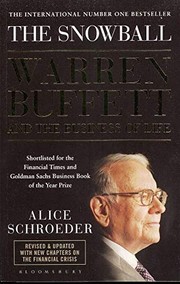
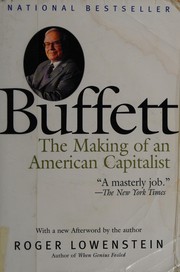
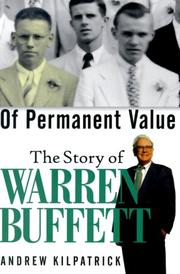
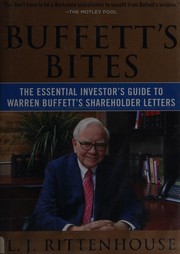
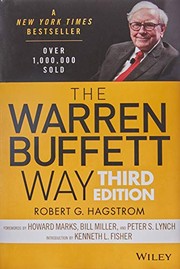
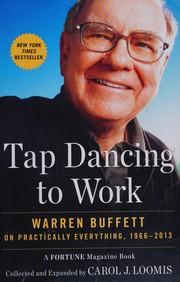
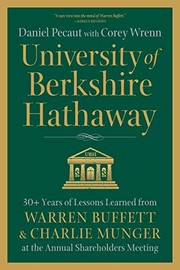
- 19771977 Chairman’s LetterThe earliest letter in Berkshire’s own archive. Contains the four tests still quoted today: a business we can understand, with favourable long-term prospects, run by honest and competent people, available at a very attractive price.
- 19831983 Chairman’s LetterSets down the 13 owner-related business principles that became the Owner’s Manual, and appends “Goodwill and its Amortization,” which uses See’s Candies to separate economic goodwill from the accounting kind.
- 19851985 Chairman’s Letter“Shutdown of Textile Business” — the postmortem on the mill he bought control of twenty years earlier, opened by Munger’s rule that you learn more from studying errors than successes.
- 19871987 Chairman’s LetterIntroduces Ben Graham’s Mr. Market to a general audience — “It is his pocketbook, not his wisdom, that you will find useful” — and discloses the $700 million Salomon preferred that would define 1991.
- 19881988 Chairman’s LetterFirst disclosure of the Coca-Cola position — 14,172,500 shares at a cost of $592.5 million — alongside his longest attack on efficient-market theory: observing correctly that the market was frequently efficient, academics concluded incorrectly that it was always efficient.
- 19891989 Chairman’s Letter“Mistakes of the First Twenty-five Years (A Condensed Version).” The public recantation of cigar-butt investing and the source of the most-quoted sentence he ever wrote about business quality versus price.
- 20042004 Chairman’s LetterWhere he describes reading Graham at 19 — “the scales fell from my eyes” — and traces the fifteen-year record of the Big Four holdings bought between May 1988 and October 2003.
- 20082008 Chairman’s LetterThe financial-crisis letter. Its Derivatives section opens “Derivatives are dangerous” and describes untangling the 23,218 contracts with 884 counterparties that came with General Re.
- 20102010 Chairman’s LetterReprints his 26 July 2010 memo to Berkshire’s managers: lose money, even a lot of it, but never a shred of reputation — and never accept “everybody else is doing it” as a reason.
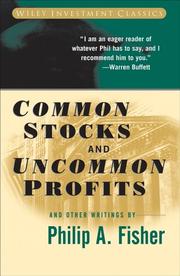
- 20122012 Chairman’s LetterThe dividend-policy essay, argued through Chapter 7 of Phil Fisher’s Common Stocks and Uncommon Profits, plus his fullest set of book recommendations in any single letter.
- 20132013 Chairman’s Letter“Some Thoughts About Investing” — the Nebraska farm and the New York retail property used to explain what an investment is, closing with what The Intelligent Investor did to him in 1949.
- 20142014 Chairman’s LetterThe Golden Anniversary letter. “Berkshire – Past, Present and Future” tells the Seabury Stanton eighth-of-a-point story in his own words, and Munger’s separate fifty-year assessment follows it; neither man changed a word after reading the other.
- 20232023 Chairman’s LetterOpens with “Charlie Munger – The Architect of Berkshire Hathaway,” written weeks after Munger died on 28 November, 33 days short of his hundredth birthday.
- 20242024 Chairman’s LetterHis last annual letter as chief executive. Opens with “Mistakes – Yes, We Make Them at Berkshire” and Tom Murphy’s rule for discussing subsidiaries: praise by name, criticize by category.
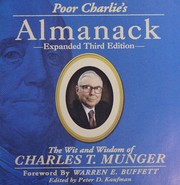
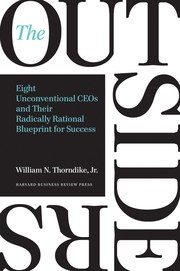
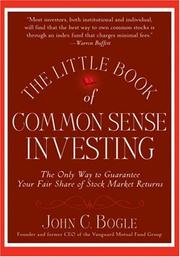
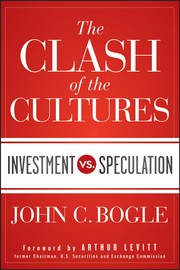
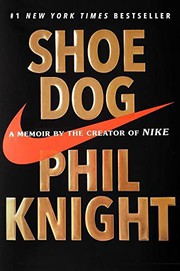
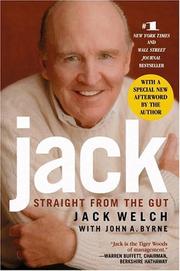
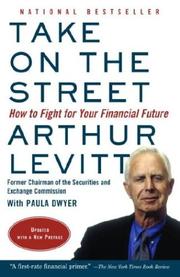
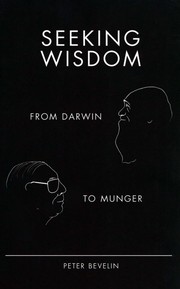
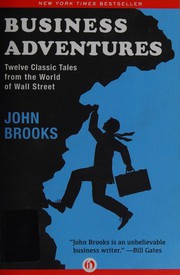
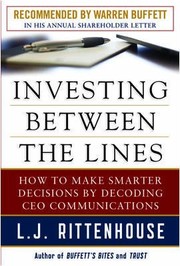

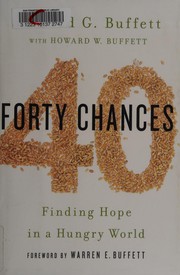
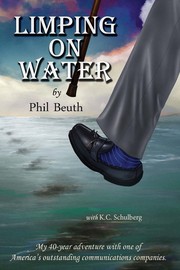
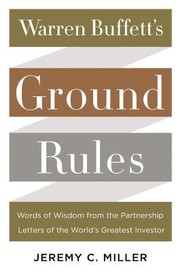
Founders who share the most book recommendations with Warren:
Sources17
- 2014 Chairman’s Letter, including “Berkshire – Past, Present and Future” — Berkshire Hathaway Inc.
- 1988 Chairman’s Letter — Berkshire Hathaway Inc.
- 1993 Chairman’s Letter — Berkshire Hathaway Inc.
- 2010 Chairman’s Letter — Berkshire Hathaway Inc.
- 2024 Chairman’s Letter — Berkshire Hathaway Inc.
- An Owner’s Manual — Berkshire Hathaway Inc.
- Berkshire Hathaway Inc. to Acquire Burlington Northern Santa Fe Corporation — Berkshire Hathaway Inc. (press release, 3 November 2009)
- Letter to Bill and Melinda Gates — Berkshire Hathaway Inc.
- News Release, 5 May 2025 — Berkshire Hathaway Inc.
- Thanksgiving Message from Warren Buffett, 10 November 2025 — Berkshire Hathaway Inc.
- Warren Buffett — Wikipedia
- Salomon Brothers — Wikipedia
- Open Library — Internet Archive
- 2011 Chairman’s Letter — Berkshire Hathaway Inc.
- 2012 Chairman’s Letter — Berkshire Hathaway Inc.
- 2013 Chairman’s Letter — Berkshire Hathaway Inc.
- 2015 Chairman’s Letter — Berkshire Hathaway Inc.