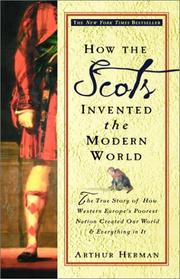
- Charlie Munger How Enlightenment Scotland — Hume, Smith, and a tiny, poor population — seeded modern science, economics and liberal institutions. Munger said the puzzle of how such a small people could have such a huge favorable impact on the world had always fascinated him, and this book finally explained it. source ↗
Arthur Herman's account of how Scotland — a tiny, poor nation on Europe's periphery — seeded the modern world with the Scottish Enlightenment's ideas: free-market economics, empirical science, liberal democracy, and the institutions that made them durable.
Munger said the puzzle of how such a small people could have such a huge favorable impact on the world had always fascinated him, and this book finally explained it. The Scottish Enlightenment gave the world Adam Smith (incentives, the invisible hand), David Hume (empiricism, skepticism of easy answers), and a culture of broad, practically-oriented education that produced disproportionate invention per capita. For founders, the book is a case study in how institutions and culture — not resources — determine output, which maps onto Munger's argument that the right incentive system and the right operating culture beat any strategy on paper. Scotland's poverty relative to England made its achievements more impressive, not less — a lesson in the power of constrained optimization.