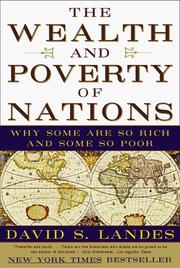
- Charlie Munger Landes’s long-run economic history sits alongside Diamond on the list as the other answer to the same question, and Munger recommended both rather than picking a side. source ↗
David Landes's magisterial long-run economic history of why some nations grew rich and others stayed poor — tracing the roles of geography, institutions, culture, technology adoption, and sheer luck across centuries of development.
Landes sits alongside Diamond on Munger's list as the other answer to the same question, and Munger recommended both rather than picking a side. For founders, the book's value is in showing that economic success is overdetermined — no single factor explains it, and the interplay of geography, institutions, and culture creates the kind of multi-causal problem that Munger insisted the latticework is designed to handle. Landes's emphasis on institutions — property rights, rule of law, contract enforcement — as the bedrock of economic growth is the same insight that governs whether a startup can scale: the internal 'institutions' of culture, decision rights, and incentive systems determine whether the company compounds or disintegrates as it grows.