PG
Paul Graham
Y Combinator · Viaweb · b. 1964
Born November 13, 1964
Programmer, essayist, and investor. Paul Graham (born 1964 in Weymouth, England; raised outside Pittsburgh) co-founded Viaweb in 1995 with Robert Morris and Trevor Blackwell — one of the first web-based applications, a store builder written largely in Lisp, sold to Yahoo in 1998 for roughly $49 million and relaunched as Yahoo Store. In 2001 he began publishing essays at paulgraham.com, and in 2005 co-founded Y Combinator with Jessica Livingston, Robert Morris, and Trevor Blackwell, inventing the batch-funding accelerator model that later backed Airbnb, Dropbox, and Stripe. His essays, more than either company, are what most founders encounter him through.
Contents
Career highlights
- 1964Born 13 November in Weymouth, Dorset, England, to a Welsh father who designed nuclear reactors for Westinghouse.
- 1968Moved with his family to Pittsburgh, Pennsylvania, where he was raised and attended Gateway High School.
- 1986Graduated from Cornell, having started in philosophy before turning toward artificial intelligence.
- 1990Earned a PhD in computer science from Harvard, after concluding that AI as practiced at the time was largely a dead end.
- 1993Published On Lisp, and studied painting at RISD and the Accademia di Belle Arti in Florence.
- 1995Co-founded Viaweb with Robert Morris — Trevor Blackwell joined soon after — building software in Lisp that let merchants create their own online stores.
- 1996Opened Viaweb for business in January with six live stores.
- 1998Sold Viaweb to Yahoo for about 455,000 shares, worth roughly $49 million; the product was relaunched as Yahoo Store.
- 2001Began publishing essays on paulgraham.com, after something he posted there was linked on Slashdot and drew 30,000 page views in a day.
- 2004Published Hackers & Painters with O’Reilly, collecting the early essays that established his voice.
- 2005Co-founded Y Combinator on 11 March with Jessica Livingston, Robert Morris, and Trevor Blackwell; the Summer Founders Program funded 8 startups out of roughly 225 applications.
- 2007Launched Hacker News on 19 February — originally ‘Startup News’ — as a side project written in Arc.
- 2008Released the Arc programming language and married Jessica Livingston.
- 2014Stepped back from running Y Combinator, handing the presidency to Sam Altman.
- 2016Relocated with his family to England.
- 2019Published Bel, a new Lisp dialect written in itself, after four years of work.
- 2023Published ‘How to Do Great Work,’ an attempt to compress a career of advice into a single piece.
Lessons for founders
- Make something people want. In ‘How to Start a Startup’ (2005) Graham names making something customers actually want as the one indispensable ingredient, arguing that good people can fix bad ideas but good ideas can’t save bad people. The phrase became Y Combinator’s motto.
- Do things that don’t scale. In ‘Do Things that Don’t Scale’ (2013) he describes personally onboarding Viaweb’s early merchants — work that felt lame at the time but taught them exactly how customers experienced the product — and points to Airbnb’s founders going door-to-door in New York as the same instinct.
- A startup is defined by growth, not by funding or technology. ‘Startup = Growth’ (2012) argues that a startup is simply a company designed to grow fast, and that a weekly growth rate is a more honest compass than any other metric. A business capped by geography or market size isn’t a startup regardless of how it’s financed.
- Protect the maker’s schedule from the manager’s schedule. ‘Maker’s Schedule, Manager’s Schedule’ (2009) observes that people who build things need unbroken half-day blocks, so a single meeting can blow a whole afternoon. Founders sit at the collision of both calendars and have to defend the maker half deliberately.
- Exploit a technology your competitors underrate. ‘Beating the Averages’ (2001) credits Viaweb’s speed to writing in Lisp, and argues there is nothing more valuable in business than a technical advantage your competitors don’t understand — the ‘Blub paradox’ of programmers who can’t see past the language they already know.
- Choose co-founders as carefully as a spouse, and keep the team small and technical. He recommends two to four founders — enough to share the load without factionalism — with technical people among them, noting that being friends with someone for a few days tells you more than any interview process. His own YC co-founders were longtime collaborators.
- Writing essays is how you find out what you think. Graham dates his turning point to 2001, when he realised anyone could now publish directly to an audience. In ‘What I Worked On’ he treats essay writing, not any single company, as the thread that most defines his career — and in ‘The Age of the Essay’ defines the form as an attempt, not an argument you already have.
- Fund founders in cohorts, not one at a time. Y Combinator’s founding innovation was batching eight startups together with weekly dinners rather than funding companies individually — a structure built so founders would learn from and push each other through the same three-month arc.
- Keep your identity small. In the 2009 essay of that name he observes that people reason worst about topics fused to their sense of self, and recommends holding as few labels as possible so that changing your mind stays cheap.
On the Founders podcast4×
Read about them1
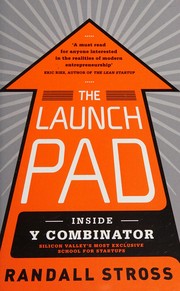
A journalist embedded inside a Y Combinator batch, with Graham as the recurring central figure. The only book found in which Graham or YC is the actual subject rather than a supporting mention. source ↗
In their own words3
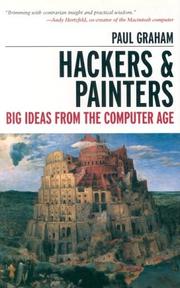
The collection of early essays — including ‘Why Nerds Are Unpopular’ and the title piece — that established Graham as an essayist for founders and seeded much of the startup vocabulary Y Combinator later formalised. source ↗
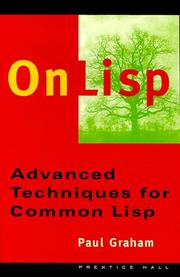
A technical text on macros, closures, and the bottom-up programming philosophy Graham later credited for giving Viaweb its edge over better-funded competitors. source ↗
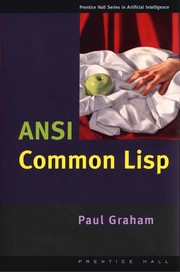
An introductory Common Lisp textbook, written while Graham was developing the ideas that became Viaweb — the first web-based application, built in Lisp with Robert Morris. source ↗
- 2023How to Do Great WorkOne of his longest: find work at the intersection of aptitude, deep interest, and room for excellence, then compound curiosity and effort over decades.
- 2005How to Start a StartupA startup needs three things — good people, something customers want, and to spend as little as possible. There is no fourth ingredient.
- 2013Do Things that Don’t ScaleRecruit users by hand and deliver service that can’t possibly scale. Startups take off because founders deliberately push them, not spontaneously.
- 2001Beating the AveragesHow Lisp gave Viaweb a decisive edge, and why the ‘Blub paradox’ keeps most programmers from seeing more powerful tools than the one they use.
- 2009Maker’s Schedule, Manager’s ScheduleTwo incompatible ways of using time: the manager’s hour-by-hour calendar, and the maker’s half-day blocks that a single meeting can destroy.
- 2012Startup = GrowthDefines a startup by its intent to grow fast rather than by industry, age, or funding, and proposes weekly growth rate as the founder’s compass.
- 2012How to Get Startup IdeasDon’t brainstorm ideas — notice problems you actually have. The best startup ideas are ones the founders themselves want solved.
- 2003Hackers and PaintersHackers are makers like painters, not scientists; great software comes from iterative hands-on making rather than rigid engineering process.
- 2003Why Nerds are UnpopularSmart teenagers are unpopular because school is an artificial world with no real work to do, so status games rush in to fill the vacuum.
- 2009Keep Your Identity SmallPeople reason worst about subjects fused to their identity. Hold fewer labels and you keep the ability to think clearly.
- 2010The Top Idea in Your MindWhatever your mind drifts to in the shower is what you’ll have good ideas about — so guard that slot from money worries and disputes.
- 2004The Age of the EssayReclaims the essay from the five-paragraph school exercise: an essai is an attempt, a way of thinking by writing toward a real discovery.
- 2008Cities and AmbitionEvery great city sends ambitious people a message — be richer, be smarter, be more powerful — and where you live shapes what you want.
- 2005What You’ll Wish You’d KnownWritten for high schoolers: you don’t need a plan. Stay curious, work on hard problems, and avoid choosing work for prestige.
- 2016Life is ShortWritten after his children were born. Life really is short, so cut bores and busywork ruthlessly and spend the remainder on what matters.
- 2015Write Like You TalkUse spoken language instead of stilted written vocabulary; prose that sounds like talking is both clearer and more persuasive.
What they recommend26
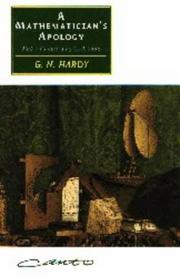
Recommended in ‘How to Do Great Work’"This idea I learned from Hardy’s A Mathematician’s Apology, which I recommend to anyone ambitious to do great work, in any field." source ↗
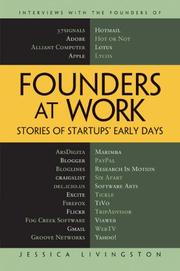
Named the single most valuable book for founders"It is probably the single most valuable book a startup founder could read." source ↗
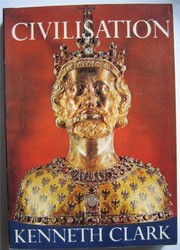
Named a favourite in ‘Some Heroes’"If you read only one book about art history, Civilisation is the one I’d recommend." source ↗
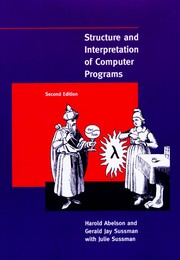
Singled out in ‘Hackers and Painters’"If I could get people to remember just one quote about programming, it would be the one at the beginning of Structure and Interpretation of Computer Programs." source ↗
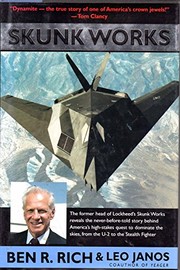
Cited as evidence in ‘Taste for Makers’One of the three epigraphs Graham chose for ‘Taste for Makers’ — Ben Rich’s line that Kelly Johnson’s designers believed fanatically that an airplane which looked beautiful would fly the same way. Graham uses it to argue that makers in every field treat visual beauty as a proxy for correctness. source ↗
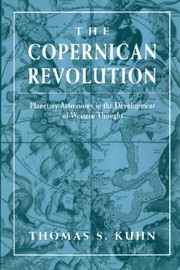
Cited as evidence in ‘Taste for Makers’Another ‘Taste for Makers’ epigraph — Kuhn on Copernicus’ aesthetic objections to equants as one essential motive for rejecting the Ptolemaic system. Graham’s historical case that beauty can steer scientific judgment, not merely decorate it. source ↗
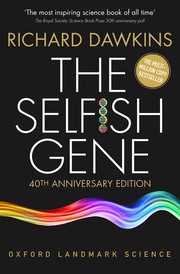
Cited as a book that reorganised his thinkingGraham compares its effect to suddenly seeing the other reading of an ambiguous image — genes rather than organisms as evolution’s protagonists. source ↗
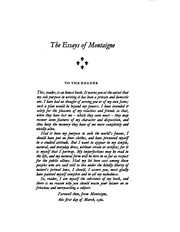
Credited as the origin of the form he works inIn ‘The Age of the Essay’ Graham traces the genre to Montaigne’s 1580 essais — French for ‘attempts’ — and builds his own theory of writing as exploration on it. source ↗
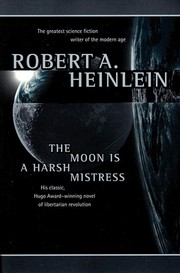
One of two things that made him want to work on AIThe novel’s sentient computer Mike, together with Terry Winograd’s SHRDLU demo, is what drew Graham toward artificial intelligence in college. source ↗
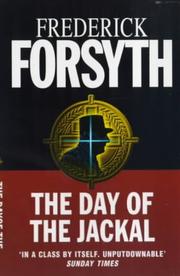
Read at nine; later the governing analogy of ‘Beating the Averages’Graham uses the assassin’s disguise as an extended metaphor for how Lisp let Viaweb’s small team hide its capabilities from competitors. source ↗
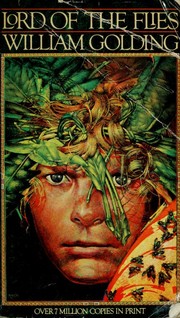
Load-bearing reference in ‘Why Nerds Are Unpopular’"If you leave a bunch of eleven-year-olds to their own devices, what you get is Lord of the Flies." source ↗
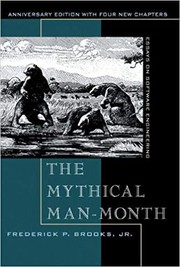
Recommended in ‘Revenge of the Nerds’"Fred Brooks described this phenomenon in his famous book The Mythical Man-Month, and everything I've seen has tended to confirm what he said." source ↗
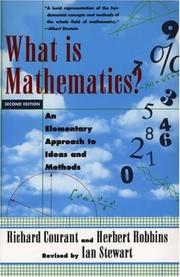
Recommended in ‘Undergraduation’"Other highly recommended books: What is Mathematics?, by Courant and Robbins; Geometry and the Imagination by Hilbert and Cohn-Vossen. And for those interested in graphic design, Byrne's Euclid." source ↗
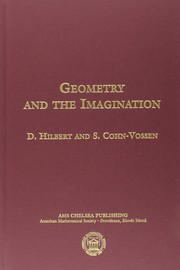
Recommended in ‘Undergraduation’"Other highly recommended books: What is Mathematics?, by Courant and Robbins; Geometry and the Imagination by Hilbert and Cohn-Vossen. And for those interested in graphic design, Byrne's Euclid." source ↗
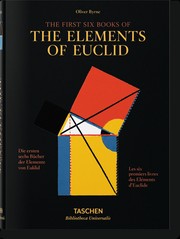
Recommended in ‘Undergraduation’"Other highly recommended books: What is Mathematics?, by Courant and Robbins; Geometry and the Imagination by Hilbert and Cohn-Vossen. And for those interested in graphic design, Byrne's Euclid." source ↗
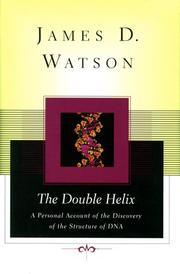
The most vivid example of fierce nerds in action, in ‘Fierce Nerds’"The most vivid example of fierce nerds in action may be James Watson's The Double Helix. The first sentence of the book is 'I have never seen Francis Crick in a modest mood.'" source ↗
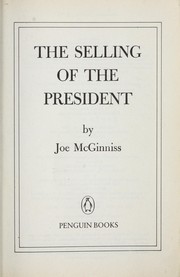
Cited in ‘It’s Charisma, Stupid’"As Joe McGinnis recounts in his famous book The Selling of the President 1968, Nixon knew he had less charisma than Humphrey, and thus simply refused to debate him on TV." source ↗

Recommended in ‘RAQs’"Here are the most exciting ones I can think of: Clark, Civilisation / White, Medieval Technology and Social Change / McEvedy, Penguin Atlases of Ancient and Medieval History / Laslett, The World We Have Lost / Bernal, The Extension of Man" source ↗
Recommended in ‘RAQs’Named in the same reading list in ‘RAQs’, where Graham recommends learning history piecemeal through books on specific topics rather than cover-to-cover surveys. source ↗
Recommended in ‘RAQs’Named in the same reading list in ‘RAQs’, where Graham recommends learning history piecemeal through books on specific topics rather than cover-to-cover surveys. source ↗

Recommended in ‘RAQs’Named in the same reading list in ‘RAQs’, where Graham recommends learning history piecemeal through books on specific topics rather than cover-to-cover surveys. source ↗
Recommended in ‘RAQs’Named in the same reading list in ‘RAQs’, where Graham recommends learning history piecemeal through books on specific topics rather than cover-to-cover surveys. source ↗
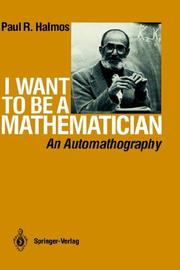
Cited in ‘Earnestness’"In his (wonderful) autobiography, Paul Halmos says explicitly that for a mathematician, math must come before anything else, including family." source ↗
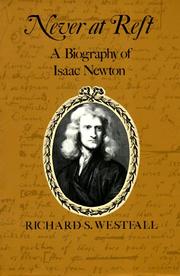
Cited in ‘Heresy’"In his excellent biography of Newton, Richard Westfall writes about the moment when he was elected a fellow of Trinity College" source ↗
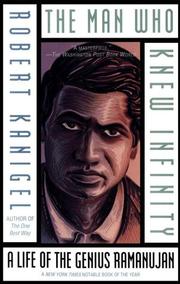
Similar taste
Founders who share the most book recommendations with Paul:
Sources12
- Bio — paulgraham.com
- What I Worked On — paulgraham.com
- Books — paulgraham.com
- Essays (canonical index) — paulgraham.com
- Taste for Makers — paulgraham.com
- Some Heroes — paulgraham.com
- Learning from Founders — paulgraham.com
- Paul Graham (programmer) — Wikipedia
- Viaweb — Wikipedia
- Hacker News — Wikipedia
- The Launch Pad by Randall Stross — Penguin Random House
- Open Library — Internet Archive