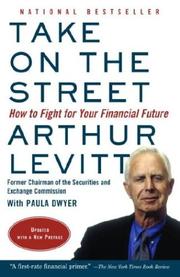
- Warren Buffett: "The details of this sordid affair are related in Levitt’s excellent book, Take on the Street." source ↗
Arthur Levitt, the longest-serving chairman of the SEC (1993–2001), recounts his crusade for investor protection during the 1990s bull market: the fight to force corporations to expense stock options, the campaign against selective disclosure (Regulation FD), and the industry resistance that weakened every reform. Levitt documents the political pressure — including a Senate vote of 88-9 against expensing options — that left the rules porous enough for Enron and WorldCom to blow through.
Warren Buffett cited Levitt's book in his 2002 letter to explain how Congress forced the FASB to back down on option expensing: 'The details of this sordid affair are related in Levitt's excellent book, Take on the Street.' For founders, this is a case study in how regulatory capture works at the highest level. The fight Levitt describes — an 88-9 Senate vote against a simple accounting change — shows that the incentives of the financial industry, corporate management, and elected politicians can align against transparency even when every investor would benefit from it. Founders building a company with outside shareholders should understand this landscape: the rules that govern reporting, disclosure, and governance are not designed for the investor's benefit by default, and Levitt's book maps where the pressure points are.
Buffett's citation of Levitt also models something founders should practice: reading the regulatory and political landscape around their industry as carefully as they read their market, because a rule change can reshape a competitive moat faster than any product decision.