JB
John Bogle
Vanguard · 1929–2019
Born May 8, 1929 · Died January 16, 2019
John Clifton 'Jack' Bogle (8 May 1929 – 16 January 2019), born in Montclair, New Jersey, graduated from Princeton in 1951 with a senior thesis arguing that mutual funds should serve investors' long-term interest — a thesis that shaped his entire career. He joined Wellington Management, rose to its top, was fired in 1974, and that September founded Vanguard, named after Nelson's flagship at the Battle of the Nile. He created the first index mutual fund, the S&P 500 tracker, in 1975, and built Vanguard on a mutual, investor-owned structure with no outside shareholders — eliminating sales commissions and driving costs toward zero through the tyranny-of-compounding-costs doctrine.
Contents
Career highlights
- 1929Born 8 May in Montclair, New Jersey, into a family that lost most of its wealth in the Great Depression — an experience that marked his lifelong views on speculation and prudence.
- 1951Graduates from Princeton; his senior thesis, 'The Economic Role of the Investment Company,' argues that funds should serve investors' interests rather than grow assets for their own sake.
- 1951Hired by Wellington Management, where he rises rapidly, eventually becoming its president.
- 1974Fired from Wellington in January after a merger gone wrong; in September he founds Vanguard, choosing the mutual, investor-owned structure.
- 1975Launches the First Index Investment Trust, the first index mutual fund, tracking the S&P 500 — initially derided as 'Bogle's Folly.'
- 1977Eliminates the industry's sales commissions by making Vanguard no-load, a radical break with the 50-year tradition of commission-based distribution.
- 1996Steps down as Vanguard's chairman after a heart transplant, remaining its senior chairman and the public face of low-cost indexing.
- 2019Dies 16 January in Bryn Mawr, Pennsylvania; Vanguard by then manages trillions, largely through the indexing revolution he began.
Lessons for founders
- Know why you're doing what you're doing, and you're far less likely to quit. Episode #57 highlights that Bogle's clarity of purpose — serving the investor — got him through being fired and the ridicule of 'Bogle's Folly,' because 'if you know why you are doing what you are doing you are less likely to quit.'
- Staying the course is a structural advantage because most people quit. Bogle's core teaching is that persistence and patience give an outsize advantage precisely because most investors and builders abandon the plan under pressure. 'Staying the course gives you a massive advantage because most humans quit.'
- Respect compounding on both sides: of returns and of costs. As Bogle put it, 'We must never underrate the power of compounding investment returns, and always avoid the tyranny of compounding investment costs' — costs compound destructively just as returns compound constructively.
- Challenge the industry's sacred assumptions when they harm the customer. Bogle attacked the entrenched traditions — sales commissions, active management, shareholder-managed corporations — not to be contrarian but because they taxed the investor. The mutual structure he chose aligned the firm's interests with its customers'.
On the Founders podcast2×
Read about them2
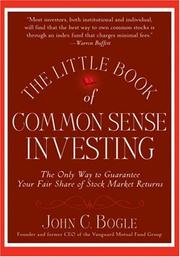
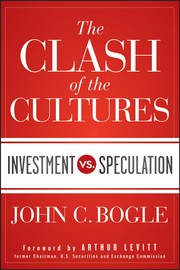
In their own words3
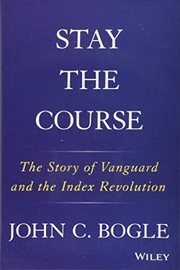
Bogle's 2018 account of building Vanguard and the indexing revolution — the subject of Founders episode #57. source ↗
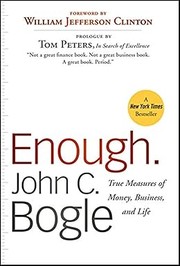
Subject of episode #58; a collection of Bogle's reflections on values, purpose and the excesses of the financial industry in his memoir-like style. source ↗
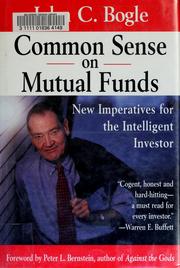
Bogle's 1999 book-length manifesto on the mutual-fund industry, updating Graham's message for fund investors and arguing for low-cost index investing. source ↗
What they recommend6
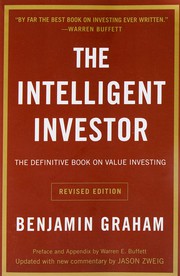
"First published in 1949, Benjamin Graham's classic text is perhaps the best book ever written about investing. With his clear and accessible writing, Graham laid the foundation for all investment books that followed." source ↗
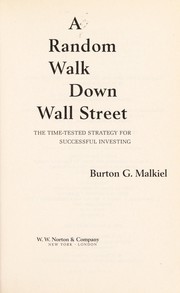
"Professor Malkiel's work helps solidify the intellectual basis for my personal favorite investment, the index fund." source ↗
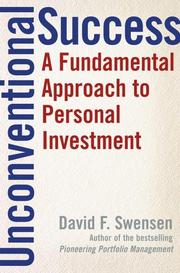
"Unconventional Success lays out an approach for individual investors that focuses on investing in low-cost index funds and rails against the high fees and abdication of fiduciary responsibility so pervasive in the mutual fund industry." source ↗
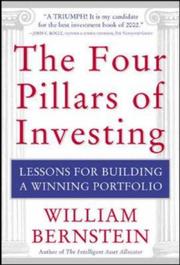
"In The Four Pillars of Investing, Bernstein presents a common-sense strategy for building a portfolio that will position investors for success." source ↗
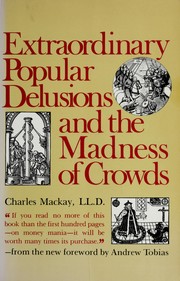
"This classic still influences writers and economists today, and provides a cautionary tale for those who might follow the crowd as the next bubble — there undoubtedly will be one — and inevitably deflates." source ↗
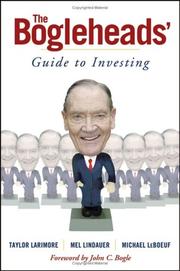
"I can think of no association that has enlarged my heart more than the Bogleheads, a group of like-minded investors who join together in an effort to spread the gospel of low-cost investing." source ↗
Similar taste
Founders who share the most book recommendations with John:
Sources6
- Jack Bogle's 6 books that every investor must read — Financial Post
- John C. Bogle — Wikipedia
- Founders Podcast, Episode #57 — Stay the Course — Founders Podcast
- Common Sense on Mutual Funds (Open Library record) — Internet Archive
- The Little Book of Common Sense Investing (Open Library record) — Internet Archive
- The Clash of the Cultures (Open Library record) — Internet Archive