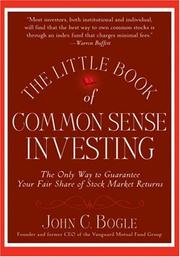
- Warren Buffett: "Rather than listen to their siren songs, investors – large and small – should instead read Jack Bogle’s The Little Book of Common Sense Investing." source ↗
John Bogle's manifesto for index investing — the case that most active managers fail to beat the market over time, that costs compound into enormous differences, and that buying and holding a low-cost total-market index fund is the rational choice for virtually every investor. Bogle founded Vanguard and created the first index mutual fund in 1976, and this book is the distilled argument for why he did it.
Warren Buffett publicly endorsed this book in his 2014 letter: 'Rather than listen to their siren songs, investors – large and small – should instead read Jack Bogle's The Little Book of Common Sense Investing.' For founders, Bogle's argument is a direct challenge to the venture-capital and startup-hustle culture that surrounds them: most financial intermediation, including much of the fund structure that founders deal with, extracts value rather than creates it. Bogle's insistence on simplicity, low costs, and patience is the investor-side version of what founders should demand from their own financial partners — cap tables, fee structures, and liquidation preferences that are transparent and aligned rather than engineered to confuse.
Bogle's deeper lesson for founders is structural: he built a trillion-dollar asset manager defined by what it refused to do (chase hot stocks, charge high fees, pretend to predict the future) and that discipline became its competitive advantage. A founder can take the same approach to product strategy: define what you will not do as clearly as what you will, and trust that the compounding effects of consistent execution over decades dwarf any single clever move.