Edward O. Thorp
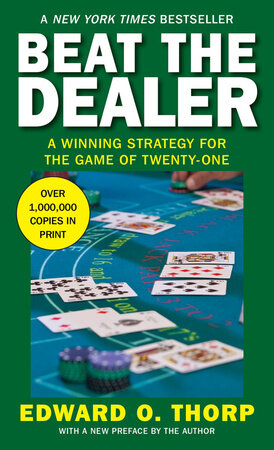
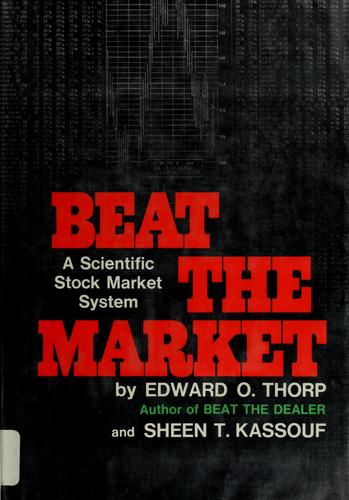
Edward O. Thorp built an investment business from a habit of testing claims for himself. Born in Chicago in 1932, he studied physics before completing a mathematics PhD at UCLA in 1958. After posts at MIT and New Mexico State University, he joined UC Irvine in 1965. His work joined mathematical questions with experiments that could be checked outside a classroom. Blackjack supplied an early test. Thorp used probability and computation to show how the changing mix of cards could affect a player’s advantage. Beat the Dealer first appeared in 1962. He also worked with Claude Shannon on a wearable device for roulette. These were separate projects: the card-counting system did not depend on the roulette computer. He then studied securities whose prices were linked, rather than relying only on forecasts of a market’s direction. At Irvine he met economist Sheen T. Kassouf, with whom he wrote Beat the Market in 1967. The book explains their approach to warrants and hedging. It is a historical account of a method, not a guarantee that its trades remain useful. In 1969 Thorp started Convertible Hedge Associates with Jay Regan. The partnership later became Princeton/Newport Partners; in his 2011 interview he dates that name change to 1974. He described using models, computers and offsetting positions to manage investments. The fund closed in 1988, and he later ran a separate statistical-arbitrage fund. A successful model still depended on people, operations and the limits of its setting. His 2017 memoir, A Man for All Markets, connects these projects with the choices behind them. The useful pattern is to test an apparent edge, examine what could defeat it and decide how much time the enterprise deserves. These are editorial lessons drawn from his record, rather than a promise of investment returns or a set of rules that he prescribed for every founder.
Which books are linked to Edward O. Thorp?
These are examples from the documented shelf. Each label describes the connection; a book on the shelf is not always a recommendation.
- Extraordinary Popular Delusions and the Madness of Crowds by Charles Mackay — Recommended, with an accuracy caveat. Source
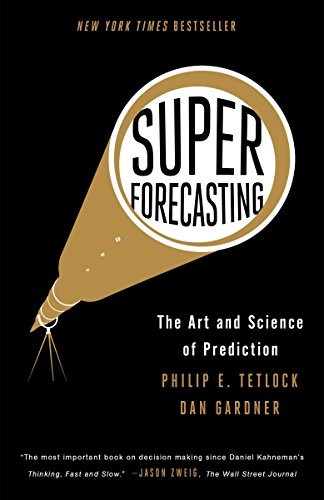
- Superforecasting: The Art and Science of Prediction by Philip E. Tetlock and Dan Gardner — Recommended. Source
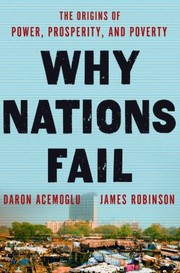
- Why Nations Fail by Daron Acemoglu, James A. Robinson — Recommended. Source
Contents
Career highlights
- 1958Completes his mathematics PhD at UCLA.
- 1962Publishes the first edition of Beat the Dealer.
- 1965Joins the new UC Irvine mathematics faculty.
- 1967Publishes Beat the Market with economist Sheen T. Kassouf.
- 1969Starts Convertible Hedge Associates with Jay Regan; it is later renamed Princeton/Newport Partners.
- 1974The investment partnership adopts the Princeton/Newport Partners name, as Thorp later recounts.
- 1988Princeton/Newport Partners closes.
- 2017Publishes his memoir A Man for All Markets.
Lessons for founders
- Test the claim in the setting where it must work. Thorp moved between calculations and practical trials. A sound model still needs evidence from actual use.
- Name the conditions that can break a method. Beat the Market includes a chapter on ways the system could fail. Put failure conditions beside the proposed advantage.
- Use the skills you can verify. In his original 2011 interview, Thorp describes carrying his probability and statistics tools into a new field. Match the problem to skills you can test.
- Keep the operation distinct from the model. His investment work required a partnership and processes as well as formulas. Test whether the business can carry out what its model assumes.
- Treat a popular story as a claim to check. In his 2022 interview, Thorp recommends Mackay’s history of crowd beliefs while also noting its inaccuracies. A useful book can still need correction.
On the Founders podcast
3×In their own words
4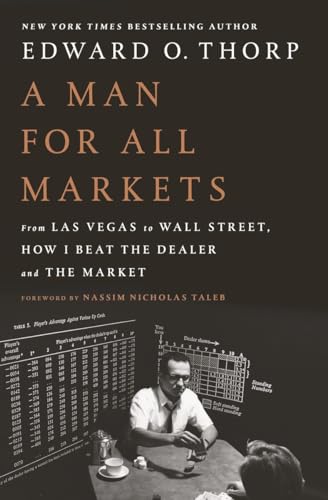
Books on their shelf
13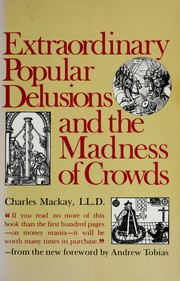
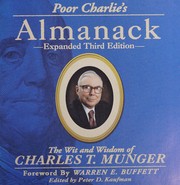
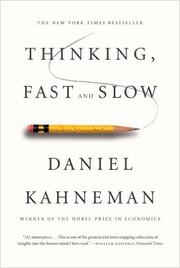
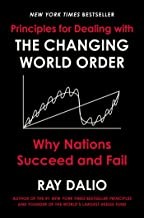

Similar taste
Founders who share the most book recommendations with Edward:
Library reading guides
These guides include books on this page. The library chooses their reading order.
Sources
13
- Edward O. Thorp — About — Edward O. Thorp
- Finding the Edge — A Natural Talent — UC Irvine Libraries
- 2025 commencement speaker biography — UC Irvine
- Putting the Cards on the Table: A Talk with Edward O. Thorp — Journal of Investment Consulting / Investments & Wealth Institute
- A Man for All Markets — publisher record — Penguin Random House
- Beat the Dealer — selected edition — Penguin Random House
- Beat the Market — original book — Random House, hosted by UC Irvine Economics
- Tim Ferriss Show #604 — original interview transcript — The Tim Ferriss Show
- Reading audit — Superforecasting: The Art and Science of Prediction
- Reading audit — Superforecasting: The Art and Science of Prediction
- Reading audit — Poor Charlie’s Almanack: The Wit and Wisdom of Charles T. Munger
- Reading audit — The Accidental Superpower
- Reading audit — The Kelly Capital Growth Investment Criterion: Theory and Practice