Jim Simons
Jim Simons built Renaissance Technologies after a career in mathematics and code breaking. He earned degrees at MIT and Berkeley, worked at the Institute for Defense Analyses, and led Stony Brook’s mathematics department from 1968 to 1978. His work with Shiing-Shen Chern produced mathematical ideas that later found uses in physics. That background matters because the investment business he built would recruit people trained to solve difficult research problems. In 1978 he left academic life to start Monemetrics. The firm took the Renaissance Technologies name in 1982. Rather than relying only on an investor’s explanation of a company or an economy, Renaissance used mathematical models to study market behavior and guide trades. Its staff included mathematicians, physicists and computer scientists. The foundation’s account of his career stresses both their ability and the work environment that helped them share ideas. Gregory Zuckerman’s biography follows this shift into finance through reporting with Simons and current and former employees. It also examines the influence that wealth gave the firm’s leaders outside the markets. The business is useful to study as an example of assembling a research organization around an unusual problem. Its history does not make a trading model easy to copy. Simons and his wife Marilyn established the Simons Foundation in 1994. He retired as Renaissance’s chief executive in 2010 and devoted more time to science and education. Their foundation funded basic research, including work unlikely to receive support elsewhere. It also built the Flatiron Institute for computational science. Simons died on May 10, 2024. His linked careers show how a founder can build institutions around capable people, shared inquiry and patient support.
Which books are linked to Jim Simons?
These are examples from the documented shelf. Each label describes the connection; a book on the shelf is not always a recommendation.
- Team of Rivals: The Political Genius of Abraham Lincoln by Doris Kearns Goodwin — Read / discussed leadership. Source
- The Captain by Jan de Hartog — Leadership reading recalled. Source
- Extraordinary Popular Delusions and the Madness of Crowds by Charles Mackay — Praised in his original oral history. Source
Contents
Career highlights
- 1968Begins leading Stony Brook University’s mathematics department; serves until 1978.
- 1974Publishes work on characteristic forms and geometric invariants with Shiing-Shen Chern.
- 1978Leaves academia and starts Monemetrics, the investment firm that becomes Renaissance Technologies.
- 1982Monemetrics takes the Renaissance Technologies name.
- 1994Establishes the Simons Foundation with Marilyn Simons.
- 2010Retires as chief executive of Renaissance Technologies.
- 2016The Simons Foundation establishes the Flatiron Institute for computational research.
- 2024Dies on May 10, aged 86, as announced by the Simons Foundation.
Lessons for founders
- Recruit for the problem you need to solve. Renaissance hired scientists from several fields. Choose the skills your method needs, even when the usual industry résumé is different.
- Make collaboration part of the work. The foundation identifies a collaborative research environment as a central part of Renaissance. Strong individual hires still need a way to share ideas.
- Build a method that can use evidence. The firm applied mathematical models to financial data. For a founder, the broader lesson is to make claims testable with the information the business collects.
- Give capable people room to work. Simons described finding outstanding people and letting them take responsibility. Define the problem and let specialists contribute their judgment.
- Keep room for work with a distant payoff. His foundation supported basic science whose use was not always clear at the start. Set aside resources for research that a short sales cycle would exclude.
- Give a new mission its own institution. The Simons Foundation and Flatiron Institute gave scientific work staff, structure and continuity. A new aim needs more than an announcement.
On the Founders podcast
2×Read about them
1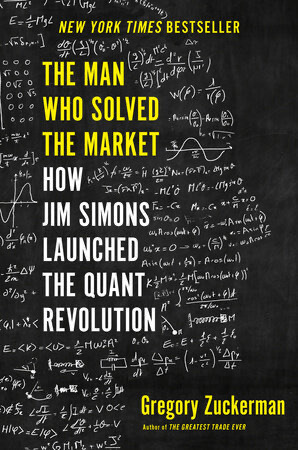
Books on their shelf
3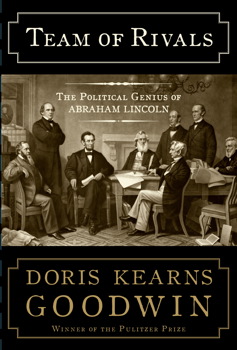

Sources
8
- Remembering the Life and Careers of Jim Simons — Simons Foundation
- Simons Foundation Co-Founder, Mathematician and Investor Jim Simons Dies at 86 — Simons Foundation
- The Man Who Solved the Market — book description and product details — Portfolio / Penguin Random House
- Our History — Simons Foundation
- In memoriam: Jim Simons — Institute for Pure and Applied Mathematics, UCLA
- Team of Rivals: The Political Genius of Abraham Lincoln — Read / discussed leadership
- Team of Rivals: The Political Genius of Abraham Lincoln — Read / discussed leadership
- Reading audit — Extraordinary Popular Delusions and the Madness of Crowds