DO
David Ogilvy
Ogilvy & Mather · 1911–1999
Born June 23, 1911 · Died July 21, 1999
Born 23 June 1911 at West Horsley, Surrey, Ogilvy failed out of Oxford in 1931, apprenticed as a chef under Monsieur Pitard at Paris's Hotel Majestic, then sold AGA cookers door-to-door in Scotland — the basis of a 1935 sales manual Fortune later called the finest ever written. After training under George Gallup and serving in British intelligence in Washington during the war, he founded Hewitt, Ogilvy, Benson & Mather in New York in 1948 with $6,000, building it into Ogilvy & Mather on campaigns for Hathaway, Schweppes, Rolls-Royce, and Dove, and codifying his creed — "We sell — or else" — in Confessions of an Advertising Man (1963) and Ogilvy on Advertising (1983).
Contents
Career highlights
- 1911Born 23 June at West Horsley, Surrey, son of a stockbroker father and a mother of Anglo-Irish descent.
- 1924Won a scholarship at thirteen to Fettes College, the Edinburgh boarding school his father had also attended.
- 1929Won a scholarship to read history at Christ Church, Oxford.
- 1931Left Oxford without a degree after failing his exams, and apprenticed as a chef in the kitchens of the Hotel Majestic in Paris under Monsieur Pitard.
- 1935After a year selling AGA cookers door-to-door in Scotland, wrote The Theory and Practice of Selling the AGA Cooker, a sales manual Fortune later called the finest ever written; his brother Francis showed it to Mather & Crowther, who hired him as an account executive.
- 1938Emigrated to the United States to join George Gallup's Audience Research Institute in Princeton, New Jersey, studying movie audiences and public opinion.
- 1942Recruited into British Security Coordination under William Stephenson, working out of the British Embassy in Washington; train trips there led him to discover Lancaster County, Pennsylvania, where he later bought a farm and lived among the Amish.
- 1948Founded Hewitt, Ogilvy, Benson & Mather on Madison Avenue on 23 September with $6,000 of his own money against roughly $80,000 put up by his British sponsors, Mather & Crowther and S. H. Benson.
- 1951Created the Hathaway shirt campaign, putting an eyepatch on model Baron George Wrangell to give him "story appeal."
- 1953Cast Schweppes executive Commander Edward Whitehead as "The Man from Schweppes," making him one of the most recognized Englishmen in America.
- 1957Launched Dove's "one-quarter cleansing cream" campaign, which kept it the market-leading bar soap for decades.
- 1958Ran the Rolls-Royce ad headlined "At 60 miles an hour the loudest noise in this new Rolls-Royce comes from the electric clock" — a line he did not write but found, and credited in the ad, to the Technical Editor of The Motor after three weeks reading about the car; he presented 26 headlines and had agency writers pick this one. Rolls-Royce sales rose about 50 percent that year.
- 1963Published Confessions of an Advertising Man, which went on to sell over a million copies.
- 1965Merged Ogilvy, Benson & Mather with London's Mather & Crowther to form Ogilvy & Mather.
- 1966Bought the 13th-century Château de Touffou in Bonnes, France, retiring there as chairman in 1973.
- 1983Published Ogilvy on Advertising.
- 1999Died 21 July at Château de Touffou, aged 88.
Lessons for founders
- Hire people bigger than yourself. Ogilvy sent a Matrioshka doll from Gorky to anyone made head of an office in the Ogilvy & Mather chain; whoever kept opening it found this message inside the smallest doll: "If each of us hires people who are smaller than we are, we shall become a company of dwarfs. But if each of us hires people who are bigger than we are, we shall become a company of giants." He wanted managers recruiting for capability they lacked, not comfort.
- Let research settle arguments, not opinions. Ogilvy insisted every campaign be checked against consumer research before it scaled, coining the line "The consumer isn't a moron; she is your wife" against agencies that talked down to audiences. The instinct predated the agency: he trained at George Gallup's Audience Research Institute in Princeton in 1938, a decade before he ran a client account.
- Judge creativity by whether it sells. "We sell — or else" is how he put it in Confessions of an Advertising Man (1963), and it became the agency's standing creed — cleverness and awards didn't count if a campaign didn't move product. He held his own celebrated work, the Rolls-Royce and Hathaway ads included, to the same test.
- Find the one big idea and commit to it. In Ogilvy on Advertising (1983) he wrote that "unless your advertising contains a big idea, it will pass like a ship in the night," and doubted more than one campaign in a hundred contained one. The Hathaway eyepatch and the Rolls-Royce clock line were each a single idea he rode for years instead of replacing with something newer.
- Publish your thinking before you have a track record. With no clients and $6,000 in 1948, Ogilvy was already building his reputation on a widely circulated manual — the 1935 AGA cooker sales guide Fortune called the finest of its kind — years before he had an agency to point to.
- Instrument everything. Trained at Gallup's Audience Research Institute before he wrote a single ad, Ogilvy held every campaign accountable to a number, pointing to Dove's decades-long market lead and Schweppes' sales climb under Commander Whitehead as evidence, not applause.
- Judge your own résumé as harshly as you'd judge an applicant's. Late in his career Ogilvy circulated a memo describing a hypothetical candidate — 38, unemployed, a college dropout who had worked as a cook, a door-to-door salesman, a diplomat, and a farmer — and concluded no American agency would hire him. The applicant was Ogilvy, describing his own résumé before 1948.
- Keep memos to one page. His 1982 staff memo "How to Write," sent to every employee of Ogilvy & Mather, laid down rules including "Never write more than two pages on any subject" and "If it is something important, get a colleague to improve it" — writing quality, he said, was what decided how far you rose in the agency.
- Read the founding texts of your craft until they're instinct. Ogilvy wrote that "nobody, at any level, should be allowed to have anything to do with advertising until he has read this book seven times," of Claude Hopkins's Scientific Advertising — advice he credited with changing the course of his own life after Rosser Reeves gave him a copy in 1938.
How to Write
- Read the Roman-Raphaelson book on writing. Read it three times.Rule one pointed staff to a specific book — Writing That Works, by Ogilvy's own colleagues Kenneth Roman and Joel Raphaelson — rather than to general advice about clarity.
- Write the way you talk. Naturally.Ogilvy's standing objection to copy that sounded like it was written for a committee rather than said to a person.
- Use short words, short sentences and short paragraphs.The same readability doctrine he drew from Rudolf Flesch's The Art of Plain Talk, applied to internal memos as strictly as to advertisements.
- Never use jargon words like reconceptualize, demassification, attitudinally, judgmentally. They are hallmarks of a pretentious ass.A direct swipe at the management-consulting vocabulary creeping into agency life in the early 1980s.
- Never write more than two pages on any subject.Length limits forced writers to cut to the point instead of padding it — the rule behind the shorter editorial takeaway that writing quality decided how far you rose at the agency.
- Check your quotations.A working habit as much as a writing one: Ogilvy expected staff to verify a source before putting it in front of a client.
- Never send a letter or a memo on the day you write it. Read it aloud the next morning — and then edit it.Built-in delay and a read-aloud pass, so tone and logic got checked with fresh eyes before anything left the building.
- If it is something important, get a colleague to improve it.Ogilvy treated a second pair of eyes as standard procedure for anything that mattered, not a sign the first draft had failed.
- Before you send your letter or your memo, make sure it is crystal clear what you want the recipient to do.Writing existed to produce an action in the reader; a memo that left that ambiguous had failed regardless of its prose.
- If you want ACTION, don't write. Go and tell the guy what you want.The memo's closing rule undercut the other nine: for anything urgent, writing itself was the wrong tool.
On the Founders podcast5×
Read about them1
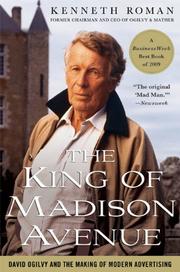
The first full biography of Ogilvy, written by a former Ogilvy & Mather chairman and CEO who worked alongside him for 26 years and drew on his personal papers, memos, and photographs. source ↗
In their own words4
Ogilvy's 1963 manifesto of over 200 rules for running an agency and writing copy, published in modest quantities with profits earmarked for his son and unexpectedly selling more than a million copies. source ↗
Ogilvy's own 1978 account of his life before advertising — the Amish farm, the Gallup polling years, and British intelligence work under William Stephenson — reissued in 1997 as An Autobiography. source ↗
His 1983 illustrated survey of the craft, aimed at a general readership, closing with the "Recommended Reading" appendix that anchors much of his own reading list.
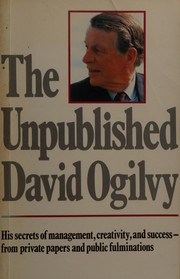
A 1986 retirement gift from his agency: a collection of Ogilvy's internal talks, memos, handwritten notes, and lists, more intimate and less polished than his published books. source ↗
What they recommend19
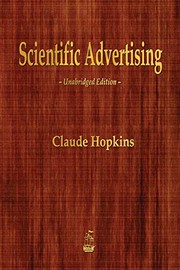
"Nobody, at any level, should be allowed to have anything to do with advertising until he has read this book seven times." source ↗
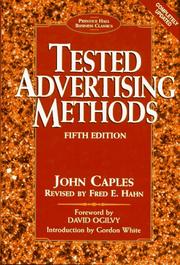
Wrote the foreword to the book's later editions"This is, without doubt, the most useful book about advertising that I have ever read." source ↗
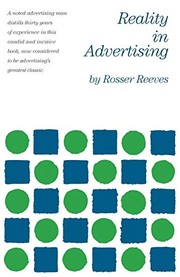
Listed in the "Recommended Reading" appendix of Ogilvy on AdvertisingReeves, Ogilvy's brother-in-law and a rival adman, argued for the Unique Selling Proposition; Ogilvy put the book on his own reading list despite their differing schools of thought. source ↗
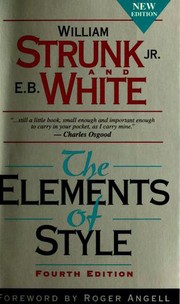
Listed in the "Recommended Reading" appendix of Ogilvy on Advertising source ↗
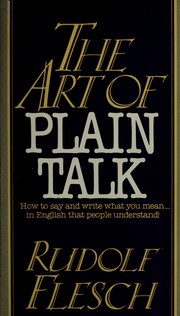
Listed in the "Recommended Reading" appendix of Ogilvy on AdvertisingFlesch's readability research underpins Ogilvy's own insistence on short words and short sentences. source ↗
"Read the Roman-Raphaelson book on writing. Read it three times." source ↗
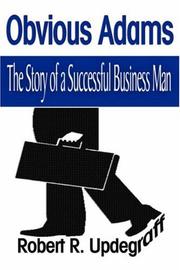
Listed in the "Recommended Reading" appendix of Ogilvy on AdvertisingA short 1916 parable about a copywriter who wins by telling clients the obvious truth rather than something clever. source ↗
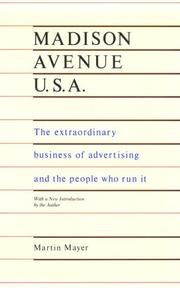
Listed in the "Recommended Reading" appendix of Ogilvy on AdvertisingAn outsider's 1958 portrait of the advertising industry Ogilvy was then a decade into building his agency inside of. source ↗
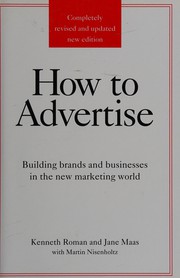
Listed in the "Recommended Reading" appendix of Ogilvy on Advertising"HOW TO ADVERTISE by Kenneth Roman and Jane Maas." source ↗
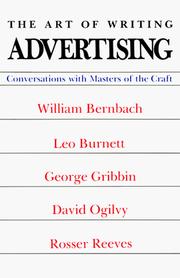
Listed in the "Recommended Reading" appendix of Ogilvy on Advertising"THE ART OF WRITING ADVERTISING by Denis Higgins" source ↗
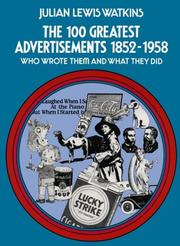
Listed in the "Recommended Reading" appendix of Ogilvy on Advertising"THE 100 GREATEST ADVERTISEMENTS by Julian Watkins" source ↗
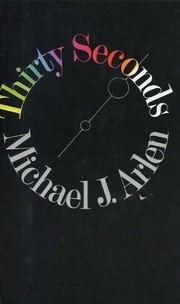
Listed in the "Recommended Reading" appendix of Ogilvy on Advertising"THIRTY SECONDS by Michael Arlen." source ↗
Listed in the "Recommended Reading" appendix of Ogilvy on Advertising"SPEECH CAN CHANGE YOUR LIFE by Dorothy Sarnoff." source ↗
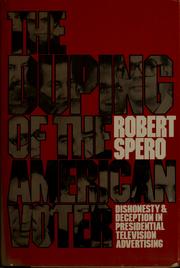
Listed in the "Recommended Reading" appendix of Ogilvy on Advertising"THE DUPING OF THE AMERICAN VOTER: DISHONEST AND DECEPTION IN PRESIDENTIAL TELEVISION ADVERTISING by Robert Spero." source ↗

Listed in the "Recommended Reading" appendix of Ogilvy on Advertising"ADVERTISING INSIDE OUT by Philip Kleinman." source ↗
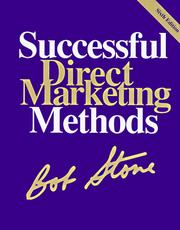
Listed in the "Recommended Reading" appendix of Ogilvy on Advertising"SUCCESSFUL DIRECT MARKETING METHODS by Bob Stone." source ↗
Listed in the "Recommended Reading" appendix of Ogilvy on Advertising"OR YOUR MONEY BACK by Alvin Eicoff. Crown, NY 1982" source ↗
Listed in the "Recommended Reading" appendix of Ogilvy on Advertising"NEW ADVERTISING. TWENTY-ONE SUCCESSFUL CAMPAIGNS FROM AVIS TO VOLKSWAGEN by Robert Glatzer. Citadel Press, NJ 1970" source ↗
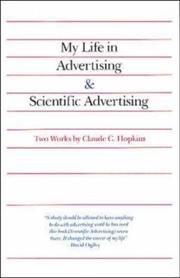
Recommended alongside Scientific Advertising in the Founders podcast episode on Confessions of an Advertising ManOgilvy quoted Hopkins's autobiography in chapter 18 of Ogilvy on Advertising; the ISBN is the 1997 combined edition "My Life in Advertising & Scientific Advertising: Two Works" (McGraw-Hill). source ↗
Sources14
- David Ogilvy (businessman) — Wikipedia
- Ogilvy (agency) — Wikipedia
- David Ogilvy — Spartacus Educational
- Confessions of an Advertising Man — Wikipedia
- David Ogilvy's foreword to Scientific Advertising — Oliver Palmer
- Tested Advertising Methods (full text, with Ogilvy's foreword) — Internet Archive
- David Ogilvy's 1982 Memo "How to Write" Offers 10 Pieces of Timeless Advice — Open Culture
- Ogilvy on Advertising book notes — ryandelaney.co
- Open Library — Internet Archive
- Centenary of Ogilvy wisdom — Bizcommunity
- The Unpublished David Ogilvy — book notes — kailajlim.com
- The King of Madison Avenue — Porchlight Books
- Quotations of David Ogilvy — Ogilvy
- "At 60 Miles An Hour" Rolls-Royce Ad by David Ogilvy — Swipe File Archive