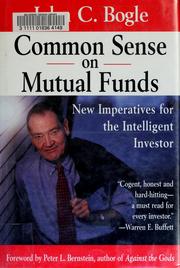
Common Sense on Mutual Funds is John Bogle's 1999 book-length manifesto on the mutual-fund industry, updating Benjamin Graham's message for fund investors. It lays out the case for low-cost index investing with Bogle's full analytical toolkit — cost compounding, the 'relentless rules of humble arithmetic,' and the evidence that active management cannot, in aggregate, beat the market. It is the most systematic statement of the philosophy that underlies Vanguard.
Bogle is one of the few founders whose product is measured in basis points. Common Sense on Mutual Funds is his operating manual, and Senra uses it to show how a single insight — that costs compound destructively just as returns compound constructively — can generate a trillion-dollar industry. The lesson for founders is the power of a simple, defensible economic insight that your competitors cannot replicate because their business model depends on the opposite.
Bogle's analysis of the 'tyranny of compounding costs' is the book's core: a 2% fee on a 7% return over 50 years consumes two-thirds of the final portfolio. For founders in industries where small differences in unit economics compound over time (marketplaces, platforms, funds), Bogle's math is universally applicable. The insight is not that costs matter — everyone knows that — but that the compounding of costs is invisible and therefore systematically underestimated.
The book also contains Bogle's most direct arguments against the culture of speculation, which Senra connects to the broader thesis that alignment between producer and consumer is the only durable moat. Vanguard's low costs were not a feature; they were the inevitable consequence of a structure that could not be gamed.