EL
Edwin Land
Polaroid · 1909–1991
Born May 7, 1909 · Died March 1, 1991
Founder of Polaroid and inventor of instant photography. Born 7 May 1909 in Bridgeport, Connecticut, Edwin Land left Harvard after one year to research polarized light in Columbia’s labs, patenting the first synthetic sheet polarizer in 1929. He founded Land-Wheelwright Laboratories with George Wheelwright III in 1932, renamed Polaroid in 1937. After his daughter Jennifer asked in 1943 why she couldn’t see the photo yet, Land spent four years building instant film, demonstrating it in 1947 and launching the Model 95 camera that November. He unveiled the SX-70 in 1972, held 535 patents, and was forced out after 1977’s Polavision failure; Steve Jobs called him “a national treasure.”
Contents
Career highlights
- 1909Born 7 May in Bridgeport, Connecticut, the son of a scrap-metal dealer, and later read Robert Wood’s Physical Optics so obsessively as a boy that he kept it under his pillow.
- 1926Entered Harvard to study physics, then left after his freshman year to pursue his own research into polarized light.
- 1928Spent nights climbing into Columbia University’s laboratory building to use equipment he had no formal right to, chasing a method for aligning microscopic crystals in plastic sheets.
- 1929Filed his first patent, on 26 April, for a synthetic sheet polarizer made of aligned iodoquinine sulfate crystals embedded in plastic — the discovery his entire career was built on.
- 1932Founded Land-Wheelwright Laboratories in Boston with Harvard physics professor George Wheelwright III to commercialize polarizing filters.
- 1935Pitched polarized headlights and windshields to Detroit automakers as a glare-reduction safety system; the industry never adopted it, since it required every manufacturer to switch at once.
- 1937Renamed the company Polaroid Corporation, having already built a business selling polarizing sunglasses and camera filters.
- 1943During a family vacation in Santa Fe, his three-year-old daughter Jennifer asked why she couldn’t see the photograph he had just taken of her right away — the question Land later said he answered in his head within the hour, in principle, on that walk.
- 1943Turned Polaroid over almost entirely to wartime optics work — gunsights, rangefinders, dark-adaptation goggles, the stereoscopic Vectograph viewer, and components for the Norden bombsight — contracts that kept the company solvent through the war.
- 1947Demonstrated the instant camera and self-developing film to the Optical Society of America in New York on 21 February, telling the room “give me fifty seconds” before revealing a finished print.
- 1948Launched the Land Camera Model 95 at Jordan Marsh department store in Boston on 26 November; all 57 units on hand sold on opening day.
- 1954Joined the Eisenhower administration’s Land Panel and worked with James Baker and Kelly Johnson on the camera system for the U-2 spy plane, then went on to advise on the Corona reconnaissance satellite program.
- 1972Unveiled the SX-70 at Polaroid’s April shareholder meeting by pulling a folded camera from his coat pocket and producing five finished photographs in ten seconds — the fully self-developing, one-step camera he called his crowning achievement.
- 1977Launched Polavision, an instant home-movie system, in April; it flopped commercially against cheaper video alternatives and forced a write-down of roughly $68 million.
- 1980Stepped down as Polaroid’s chief executive after the board balked at funding his next pocket-camera project — Land reportedly told his successor Bill McCune “either you fund this or I quit” — ending his day-to-day run of the company he had led for 45 years, and founded the Rowland Institute for Science the same year.
- 1982Resigned as Polaroid’s chairman and director on 27 July, formally ending his fifty-year association with the company to devote himself to pure research.
- 1991Died 1 March in Cambridge, Massachusetts, at 81, having amassed 535 U.S. patents, second only to Thomas Edison.
Lessons for founders
- Only work on problems that are manifestly important and nearly impossible. Land's personal motto — "Don't undertake a project unless it is manifestly important and nearly impossible" (Forbes, 4 May 1987) — became the founding charter of the Rowland Institute he built in 1980, whose scientists were explicitly barred from applying for outside grants so nothing but the hardest problems would hold their attention.
- Build the product, don't survey it into existence. In a 1945 paper, "Research by the Business Itself," Land wrote that "neither the intuition of the sales manager nor even the first reaction of the public is a reliable measure of the value of a product to the consumer" — you make it, ship it, and watch. Polaroid's own market researchers once predicted total camera demand would saturate around 8 million units; the company went on to sell several million cameras a year through the 1960s regardless.
- Let the product perform the pitch, live. At the Optical Society of America on 21 February 1947, Land shot a photo, said "give me fifty seconds," and produced a developed print in front of the room. Twenty-five years later, at Polaroid's April 1972 shareholder meeting, he pulled a folded SX-70 from his coat pocket and produced five photographs in ten seconds — the theatrical, on-stage demo Steve Jobs later borrowed as the template for Apple's own product launches.
- Treat science and art as one activity, not two departments. Addressing the Society of Photographic Scientists and Engineers on 5 May 1977, Land said: "I do not understand the divine source, but I know, in a way that I don't understand, that out of chaos I can make order, out of loneliness I can make friendship, out of ugliness I can make beauty" (Harvard Magazine, Jan–Feb 1978). He ran Polaroid's chemists, opticians, and image-quality staff in one integrated lab rather than separate divisions, and spent his last decade at the Rowland Institute pursuing his own retinex theory of color vision as both a scientific and aesthetic question.
- Own the whole chain, from chemistry to the point of sale. Land put it this way in a Founders podcast–cited recollection: "I knew then I would never go into a commercial field that put a barrier between us and the customer." That meant Polaroid manufactured both the camera and the film itself — down to embedding the SX-70's power source inside the disposable film pack so the camera never needed a separate battery. Owning every link kept competitors from replicating the system piecemeal.
- Patents are a moat, not a formality. Land's 535 patents gave Polaroid the standing to sue Kodak for infringement after Kodak launched its own instant camera in 1976; the resulting suit, chronicled in Ronald Fierstein's A Triumph of Genius, eventually forced Kodak to stop manufacturing and selling instant cameras and film entirely and compensate customers left holding them.
- A founder's pet project can bankrupt the founder's authority. Land personally championed Polavision, an instant home-movie system he launched in April 1977 just as cheaper video alternatives from Sony and others were arriving — Sony co-founder Akio Morita reportedly told him directly, "you're too late." The roughly $68 million write-down that followed cost Land the board's confidence, and by 1980 he was pushed out of day-to-day control of the company he founded.
- Never fully delegate the vision, but know it can cost you the company. Land kept creative and technical control concentrated in himself for nearly fifty years, most visibly in 1980 when he reportedly told successor Bill McCune "either you fund this or I quit" over a pocket-camera idea the board wouldn't back — and McCune let him go. It is both the reason Polaroid's products stayed so coherent and the reason Land's own company eventually forced him out.
- Design the whole experience, not just the invention. Land treated the film chemistry, the camera body, the packaging, and the sixty-second moment of watching a photograph develop as one designed object rather than separate engineering problems — a discipline visible from the theatrical 1947 unveiling through the SX-70's self-ejecting, battery-in-the-film-pack design in 1972.
On the Founders podcast6×
Read about them6
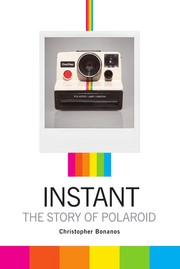
A design- and object-focused history of Polaroid built from company archives and interviews with Land's former colleagues, first published to coincide with the film-industry Polaroid revival of the early 2010s. source ↗
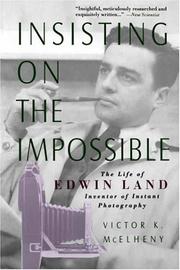
The first full-scale biography of Land, written with his cooperation before his death; still the primary source most later accounts (including the Founders podcast episodes) draw on for his early life and Columbia-library research. source ↗
Written by a former Polaroid marketing and advertising executive who worked directly under Land for two decades — an insider's account of the company's culture and Land's management style rather than a technical biography. source ↗
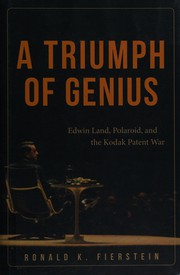
Written by a lawyer who worked on Polaroid's legal team during the 1980s patent trial against Kodak; covers Land's decades of Cold War intelligence work alongside the litigation that forced Kodak out of instant photography. source ↗

A Taschen collection of images from the Polaroid Corporation's own art collection, with an essay by longtime Polaroid curator Barbara Hitchcock on the company's history and its relationships with photographers like Ansel Adams and Andy Warhol; not a Land biography, but the closest thing to a visual record of what he built. source ↗
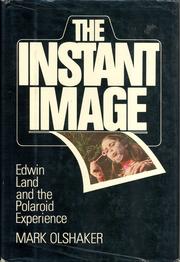
A full-length contemporary biography of Land and Polaroid written while Land still ran the company in 1978; supplements the existing Wensberg and McElheny biographies with the perspective of a reporter working during Land's own era. source ↗
What they recommend1
The book Land is said to have read obsessively as a boy, kept under his pillow, and returned to during his self-directed nighttime research in Columbia University's laboratories while on leave from Harvard.First published in 1905; the edition listed here is the Optical Society of America's 1988 reprint, the one still in print and citable by ISBN. Land's own copy and its exact edition are not documented. source ↗
Sources12
- Edwin Land — Wikipedia
- Polaroid Corporation — Wikipedia
- SX-70 — Wikipedia
- Rowland Institute at Harvard — Wikipedia
- Edwin Herbert Land — National Inventors Hall of Fame
- Edwin Herbert Land — Molecular Expressions / Florida State University
- Playboy Interview: Steven Jobs (1985) — Playboy, reproduced by allaboutstevejobs.com
- Edwin H. Land — Wikiquote
- The Secret History of Polaroid CEO Edwin Land — Steve Blank
- #134 Edwin Land (Polaroid vs Kodak) — transcript — Founders podcast, via podscripts.co
- #263 Land's Polaroid — transcript — Founders podcast, via podscripts.co
- #264 The Story of Edwin Land and Polaroid — transcript — Founders podcast, via podscripts.co