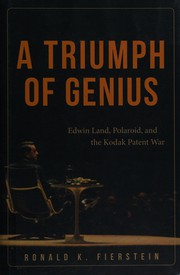
Ronald K. Fierstein's A Triumph of Genius covers Edwin Land and Polaroid from the perspective of the landmark patent trial against Kodak — the longest patent trial in US history at the time. Fierstein worked on Polaroid's legal team during the 1980s suit, and his book weaves together Land's career, Polaroid's Cold War intelligence work, and the litigation that forced Kodak out of instant photography entirely. It is the definitive account of how Land's 535 patents became the legal moat that destroyed Kodak's instant-camera business.
Fierstein's book was covered by David Senra on Founders #134, and it is the most vivid case study in the library on patents as a founder's moat. Land filed his first polarizer patent in 1929 at 20 years old, and over the next five decades he accumulated 535 US patents — second only to Thomas Edison. When Kodak launched its own instant camera in 1976, Polaroid had the standing to sue because Land had patented the entire integrated system: the film chemistry, the camera mechanics, the development process.
For founders, the lesson is that a patent portfolio is not a formality or a defensive cost — it is an offensive weapon that can destroy a competitor's entire product line. The Kodak suit is the most extreme example in business history of a patent system working exactly as intended: Polaroid won, Kodak was forced to stop manufacturing instant cameras and film, and had to compensate every customer who had bought one. Fierstein's insider account also shows the cost of that litigation: years of management attention, tens of millions in legal fees, and a culture that increasingly looked backward at its legal victory rather than forward at the market's next move.