AC
Andrew Carnegie
Carnegie Steel · 1835–1919
Born November 25, 1835 · Died August 11, 1919
Born in Dunfermline, Scotland, in 1835 to a handloom weaver ruined by power looms, Carnegie emigrated with his family to Allegheny, Pennsylvania, in 1848 and started work as a bobbin boy earning $1.20 a week. He rose through telegraphy and the Pennsylvania Railroad before building Carnegie Steel into Gilded Age America’s dominant industrial force through obsessive cost control and vertical integration — a rise stained by the violent 1892 Homestead strike, run in his absence by Henry Clay Frick. He sold the company to J. P. Morgan for $480 million in 1901 and spent his last two decades giving nearly all of it away, funding more than 2,500 public libraries.
Contents
Career highlights
- 1835Born 25 November in Dunfermline, Scotland, the son of handloom weaver William Carnegie.
- 1848Emigrated with his family to Allegheny, Pennsylvania, after steam-powered looms destroyed his father's handloom-weaving trade.
- 1848Took his first job as a bobbin boy in a cotton mill, earning $1.20 a week at age thirteen.
- 1850Worked as a telegraph messenger boy in Pittsburgh and won access to Colonel James Anderson's personal library, opened to working boys on Saturday afternoons — the reading he later called a debt he 'would not exchange for all the millions that were ever amassed by man.'
- 1853Hired as private secretary and telegraph operator by Thomas A. Scott of the Pennsylvania Railroad.
- 1856Invested $217.50 in Theodore Woodruff's sleeping car company on Scott's advice, his first taste of capital income.
- 1859Promoted to superintendent of the Pennsylvania Railroad's Western Division, succeeding Scott, at $1,500 a year.
- 1865Left the railroad to found the Keystone Bridge Company and concentrate on his own ventures.
- 1868At New York's St. Nicholas Hotel, wrote a private memo to himself resolving to cap his income at $50,000 a year and devote the surplus to benevolent purposes — a promise he did not act on for another thirty-three years.
- 1872Traveled to Britain, saw Henry Bessemer's steel converters in operation, and returned convinced that steel, not iron, was the future.
- 1875Opened the Edgar Thomson Steel Works in Braddock, Pennsylvania, built during the depression of 1873 while competitors retrenched.
- 1883Opened the Dunfermline Carnegie Library, the first of what would eventually total more than 2,500 libraries he funded across the English-speaking world.
- 1889Published 'Wealth' in the North American Review, later reprinted as 'The Gospel of Wealth,' arguing the rich should administer their surplus fortunes for the public good rather than pass them to heirs.
- 1892Henry Clay Frick locked out the Homestead steelworkers over a wage cut and brought in 300 Pinkerton agents by barge; the July 6 battle left seven strikers and several Pinkertons dead, and the union collapsed that November — Carnegie stayed in Scotland throughout.
- 1901Sold Carnegie Steel to J. P. Morgan for $480 million, forming U.S. Steel, and retired from business at sixty-five.
- 1911Established the Carnegie Corporation of New York with a $135 million endowment to carry on his philanthropy.
- 1919Died 11 August of bronchial pneumonia at Shadowbrook, his estate in Lenox, Massachusetts.
Lessons for founders
- Track costs to the penny and let profit follow. Carnegie's Edgar Thomson Works measured the cost of producing every ton of steel down to fractions of a cent, and his insistence on watching costs first and letting profits follow let him underprice rivals who were still guessing at their margins.
- Own every link in the chain you depend on. Carnegie bought the iron ore fields, the ore boats, the railroads, and the coke ovens that fed his mills, so no middleman's margin sat between his raw materials and his finished steel.
- Build when everyone else is retrenching. He broke ground on the Edgar Thomson Works during the depression of 1873, when construction and labor were cheapest and terrified competitors were sitting on their hands, so his newest, most efficient mill was ready right as demand recovered.
- Hire people better at the job than you are, then get out of their way. Carnegie couldn't run a blast furnace himself, so he recruited operators like Henry Clay Frick and Charles Schwab and let them run the mills; his chosen epitaph reads he knew how to "enlist in his service better men than himself."
- Concentrate everything in the one business you understand. Rejecting the conventional wisdom to diversify, Carnegie's rule was to "put all your eggs in one basket and then watch that basket," pouring reinvested profits back into steel instead of spreading capital thin across unrelated ventures.
- Give the fortune away while you're alive to direct it. Carnegie's Gospel of Wealth held that "the man who dies thus rich dies disgraced," and he spent his retirement funding over 2,500 public libraries so others could get the self-education a library once gave him, rather than leaving an untouched inheritance.
- Reading you had to fight for sticks harder than reading handed to you. Colonel James Anderson opened his four-hundred-volume personal library to working boys on Saturday afternoons, and the twelve-year-old Carnegie — with no other route to books — called it the source of a taste for literature he "would not exchange for all the millions that were ever amassed by man." He later built his own library program to hand other boys the same opening.
- Delegating a crisis doesn't transfer the blame for it. Carnegie left Henry Clay Frick in charge of Carnegie Steel and stayed in Scotland through the summer of 1892, when Frick locked out the Homestead union, brought in 300 Pinkerton agents by barge, and watched the July 6 battle leave seven strikers and several Pinkertons dead. History has never let the distance absolve him.
- A stated principle you don't act on for decades is still a debt. At thirty-three, at New York's St. Nicholas Hotel, Carnegie wrote himself a memo resolving to cap his income at $50,000 a year and spend the rest on benevolence — then kept building Carnegie Steel for another thirty-three years before the 1901 sale finally let him make good on it.
The Gospel of Wealth
- The man who dies rich dies disgraced.Carnegie's most famous line, from his 1889 essay 'The Gospel of Wealth.' He argued that the wealthy have a moral obligation to distribute their fortunes during their lifetimes for the public good, and that leaving money to heirs or the state was wasteful. He practiced what he preached: by his death in 1919 he had given away over $350 million — roughly 90% of his fortune — funding 2,811 public libraries across the English-speaking world.
- Put all your eggs in one basket, and then watch that basket.Carnegie was a fierce believer in focus. He concentrated his investments in a single industry — steel — rather than diversifying. His company owned every step of the process, from iron ore mines to railroads to finished steel mills. Vertical integration on a scale no one had attempted before.
- Take away my people, but leave my factories, and soon grass will grow on the factory floors. Take away my factories, but leave my people, and soon we will have a new and better factory.Carnegie valued talent above all else. He recruited Charles Schwab, Henry Clay Frick, and other industrial geniuses by offering them partnership stakes. His genius was not in making steel but in recognizing and empowering the people who could.
- The secret of success lies not in doing your own work, but in recognizing the right man to do it.Carnegie's autobiography emphasizes that his greatest skill was delegation. He famously wrote his own epitaph: 'Here lies a man who knew how to enlist in his service better men than himself.'
On the Founders podcast4×
Read about them4
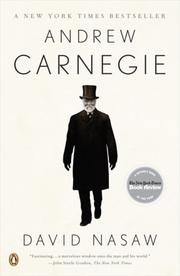
The standard modern biography, built from Carnegie's private papers, giving the fullest documented account of the Homestead strike, the 1901 sale, and the library program. source ↗
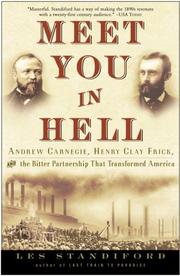
A dual portrait of Carnegie and Frick built around the Homestead strike, tracing how a labor dispute Carnegie left in Frick's hands became the defining stain on his reputation. source ↗
One of the two most detailed scholarly biographies of Carnegie, alongside Nasaw's; the academic standard account that preceded it. source ↗

The pre-Nasaw standard biography, first published in 1932; superseded as the definitive account by Wall and later Nasaw, but still a foundational treatment. source ↗
In their own words3
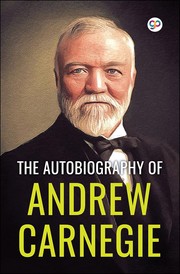
Carnegie's own account of his rise, dictated in his final years and left unfinished at his death in 1919; published posthumously in 1920. The Colonel Anderson, telegraph-office, and reading material in this entry is drawn from it. source ↗
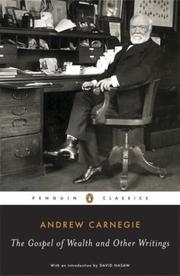
The Penguin Classics collection gathering 'Wealth,' 'The Best Fields for Philanthropy,' and Carnegie's other major essays on money and giving in one volume. source ↗
Carnegie's own 1902 collection of essays and addresses on business, opening with 'The Road to Business Success,' his most-reprinted talk to young men. source ↗
- 1889WealthThe North American Review essay later republished as 'The Gospel of Wealth': the rich should administer surplus fortunes for the public good during their own lifetimes rather than pass them to heirs.
- 1889The Best Fields for PhilanthropyA follow-up to 'Wealth' ranking the best uses for a fortune — universities, libraries, hospitals, parks — by public benefit.
- 1899Americanism versus ImperialismArgues against American annexation of the Philippines, warning that overseas empire would corrupt the republic.
- 1906A League of PeaceHis rectorial address at the University of St Andrews proposing an international league to arbitrate disputes and outlaw war.
- 1910War as the Mother of Valor and CivilizationRejects the Social Darwinist claim that war drives moral and civilizational progress.
What they recommend11

Learned by heart from his uncle as a boy in Dunfermline"I can truly say in the words of Burns that there was then and there created in me a vein of Scottish prejudice (or patriotism) which will cease to exist only with life." source ↗
Discovered through a touring Pittsburgh production, then read obsessively"Thenceforth there was nothing for me but Shakespeare. I seemed to be able to memorize him almost without effort. Never before had I realized what magic lay in words." source ↗
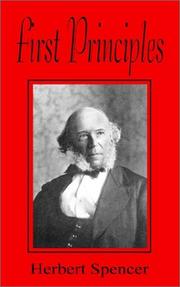
Named the writer who influenced him most"Light came as in a flood and all was clear... 'All is well since all grows better' became my motto, my true source of comfort." source ↗

Read from Colonel Anderson's library during his messenger-boy years"In this way I became familiar with Macaulay's essays and his history, and with Bancroft's 'History of the United States,' which I studied with more care than any other book I had then read." source ↗
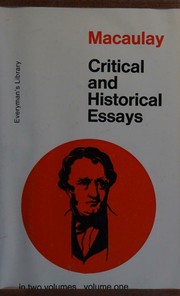
Read from Colonel Anderson's library alongside Bancroft's history"In this way I became familiar with Macaulay's essays and his history, and with Bancroft's 'History of the United States,' which I studied with more care than any other book I had then read." source ↗
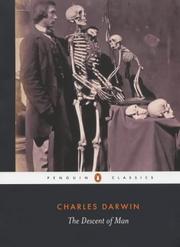
From his Autobiography, describing his reading"I came fortunately upon Darwin's and Spencer's works 'The Data of Ethics,' 'First Principles,' 'Social Statics,' 'The Descent of Man.'" source ↗
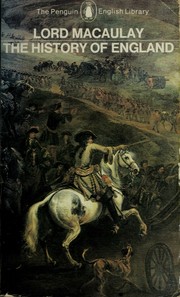
From his Autobiography, describing his reading"I became familiar with Macaulay's essays and his history, and with Bancroft's 'History of the United States'" source ↗
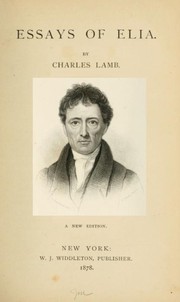
From his Autobiography, describing his reading"Lamb's essays were my special delight, but I had at this time no knowledge of the great master of all, Shakespeare." source ↗

From his Autobiography, describing his readingNamed in the same passage as The Descent of Man; complements the existing First Principles entry. source ↗

From his Autobiography, describing his readingNamed in the same passage as The Descent of Man, alongside The Data of Ethics and First Principles. source ↗

From his Autobiography, describing his reading"I should add to this the fairy tales of childhood, and especially the 'Arabian Nights,' by which I was carried into a new world. I was in dreamland as I devoured those stories." source ↗
Sources10
- Andrew Carnegie — Wikipedia
- Homestead strike — Wikipedia
- The Gospel of Wealth — Wikipedia
- Carnegie library — Wikipedia
- Timeline: Rags to Riches — PBS American Experience
- Herbert Spencer — PBS American Experience
- Autobiography of Andrew Carnegie — Project Gutenberg
- Our History — Andrew Carnegie Foundation (Carnegie Corporation of New York)
- Author: Andrew Carnegie — Wikisource
- Open Library — Internet Archive