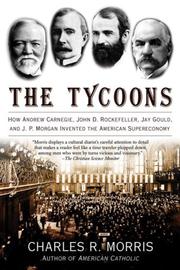
- Marc Andreessen: "on how four great builders of the 19th century built the world we live in today." source ↗
Charles R. Morris's 2005 book profiles the four great American industrialists of the nineteenth century — Cornelius Vanderbilt, John D. Rockefeller, Andrew Carnegie, and J.P. Morgan — who together built the infrastructure of the modern American economy. Morris argues that these men were not merely predators or monopolists but great builders whose strategic vision, organizational genius, and willingness to place enormous concentrated bets transformed a fragmented agrarian economy into an industrial superpower.
Andreessen lists it in his "It's Time to Build" companion-book thread, saying it is "on how four great builders of the 19th century built the world we live in today." The framing is deliberate: this is not a book about robber barons — it is a book about builders.
For a founder, Morris's treatment of Rockefeller is the most instructive. Rockefeller didn't invent the oil industry — he saw that it was a chaos of competing producers and realized that the winner would be the one who brought order. He invested in refining capacity during a glut when everyone else was getting out, negotiated secret railroad rebates that gave him a structural cost advantage, and then used that advantage to drive the market to rationalization. The pattern — see the structural inefficiency, make the contrarian bet on bringing order, use the resulting margin to consolidate — repeats across the electricity, steel, railroad, and banking transformations. For a founder operating in a fragmented, pre-consolidation market, these are the original playbooks.