Akio Morita
Akio Morita (26 January 1921 – 3 October 1999) was the co-founder of Sony. Born the eldest son and fifteenth-generation heir to a 300-year-old sake-brewing family in Nagoya, he studied physics at Osaka Imperial University and served in the wartime navy, where he met engineer Masaru Ibuka. In 1946 the two founded Tokyo Tsushin Kogyo (later Sony) in a burned-out department store, buying supplies on the black market to build early products. Morita turned the small company into a global electronics brand defined by high quality, product innovation without market research, brand building over immediate profit, and the Walkman — which sold over 400 million units and inspired a generation of founders.
Contents
- 1921Born 26 January in Nagoya to Kyuzaemon Morita, a sake brewer, as the eldest son and fifteenth-generation heir of the family business.
- 1944Graduates with a physics degree from Osaka Imperial University and joins the Imperial Japanese Navy as a technical officer during WWII, meeting engineer Masaru Ibuka in the Naval Technical research division.
- 1946With Ibuka, founds Tokyo Tsushin Kogyo (Tokyo Telecommunications Engineering) in a burned-out department store in war-torn Tokyo, buying scarce parts on the black market.
- 1958Renames the company Sony — from the Latin 'sonus' (sound) and 'sonny' — a brand designed for global recognition, and the first Japanese company to be known primarily by its coined Western name.
- 1960Establishes Sony Corporation of America, moving to New York to build the American market personally and famously rejecting a huge radio order to protect the brand's quality image.
- 1979Conceives and pushes through the Walkman against internal opposition, creating a personal-stereo category; it sells over 400 million units worldwide.
- 1989Buys Columbia Pictures for $3.4 billion, a landmark Japanese acquisition of a major American studio that made Sony a content-and-hardware giant.
- 1994Steps down as Sony chairman after a stroke, continuing to advise; remains the public face of the company until his death.
- 1999Dies 3 October at 78; his legacy as the founder who rebuilt Japan's reputation for quality manufacturing is widely recognized.
- Build a brand of quality that transcends price and volume. Episode #386 emphasizes that Morita was 'determined to change the global perception of Japanese goods as poor quality' — from day one he aimed at high-quality, differentiated products for affluent markets, refusing to tarnish the brand for short-term volume.
- Do product innovation without market research. Morita famously created products — most of all the Walkman — without market research, on the belief that customers cannot describe innovations they've never imagined. 'Product innovation without market research' is a deliberate doctrine.
- Think long-term and build the brand over immediate profit. Morita chose brand building over profit, and long-term vision over short-term results — accepting losses and slow growth in new markets for decades as an investment in Sony's name.
- Protect a key product even against your own company's resistance. The Walkman faced opposition from inside Sony itself; Morita 'invented one of the most successful consumer products of all time' by overriding his own engineers' and marketers' doubts — founder conviction as product strategy.
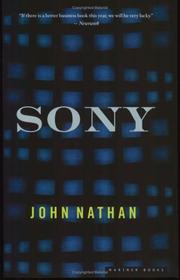

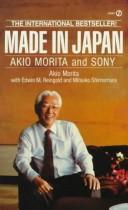
Founders who share the most book recommendations with Akio:
Sources3
- Akio Morita — Wikipedia
- Founders Podcast, Episode #386 — Founders of Sony (reread) — Founders Podcast
- Sony: The Private Life (Open Library record) — Internet Archive