Summary
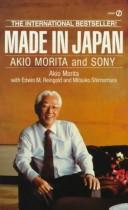
Akio Morita recounts his life and the building of Sony in this 1986 autobiography, written with Edwin M. Reingold and Mitsuko Shimomura. It follows his departure from a family sake business and his partnership with Masaru Ibuka in postwar Japan.
The account connects Sony's products with Morita's choices about quality, markets, and the company's name. He describes trying to establish a Japanese brand abroad and argues for creating products that customers could not yet ask for. The book combines a company story with his views on management and international business.
Why read it Our view
Read this to consider how product choices and brand choices reinforce each other. A large order can bring cash while also limiting the name customers see. Morita's account makes that trade concrete.
His confidence in unfamiliar products is useful to examine, too. Where does a founder know something customers cannot yet describe, and where is confidence hiding a weak idea? Use the story to ask what evidence would support your next product bet and what you want your company to be known for.
Decisions from the book
Keeping the Sony name on the radios
- Decision: Whether to accept a large radio order that required the Bulova brand.
- Action: Morita declined the private-label condition and insisted that the products carry Sony’s name.
- Outcome: He gave up the order to preserve the chance to build recognition for Sony. The immediate cost was lost sales, rather than a guaranteed future success.
Written about
- Akio MoritaAuthorMorita wrote Made in Japan about his life and Sony.Source