TE
Thomas Edison
General Electric · 1847–1931
Born February 11, 1847 · Died October 18, 1931
Thomas Alva Edison (11 February 1847 – 18 October 1931) left school at 12, taught himself telegraphy, and at 21 began a career as a professional inventor, securing over 1,000 US patents. He built industrial research laboratories at Menlo Park (1876) and West Orange (1887), invented the phonograph in 1877, perfected a practical incandescent light bulb in 1879, and organized the Edison Electric Light Company that became General Electric. He lost the 'war of the currents' to Westinghouse and Tesla's alternating current, and J.P. Morgan later erased his name from corporate existence when the former Edison company was reorganized — a founder who both created and was displaced by the modern corporation.
Contents
Career highlights
- 1847Born 11 February in Milan, Ohio; deaf in one ear from childhood, he left school at about 12 and taught himself.
- 1868Files his first patent, for an electric vote recorder, which no one buys — teaching him the lesson of inventing what people actually want.
- 1869Invents the improved stock ticker and sells the rights for $40,000, his first significant money from invention.
- 1876Opens the Menlo Park research laboratory in New Jersey, built as an 'invention factory' dedicated to turning out new technology on demand.
- 1877Invents the phonograph, the first machine to record and reproduce sound, announced in December and making him world-famous.
- 1879Demonstrates a practical, long-burning incandescent light bulb at Menlo Park and files for patent protection on the electric lamp.
- 1882Opens the Pearl Street Station in New York, the first central electric-power plant, supplying direct current (DC) to customers.
- 1887Moves to West Orange, New Jersey, opening a larger laboratory complex that becomes the prototype for modern industrial R&D.
- 1891The 'war of the currents' tilts against his direct-current system as Westinghouse and Tesla's alternating current wins scale economies; Edison's is the losing campaign.
- 1914His West Orange laboratory complex, with many of his works in progress, is severely damaged by fire; he reportedly replies that the catastrophe was valuable because it burned up his mistakes.
- 1931Dies 18 October at West Orange; at his funeral much of the world dims lights briefly in tribute to the inventor of practical electric lighting.
Lessons for founders
- Invention is a discipline, not a flash of genius. Edison built Menlo Park as an 'invention factory' — a lab engineered to turn out usable technology on schedule, working with assistants rather than alone, and iterating relentlessly until the thing worked.
- Make it work; don't just conceive it. His own maxim — 'Remember, nothing that's good works by itself. You've gotta make the damn thing work' — captures the difference between a patent and a product.
- Persistence beats brilliance at the margins. As he put it, 'The trouble with other inventors is that they try a few things and quit. I never quit until I get what I want' — a doctrine of sticking with a problem past where rivals stop.
- A founder can be displaced by the institution he creates. Edison's companies were merged into the Edison General Electric combine, and later reorganizations by J.P. Morgan removed his name entirely — the corporation outliving and absorbing the visionary who built it.
On the Founders podcast4×
Read about them6
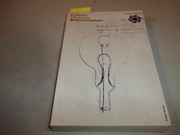
The classic 1959 biography that is the subject of Founders episode #267, giving the fullest portrait of Edison's life, methods, and the 'war of the currents'. source ↗

Subject of episode #3; focuses on Edison as the first celebrity inventor and the creation of the modern research laboratory. source ↗
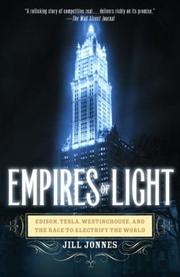
Subject of episode #83; recounts the war of the currents and the birth of the electric-power industry. source ↗
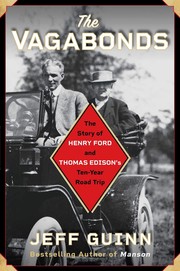
Subject of Founders episode #190; recounts the famous friendship and camping expeditions of Edison, Ford, Firestone and Burroughs, and the two titans' influence on each other. source ↗
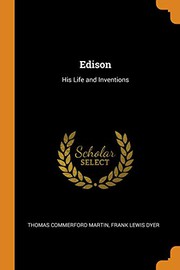
A modern reprint of the 1910 authorized biography written with Edison's cooperation, preserving his own recollections of the Menlo Park years and the invention process. source ↗
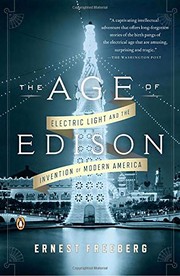
A 2013 cultural history of how electric light reshaped American life, using Edison's achievement as the hinge between the gas-lit past and the electrified century. source ↗
What they recommend10

Cited in Founders episode #267 as 'one of Thomas Edison's favorite books.'The Founders podcast names Hugo's maritime novel among Edison's favorites; the exact edition he read is unverified, so no ISBN is attached. source ↗

Documented in Founders episode #267 from the Josephson biography: Edison's all-night reading of Faraday's experiments filled him with determination to learn all he could"After working at the telegraph office until the early hours, Edison began reading Faraday's Experimental Researches in Electricity when he returned to his room at 4 A.M. and continued all day, going back to the telegraph without having slept." source ↗
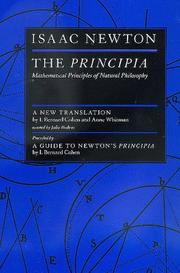
The quote describes Edison reading the Principia with his mother in the 1850s; Munro's 1891 Heroes of the Telegraph adds that "the Principia of Newton never daunted him.""had even attempted to struggle through Newton's Principia, whose mathematics were decidedly beyond both teacher and student" source ↗
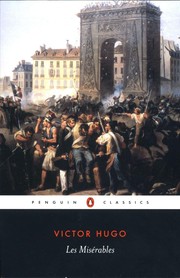
Dyer & Martin recount that Edison's fellow telegraphers nicknamed him "Victor Hugo Edison"; the existing Toilers of the Sea entry stays as-is."in Victor Hugo's Les Miserables and The Toilers of the Sea he found a treasure after his own heart" source ↗

"he had read, with his mother's help, Gibbon's Decline and Fall of the Roman Empire, Hume's History of England, Sears' History of the World, Burton's Anatomy of Melancholy…" source ↗

Named in the same Dyer & Martin passage as Gibbon; the Rutgers Edison Papers ("the Boyhood Years") independently names Hume among the writers Edison read.No confirmed edition exists, so no ISBN is attached. source ↗
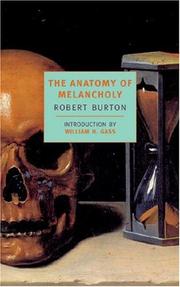
Named in the same Dyer & Martin passage as Gibbon and Hume; also documented in the 1913 History of Detroit & Wayne County.ISBN is the 2001 NYRB Classics edition; the edition Edison read is unverified. source ↗

Sources disagree on the title — "Ure's Dictionary of Chemistry" vs "Ure's Dictionary of Arts, Manufactures and Mines."A 19th-century work, so no ISBN is attached. source ↗

Named in the same Dyer & Martin passage as Gibbon and Hume; the 1883 Bliss account renders it "Searl's."The exact edition is unverified, so no ISBN is attached. source ↗

Read during Edison's train-laboratory period."Fresenius' Qualitative Analysis served as a basis for ceaseless testing and study" source ↗
Sources7
- Thomas Edison — Wikipedia
- Founders Podcast, Episode #267 — Thomas Edison — Founders Podcast
- Founders Podcast, Episode #83 — Empires of Light — Founders Podcast
- The Vagabonds (Open Library record) — Internet Archive
- Edison: His Life and Inventions (Open Library record) — Internet Archive
- The Age of Edison (Open Library record) — Internet Archive
- Experimental Researches in Electricity (Open Library record) — Internet Archive