JD
James Dyson
Dyson · 1947–present
Born May 2, 1947
Founder of Dyson. Born in Cromer, Norfolk in 1947 and fatherless at nine, he trained as a designer — Byam Shaw, then the Royal College of Art — rather than an engineer, and built the Sea Truck landing craft for Jeremy Fry’s Rotork before going out alone with the 1974 Ballbarrow. Ousted from that company and stripped of its patent, he spent 1979 to 1984 building 5,127 prototypes of a bagless cyclonic vacuum behind his house. Hoover and Electrolux refused to license it; Japan took it as the G-Force in 1986, and the royalties paid for his own factory. The DC01 launched in 1993 and was Britain’s best-selling vacuum within eighteen months. Dyson has never had outside shareholders.
Contents
Career highlights
- 1947Born 2 May in Cromer, Norfolk, the youngest of three children of Alec Dyson, head of classics at Gresham’s School.
- 1956His father died of cancer at 43, when James was nine; the Gresham’s headmaster, Logie Bruce-Lockhart, kept him and his brother at the school essentially free of charge.
- 1965Left Gresham’s after nine years, having won the school mile and three miles; after reading that Herb Elliott’s coach trained him on sand dunes, he ran the Norfolk dunes at six in the morning and again at ten at night — “Difference itself was making me come in first.”
- 1966Spent 1965–66 at the Byam Shaw School of Art under Maurice de Sausmarez, then entered the Royal College of Art, where the structural engineer Anthony Hunt pointed him to Buckminster Fuller and he moved from furniture and interior design toward engineering.
- 1970Left the RCA to head the new marine division of Jeremy Fry’s Rotork, designing, making and selling the Sea Truck — a flat-bottomed high-speed landing craft; Fry became the mentor who taught him to ignore the experts and just build the thing.
- 1974Went out on his own with the Ballbarrow — a wheelbarrow carried on a pneumatic ball instead of a narrow wheel — through Kirk-Dyson, a company formed with his sister and brother-in-law.
- 1978Copied a local sawmill’s industrial cyclone, measured at night, into a 30-foot dust extractor for the Ballbarrow factory; realising the cyclone was a filter that never clogged, he taped a cardboard version to his de-bagged Hoover Junior at home and it worked.
- 1979Forced out of the Ballbarrow company — whose directors argued that if a better vacuum were possible Hoover or Electrolux would already have built it — and, having assigned the patent to it, lost his own invention. Jeremy Fry put up 49% of the money for the cyclone venture; the rest was a bank loan.
- 1984Finished the dual cyclone after 5,127 prototypes built between 1979 and 1984, changing one variable at a time: “There is no such thing as a quantum leap. There is only dogged persistence – and in the end you make it look like a quantum leap.”
- 1986After Hoover, Electrolux and Black & Decker all declined to license the machine — the replacement-bag market was worth around $500m — and Amway shipped a near-copy in 1985, Japan’s Apex Ltd took it: the bright pink G-Force went on sale in March 1986 for the equivalent of about $2,000 and won the International Design Fair prize in 1991.
- 1993Opened a research centre and factory at Malmesbury, Wiltshire, in June — financed through Dyson Appliances, set up in 1991 on the Japanese licence income — and launched the DC01 under his own name, with the slogan “say goodbye to the bag” and a transparent bin that market research had said nobody wanted.
- 1995The DC01 became the UK’s best-selling vacuum cleaner within eighteen months of launch, outselling the manufacturers that had turned the technology down; by 2001 it held 47% of the British upright market.
- 1999Sued Hoover (UK) for infringing his dual-cyclone patent; on 3 October 2000 the High Court held that the Hoover Triple Vortex infringed and dismissed Hoover’s counterclaim to revoke, and in 2002 Hoover paid £4m — which Dyson said was the largest settlement in British patent history.
- 2002Moved vacuum production from Malmesbury to Malaysia, where costs ran about 30% lower, and founded the James Dyson Foundation to fund engineering education; washing-machine assembly followed in 2003.
- 2007Appointed Knight Bachelor in the New Year Honours for services to business, a year after the Airblade hand dryer opened a second product category; the bladeless Air Multiplier fan followed in October 2009.
- 2017Opened the Dyson Institute of Engineering and Technology on the Wiltshire campus in September — no tuition fees, a salary, three days a week on real Dyson projects — having already given £8m to Cambridge in 2014 and £12m to Imperial College in 2015.
- 2019Announced in January that Dyson’s headquarters would move from Malmesbury to Singapore, and in October cancelled the electric car after spending £500m of his own money; the N526 prototype ran, but each car would have had to sell for about £150,000 to break even.
Lessons for founders
- Treat failure as a method, not a verdict. Between 1979 and 1984 Dyson built 5,127 prototypes of the dual cyclone, changing one variable at a time so that each failure taught him something specific. His own summary: “There is no such thing as a quantum leap. There is only dogged persistence – and in the end you make it look like a quantum leap.” He is equally clear about the cost — he would crawl into the house every night covered in dust, and lived in debt for fifteen years.
- Own the patent and the means of making it. Dyson assigned the Ballbarrow patent to a company he did not control, and in 1979 was pushed out and lost the invention with it. He financed his own factory rather than license the cyclone away, and Dyson still has no outside shareholders. He compresses the whole philosophy into one line: “Difference for the sake of it. In everything… From the moment the idea strikes, to the running of the business. Difference, and retention of total control.”
- Make difference itself the strategy. As a schoolboy he read that Herb Elliott’s coach trained him on sand dunes, so he ran the Norfolk dunes at six in the morning and again at ten at night while his rivals circled the track. “They were all running round and round the track like a herd of sheep and not getting any quicker. Difference itself was making me come in first.” He carried the same logic into a transparent dust bin every focus group told him to hide.
- Build the thing before you understand it. Jeremy Fry, his mentor at Rotork, “encouraged me to think for myself and to ‘just do it.’” Dyson applied it literally: “After the idea there is plenty of time to learn the technology. My first cyclonic vacuum cleaner was built out of cereal packets and masking tape long before I understood how it worked.”
- Distrust market research and experts when the product is genuinely new. From the Mini’s designer Alec Issigonis he took the view “that market research is bunk and that one should never copy the opposition,” and from Fry a loathing of people “who want you to believe that they know everything about a subject.” Told in 2021 how Dyson uses research, he was blunt: “Most focus groups are wrong. You just can’t ask people what they want and then go off and make it.”
- Hire people who have not yet learned how it is done. “At Dyson, we don’t particularly value experience. Experience tells you how things should be done when we are much more interested in how things shouldn’t be done.” He inherited the rule from Fry, who “believed in taking on young people with no experience because this way he employed those with curious, unsullied, and open minds,” and institutionalised it in the 2017 Dyson Institute, where undergraduates work three days a week on live projects and graduate debt-free.
- Copy a great operator’s loop, not their product. “I admire Soichiro Honda greatly for his addiction to the continuous improvement of products.” What Dyson took from Honda — and from Issigonis and Citroën, whom he wanted “to emulate… in my own small way” — was not a machine but a habit: take something that already exists, find what is clumsy about it, and improve it forever.
- Selling a new product is part of inventing it. “Selling goes with manufacturing as wheels do with a bicycle. Products do not walk off shelves and into people’s homes. And when a product is entirely new, the art of selling is needed to explain it.” Hence the single-message discipline — “You simply cannot mix your messages when selling something new. A consumer can barely handle one great new idea, let alone two” — and why he fronted Dyson’s own advertising rather than hiding behind a corporate name.
- Defend the patent — and know when to stop spending. Dyson sued Hoover in 1999 rather than let the Triple Vortex stand; the High Court found infringement in October 2000 and Hoover paid £4m in 2002. The same founder killed his electric car in October 2019 after £500m of his own money, once the arithmetic showed each unit needed to sell for roughly £150,000. Persistence on the cyclone and a hard stop on the car came from the same habit of testing the thing empirically rather than defending a position.
On the Founders podcast5×
Read about them1
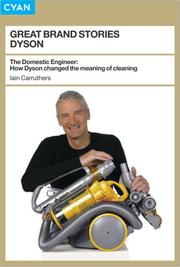
The one substantial book about Dyson written by somebody other than Dyson. Carruthers is a brand strategist rather than a biographer, and is usefully sceptical about the company’s own origin myth — he points out, for instance, that vacuum cleaners were not quite the technological desert the Dyson story implies. source ↗
In their own words4
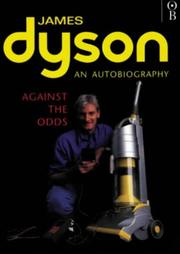
The 1997 first autobiography, written while the DC01 was still new: the Ballbarrow betrayal, the 5,127 prototypes, the fifteen years of debt, and the philosophy of “difference and retention of total control.” It is the Dyson book David Senra has recommended more often than any other, and the basis of three separate Founders episodes. source ↗
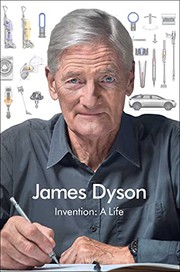
The 2021 second autobiography, written more than twenty years later and aimed squarely at young engineers. It covers what the first book could not — the Malaysian move, the abandoned electric car, the founding of the Dyson Institute — and is franker about the mentors, Jeremy Fry above all, who shaped how he works. source ↗
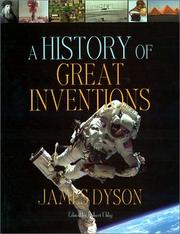
Dyson’s 2001 survey of invention from the wheel forward, edited by Robert Uhlig. Not a business book at all — it is the clearest statement of the historical enthusiasm that sits under the company, and of his conviction that engineers, not financiers, are what make a country rich. source ↗
Dyson’s first book (1996), co-written with Tony Muranka and published by Dyson Appliances Limited at Malmesbury. Open Library credits it to Muranka and Nick Rootes alone — the by-line reads “by Tony Muranka and Nick Rootes” — but the dyson.com biography affirms James as co-writer: “His first, Doing a Dyson, was written by James and also Tony Muranka in 1996.” source ↗
What they recommend13
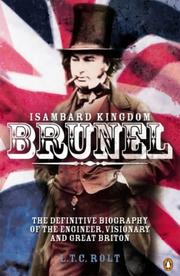
Top of the “personal pantheon” he assembled as a student"Isambard Kingdom Brunel was unable to think small, and nothing was a barrier to him. The mere fact that something had never been done before presented, to Brunel, no suggestion that the doing of it was impossible… And at times in my life when I have encountered difficulty and self-doubt I have looked to his example to fire me on." source ↗
The book his RCA tutor Anthony Hunt sent him to; the other half of his student pantheon"As Buckminster Fuller said, “You never change things by fighting the existing reality. To change something, build a new model that makes the existing model obsolete.”" source ↗
Herb Elliott was a big name at the time, so I read a few books about him and discovered that his coach had told him that the way to develop stamina and strengthen the leg muscles was to run up and down sand dunes. The running books that produced his lifelong theory of differenceDyson does not name the titles — he says only that he read “a few books” about Elliott — so this entry stands in for that reading, Elliott’s own 1961 account being the obvious candidate. Its ISBN is omitted because no verifiable ISBN-13 edition could be found; the 1961 original predates ISBNs. source ↗
First of the ten books he would take to a desert island"Rosenblum is a fearless Associated Press reporter who loves olive trees. He then wrote a book on the global production of olive oil that I couldn’t put down." source ↗
Named among his ten desert-island books"Design historians Charlotte and Peter Fiell take a journey through the earliest forms of design. Through dynamic illustrations, this history of design stretches over the centuries." source ↗
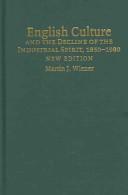
Named among his ten desert-island books"It took an American academic to research and diagnose this British class snobbishness about the activity of manufacturing. Astonishingly, it is more acceptable for the educated classes to go into banking or insurance rather than dirty their hands making things." source ↗
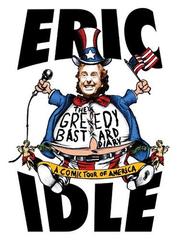
Named among his ten desert-island books"An alternative autobiography by Monty Python’s most creative member, Eric Idle… “The Greedy Bastard” turns out to be warm-hearted, loving and highly intelligent. Would that all writers had his hunger for knowledge and wit in parody." source ↗
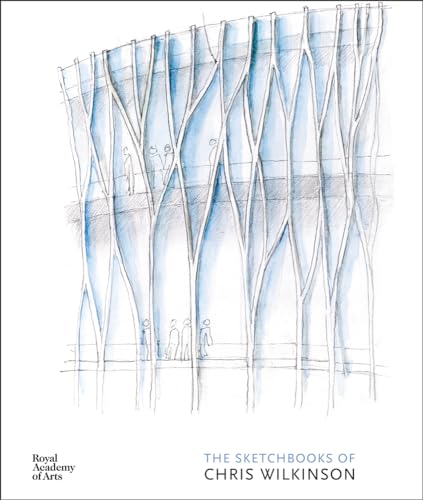
Named among his ten desert-island books"Despite being at the forefront of high-tech innovation in architecture, Wilkinson still uses drawing as a way to think through ideas, to grapple with design problems and as a tool for communication." source ↗
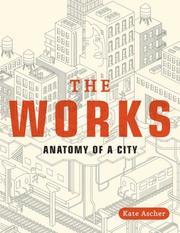
Named among his ten desert-island books"A book which artfully unveils the hidden engineering that makes Manhattan tick — from where rubbish goes to how traffic lights are synched to avoid thousands of daily collisions." source ↗
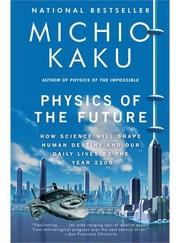
Named among his ten desert-island books"An interesting look into how things like nanotechnology could change how we interact with the devices in our home, making them smarter, more efficient." source ↗
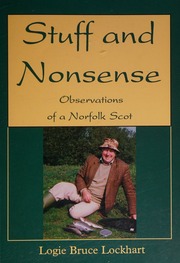
The autobiography of the headmaster who paid for his schooling"Nobody could have had a kinder and wiser headmaster than I. At the age of 92, he decided to write his fascinating autobiography." source ↗
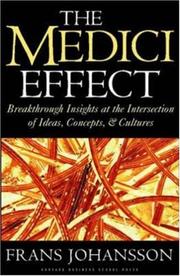
Named among his ten desert-island books; the closest thing to a theory of his own invention"Breakthrough inventions hardly ever come from completely new ideas, but rather from the application of a concept from one field to another. The cyclonic vacuum cleaner was inspired by the way industrial cyclones spun dust and dirt out of the air." source ↗
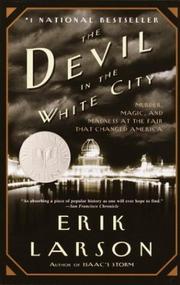
Named among his ten desert-island books"What better a time to set a mystery thriller than during the 1893 Chicago World’s Fair — the birthplace for so much American ingenuity." source ↗
Sources16
- James Dyson — Wikipedia
- Dyson (company) — Wikipedia
- Our Story — The James Dyson Foundation
- Sir James Dyson: From barrows to billions — BBC News
- Dyson wins Hoover case — BBC News
- Dyson agrees £4m Hoover damages — BBC News
- Judgement of the Patents Court of 3 October 2000 — Dyson Appliances Ltd. v. Hoover Ltd. — European Patent Office, Official Journal
- Dyson has scrapped its electric car project — BBC News
- James Dyson says he spent £500M of his own money on the company’s canceled electric vehicle — The Verge
- My 10 Favorite Books: James Dyson (archived) — The New York Times, T Magazine
- Desert Island Discs: James Dyson (Sue Lawley) — BBC Radio 4
- #25 Against the Odds: An Autobiography by James Dyson — Founders
- #205 James Dyson (Invention: A Life) — Founders
- #300 James Dyson (Against the Odds) — Founders
- Sir James Dyson: ‘Most focus groups are wrong’ — British GQ
- Open Library — Internet Archive