CC
Coco Chanel
Chanel · 1883–1971
Born August 19, 1883 · Died January 10, 1971
Founder of Chanel. Born Gabrielle Bonheur Chanel on 19 August 1883 in a Saumur poorhouse to an unmarried laundrywoman, she was sent to the Aubazine orphanage after her mother's 1895 death. Backed by her lover Arthur ‘Boy’ Capel, she opened a Rue Cambon hat shop in 1910, then boutiques in Deauville (1913) and Biarritz (1915) built on jersey, then reserved for underwear. She launched Chanel No. 5 in 1921 with perfumer Ernest Beaux, ceded 90% of Parfums Chanel to the Wertheimers and Théophile Bader in 1924, and put the little black dress in Vogue in 1926. She closed the house in 1939, spent the occupation at the Ritz involved with an Abwehr officer, then relaunched at 70 in 1954 to a cold Paris and a warm America.
Contents
Career highlights
- 1883Born Gabrielle Bonheur Chanel on 19 August in a Saumur poorhouse to Eugénie Jeanne Devolle, an unmarried laundrywoman, and Albert Chanel, an itinerant peddler of work clothes; her parents did not marry until the following year.
- 1895Her mother died at 32; her father sent his sons to work as farm labourers and placed Gabrielle and her sisters in the orphanage at Aubazine, run by the Congregation of the Sacred Heart of Mary, where she learned to sew.
- 1903Left Aubazine for a Catholic boarding house in Moulins, worked as a seamstress, and sang in cafés-concerts frequented by cavalry officers, where she acquired the nickname ‘Coco.’
- 1906Became the mistress of textile heir and former cavalry officer Étienne Balsan, living at his château Royallieu near Compiègne and beginning to design hats as a diversion.
- 1908Began a nine-year affair with Arthur ‘Boy’ Capel, a wealthy English businessman among Balsan's circle, who installed her in Paris and financed her first commercial ventures.
- 1910Opened her millinery shop, Chanel Modes, at 21 Rue Cambon in Paris with Capel's backing, and became a licensed milliner.
- 1913Opened a boutique in Deauville selling deluxe sportswear cut from jersey and tricot, fabrics until then confined to men's underwear.
- 1915Opened a couture house in Biarritz; within a year its profits let her repay Capel's original investment in full.
- 1919Capel died in a car accident on 22 December; Chanel later told Paul Morand, ‘In losing Capel, I lost everything.’
- 1921Launched Chanel No. 5 on 5 May, its formula developed by perfumer Ernest Beaux, who presented her with ten numbered samples from which she chose the fifth.
- 1924Signed the deal creating Parfums Chanel with Pierre and Paul Wertheimer, who took 70% of the company and financed production and marketing of No. 5, leaving Chanel 10% for licensing her name — a split she spent the next two decades trying to undo.
- 1926American Vogue published her simple black sheath dress, comparing it to the Ford Model T and predicting it would become ‘a sort of uniform for all women of taste.’
- 1939Closed her couture house at the outbreak of war, putting roughly 4,000 employees out of work, and said it was not a time for fashion.
- 1941Living at the Ritz under German occupation and involved with Wehrmacht intelligence officer Baron Hans Günther von Dincklage, she wrote to the German administrator of Jewish assets on 5 May seeking to use Aryanisation law to strip the Wertheimers of Parfums Chanel, arguing the firm was ‘still the property of Jews’; declassified files later registered her as an Abwehr agent, and in 1943–44 she took part in Operation Modellhut, an attempt to open peace talks with Churchill.
- 1954Reopened her couture house on 5 February, financed by Pierre Wertheimer; the French press panned the comeback while American Vogue's Bettina Ballard championed it and bought a suit herself, driving a wave of US orders.
- 1955Introduced the quilted 2.55 handbag in February, named for its month and year of creation, its chain strap and burgundy lining nodding to the chatelaines and uniforms of her Aubazine years.
- 1971Died at the Hôtel Ritz in Paris on 10 January, aged 87, where she had lived for more than three decades; buried at the Bois-de-Vaux cemetery in Lausanne.
Lessons for founders
- Turn the material only the poor can afford into the material the rich want. Jersey and tricot were, in 1913, fabrics reserved for men's underwear because they were cheap. Chanel used them for her Deauville sportswear out of financial necessity, then kept using them once the house was profitable because their ease became the whole point of her clothes.
- Let a patron buy you time, not permission. Arthur Capel financed the 1910 Rue Cambon shop and the Biarritz house, but Chanel repaid his Biarritz investment within a year of opening in 1915 — proof, deliberately generated, that the business could stand on its own before anyone could say it was only his.
- A bad equity split can still be a good annuity if you keep fighting it. The 1924 Wertheimer deal left Chanel just 10% of Parfums Chanel. She spent over twenty years contesting it, and by a 1947 renegotiation secured 2% of Chanel No. 5's worldwide sales plus all her living expenses for life — a settlement that made her one of the richest women in the world despite never owning control.
- Make your own biography part of the product. The 2.55 bag's chain strap and burgundy lining were designed, in 1955, to echo the caretakers' chatelaines and convent uniforms of the Aubazine orphanage she was raised in from age eleven — turning a hidden, humiliating chapter of her life into a load-bearing design detail four decades later.
- A brand can survive a scandal the founder never lives down. Chanel closed her house in 1939, spent the German occupation involved with an Abwehr officer, and by 1941 was petitioning Nazi administrators to seize her Jewish partners' stake in her own perfume company. She was interrogated but never tried; the house nonetheless reopened in 1954 and the record of her wartime activity stayed largely buried until documents were declassified decades after her death.
- A comeback needs one champion in the room you're trying to win, not universal approval. Her 1954 relaunch was panned by the French press, still raw about the war. American Vogue's editor Bettina Ballard bought one of the new suits herself and put it in the magazine; US orders followed, and that foothold, not French approval, was what let the comeback compound.
- Strip the product down and sell the absence as luxury. She removed corsets, petticoats, and ornament rather than adding to them; the 1926 little black dress, simple enough that Vogue compared it to the Ford Model T, became the garment every subsequent minimalist label has tried to reinvent.
- Be the most visible advertisement for your own product. Her tan, her trousers, her string of aristocratic lovers, and her own styled persona were inseparable from the Chanel label from the 1910s onward; customers who could never afford the clothes still bought into the image, which cost the house nothing to produce.
- Closing the business is sometimes a stronger move than limping it along. Chanel shut the couture house outright in 1939 rather than run it through the war at reduced scale, then came back at 70 with a fully new collection in 1954 instead of trying to revive what she'd left behind — a clean break followed by a clean restart.
On the Founders podcast2×
Read about them5
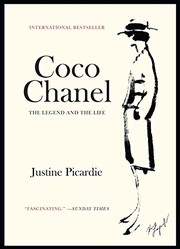
Picardie was the first biographer given access to the Aubazine convent's own archives, which is what makes this the most reliable account of the childhood Chanel spent her whole life obscuring. source ↗
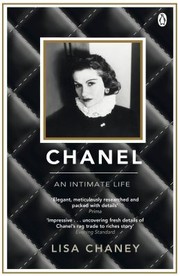
A biography built around Chanel's connections to the modernist artists and writers of her circle — Stravinsky, Cocteau, Reverdy, Diaghilev — placing the fashion house inside the wider Parisian avant-garde rather than treating it in isolation. source ↗
A 608-page biography that reads Chanel against the political history of her century — the war, Vichy, the Cold War — rather than as a fashion figure alone. Listed with the Random House hardcover's ISBN (9781400069521) so the ISBN and its Publishers Weekly listing cite the same edition: PW has no separate page for the 2014 paperback (9780812981858), whose URL redirects to the hardcover's listing, so the entry keys to the hardcover rather than mismatching ISBN and source. source ↗
Vaughan mined declassified French and German intelligence files to document Chanel's registration as Abwehr agent F-7124, the 1941 Aryanisation letter against the Wertheimers, and her role in Operation Modellhut — the archival basis for the wartime material in this entry. source ↗
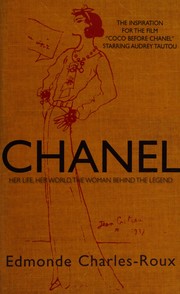
The standard biography, in Nancy Amphoux's translation from the French. Charles-Roux was Chanel's close friend and her chosen official biographer, and this is the definitive treatment of the life — its French original, L'Irreguliere, appeared with Grasset in 1974. source ↗
In their own words2
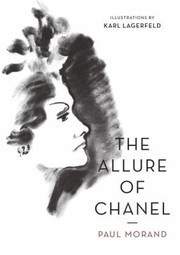
Chanel's own account, dictated to novelist Paul Morand over a series of 1945 conversations in St Moritz; the manuscript sat in a drawer and wasn't published until 1976. As close to her own voice as the record gets — and also the least reliable narrator of her own life, so it belongs alongside the biographies, not instead of them. source ↗
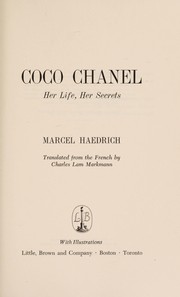
Journalist Marcel Haedrich's portrait built on his 1971 interviews with Chanel at the Ritz — first published in France as Coco Chanel secrète. Like the Morand conversations, it is as close to her own voice as the record gets while remaining her own retelling, so it belongs alongside the biographies rather than instead of them. source ↗
What they recommend2
The serial romance she smuggled into Aubazine as a teenager"Those novels taught me about life. They nourished my sensibility and my pride." source ↗

Her lover for five years and her closest friend for fortyReverdy and Chanel were involved from 1921 to 1926 and stayed close for decades after; biographers credit him with helping shape the aphorisms later published under her name, though no verbatim statement from Chanel about his poems survives in a source that could be fetched and checked, so this is listed as a relationship rather than a quote. source ↗
Sources11
- Coco Chanel — Wikipedia
- Chanel No. 5 — Wikipedia
- Pierre Reverdy — Wikipedia
- The Real Story Behind Coco Chanel's Rise to the Top — Time
- Sleeping with the enemy (Internet Archive record) — Internet Archive
- Chanel by Lisa Chaney — Penguin
- Mademoiselle by Rhonda K. Garelick — Publishers Weekly
- The Allure of Chanel (edition record) — Open Library
- Coco Chanel: The Legend and the Life (edition record) — Open Library
- Open Library — Internet Archive
- Little black dress — Wikipedia