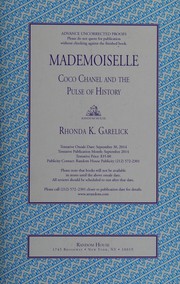
Rhonda K. Garelick's 608-page biography reads Coco Chanel against the political history of her century — the world wars, Vichy France, the Cold War — rather than treating her as a fashion figure alone. It traces how the orphan from Aubazine became the dominant designer of the 1920s, how she spent the German occupation at the Ritz with an Abwehr officer, and how she relaunched her house at 70 into an American-led comeback that made her one of the richest self-made women in the world.
Garelick's book is the one to read if you want to understand that Chanel was not a fashion figure who happened to live through history but a founder who operated inside political currents she understood and used. The central tension for founders is visible on every page: the same instincts that made Chanel ruthless in business — her willingness to use anyone, her refusal to be sentimental about partners, her patience for long legal fights — are the same instincts that led her to write an Aryanisation letter against her Jewish partners in 1941 and register as an Abwehr agent. The book does not resolve that tension; it documents it.
For founders, the book is a case study in what happens when a founder's will to control her company meets a moment that has no clean choices. Chanel spent the 1920s and 30s trying to undo the 1924 Wertheimer deal that left her with only 10% of Parfums Chanel. When the Nazis occupied France and introduced Aryanisation law, she saw a legal mechanism to take back what she felt was hers. The move failed — the Wertheimers had already transferred control to a Gentile frontman — but the attempt is documented in declassified French and German intelligence files Garelick draws from. The lesson is not that Chanel was a monster (the evidence is complicated) but that founders who define themselves by their fight for control will find, in a crisis, that the fight has no natural boundary.