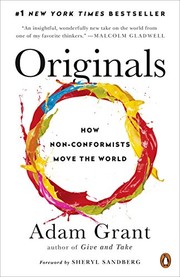
- Richard Branson: "One of the titles in Richard Branson's own 'My Top 65 Books To Read In A Lifetime' list on Virgin.com." source ↗
Adam Grant's Originals examines what causes people to champion novel ideas against an entrenched status quo. Using research from psychology, sociology, and business, he argues that originality is not a fixed personality trait but a set of behaviors anyone can adopt — procrastinating strategically, generating lots of bad ideas to get a few good ones, and choosing the right moment to speak up. The book profiles entrepreneurs, artists, and activists who succeeded not by ignoring risk but by managing it more intelligently than the status-quo defenders.
Richard Branson included Originals on his list of 65 books to read in a lifetime, and for a founder the thesis is central: the thing that makes someone start a company is the same trait that makes them annoying in a meeting. Grant argues that originals are often late to the status quo because they are busy imagining a better way — a characterization that fits Branson, who started Student magazine, then a mail-order record business, then an airline, moving across categories precisely because he never accepted that the existing players had solved the problem.
Grant's research upends the common founder myth of the lone visionary who knows they are right while everyone doubts. What actually characterizes successful originals is not confidence but doubt — they doubt the status quo deeply while managing their own fear of failing. Grant shows that the founders who succeeded were not the ones who ignored risk but the ones who reframed it: they saw the risk of not starting as greater than the risk of failing. Branson structured his Virgin Atlantic launch to cap personal losses — not because he was fearless, but because he managed risk intelligently.
The book also covers the 'equity effect' in negotiation (why asking for what you deserve works even when it is uncomfortable), the value of generating many bad ideas (Picasso painted 1,800 paintings in one year alone), and why the worst enemy of originality is not a hostile culture but a culture that is merely supportive without being demanding. For founders building teams, the practical takeaway: hire people who argue with you, reward dissent, and build systems that surface bad news before it is too late to fix.