Founder connections
- Ed CatmullCritical response; limits of the book’s Pixar accountCatmull identifies DisneyWar and says Pixar declined its interview requests, so its Pixar sections reflect Disney-side sources. He gives a bounded response rather than a recommendation; the exchange does not prove he read every page.Source
Summary
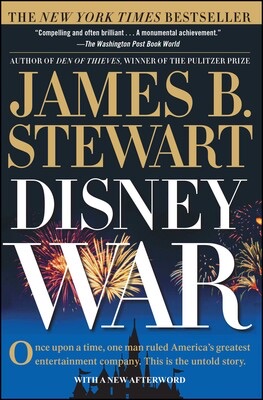
James B. Stewart examines the struggle for power at the Walt Disney Company during Michael Eisner’s leadership. Drawing on interviews and internal documents, he follows disputes among senior executives and directors, including Roy Disney’s campaign against Eisner. The account explores Jeffrey Katzenberg’s departure, Michael Ovitz’s troubled appointment as president and the breakdown of Disney’s relationship with Pixar and Steve Jobs. It places those conflicts inside a business whose films, parks and characters depended on both creative work and corporate control. The result is a company history centered on the choices, relationships and board decisions behind a public battle over Disney’s future.
Why read it Our view
Read for the effect of senior hiring, trust and board oversight on a creative business. Compare the needs of a powerful distribution partner with those of a studio whose product depends on creative control and a stable working relationship.
Written about
- Michael OvitzSubstantial executive-career subjectStewart’s account examines Ovitz’s appointment as Disney president and the failed working relationship that followed. The publisher identifies this as a central question in the book. It is about his Disney tenure, not a recommendation by him.Source