- Warren Buffett: "What Ben had recommended, Charlie demanded." source ↗
- David Senra Senra turned his notes on the new edition into a numbered list of maxims, opening with “Find a simple idea and take it seriously” and “Good ideas are rare. When you find one bet heavily.” source ↗
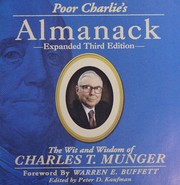
Poor Charlie's Almanack, edited by Peter Kaufman, compiles decades of Charlie Munger's speeches, talks, and writings into a single volume covering his approach to rational thinking, investing, and living well. Its centerpiece is Munger's case for building a "latticework of mental models" drawn from psychology, economics, physics, and biology so that judgment improves across every domain of life, not just markets. It also documents his investment partnership with Warren Buffett at Berkshire Hathaway and his philosophy of avoiding stupidity rather than chasing brilliance.
Munger's core idea for founders is that most bad decisions come not from lacking one more clever insight but from failing to avoid an obvious, avoidable mistake — his famous line that it is remarkable how much long-term advantage people like him have gotten from trying to be consistently not stupid, rather than trying to be very intelligent. David Senra returns to this constantly on Founders: the highest-leverage move a founder can make is often just removing a known source of failure — bad partners, bad incentives, bad habits — rather than searching for a breakthrough.
The latticework of mental models is the book's other load-bearing idea for operators: instead of forcing every problem through one favorite framework, Munger argues for pulling the right tool from psychology, math, or biology depending on the situation, and for practicing inversion — figuring out how a venture could fail, then systematically avoiding those paths, rather than only strategizing forward from where you are.
Munger's emphasis on rationality, patience, and reading voraciously ties directly into his investment maxim that a great business at a fair price beats a fair business at a great price — a principle founders apply just as much when hiring, choosing partners, and picking which opportunities to pursue as when allocating capital. Senra frequently pairs Munger's wisdom with Buffett's, treating the two as a single durable operating philosophy: think clearly, act rationally, avoid unforced errors, and compound relentlessly over decades.