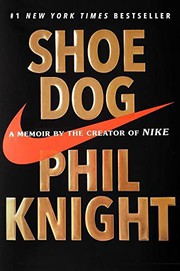
- Bill Gates: "Shoe Dog, Phil Knight’s memoir about creating Nike, is a refreshingly honest reminder of what the path to business success really looks like. It’s a messy, perilous, and chaotic journey riddled with mistakes, endless struggles, and sacrifice." source ↗
- Warren Buffett: "The best book I read last year was Shoe Dog, by Nike’s Phil Knight. Phil is a very wise, intelligent and competitive fellow who is also a gifted storyteller." source ↗
- David Senra — One of the first books of the Founders project — episode #10 (2017). source ↗
Shoe Dog is Phil Knight's memoir of founding Blue Ribbon Sports, the shoe-importing distributor that became Nike. It covers the company's precarious first two decades — from selling Japanese Tiger running shoes out of his car to a near-fatal cash crunch with its bank, to the birth of the Nike brand and swoosh — told with unusual candor about how close the company repeatedly came to failing.
Knight's core message, which David Senra treats as one of Founders' foundational episodes (and one Senra says he has re-read more than almost any other book on the podcast), is that a great company rarely looks great while it's being built. Blue Ribbon Sports spent most of its first decade insolvent in all but name — perpetually out of cash, chronically in conflict with its bank, and one bad shipment away from collapse — while still growing revenue every year. Senra's framing is that founders should expect this: growth and near-death are not contradictory, they are often the same phase of the same company.
The book is also, in Senra's telling, a case study in how far an idiosyncratic, loyal team of "misfits" can take a company when a conventional resume pool would never have assembled it — an accountant, a track coach, a disabled ex-athlete, and a law-school dropout founder. Knight's central discipline was to keep placing large, asymmetric bets (borrowing against inventory he didn't yet have, committing to shoe orders before he had buyers) because he judged the downside of moving slowly to be worse than the downside of running out of money. Senra repeatedly extracts Knight's line to "just don't stop" as the operative principle: perseverance compounds in a way that any single decision doesn't.
For founders specifically, the practical takeaways are about capital fragility (know exactly how thin your margin for error is and act accordingly), the value of a founding team bound by loyalty rather than just competence, and the idea that a "crazy idea" only looks crazy in retrospect if it fails — the founders living it never experienced it as a strategy, only as a series of forced, urgent decisions.