P.T. Barnum
Phineas Taylor Barnum (5 July 1810 – 7 April 1891) was a Connecticut shopkeeper-turned-showman who became the master promoter of his age. After his father died leaving the family in debt when Barnum was 16, he ran a newspaper, a lottery and a succession of ventures before buying New York's American Museum in 1841 and turning it into a sensation with ever-more-remarkable exhibits. He made Joice Heth, General Tom Thumb and 'Swedish Nightingale' Jenny Lind famous, went bankrupt at 50 and rebuilt himself, and in his final quarter-century transformed himself from a hoax-and-humbug huckster into the world's first billionaire-style entertainment impresario by merging his circus with James Bailey's — creating the Barnum & Bailey Greatest Show on Earth.
Contents
- 1810Born 5 July in Bethel, Connecticut, to innkeeper Philo Barnum; named after his maternal grandfather, noted speculator Phineas Taylor.
- 1826His father dies when Barnum is 16, leaving the family in debt and Barnum determined to work only for himself.
- 1829Starts a newspaper and, within months, is sued for libel and jailed — releasing himself to a celebratory parade and a first taste of marshaling public attention.
- 1835Launches his showman career by exhibiting Joice Heth, an enslaved woman he presents as the 161-year-old former nurse of George Washington.
- 1841Buys Scudder's American Museum in New York on credit, filling it with curiosities and spectacular exhibits that make it the city's top attraction.
- 1842Introduces Charles Stratton, the short performer he promotes worldwide as 'General Tom Thumb.'
- 1850Tours Swedish soprano Jenny Lind, 'the Swedish Nightingale,' across America to enormous crowds and profit.
- 1855Goes bankrupt on an overambitious real-estate and manufacturing project he knew little about — a circle-of-competence failure.
- 1870Returns to form as a circus impresario, and in 1881 merges his circus with James Bailey's to form Barnum & Bailey, 'The Greatest Show on Earth.'
- 1891Dies 7 April in Bridgeport, Connecticut, having served as the city's mayor and become one of the most famous — and by some reckonings the first — self-made entertainment magnate.
- Promote relentlessly, but promote something you genuinely love sharing. Episode #137 frames Barnum's genius not as manipulation but as promotion — 'Promoting is just sharing what you love.' He built a life around one simple idea: promoting wholesome entertainment so people could enjoy their time, taken to extremes.
- Stay inside your circle of competence. Barnum's ventures succeeded when they drew on his showman instincts and failed when he chased schemes in areas he knew less well — his bankruptcy at 50 came from real-estate and manufacturing gambits. The episode reads this as a case for staying within what you actually understand (echoing Munger and Buffett).
- Think in second-order effects, not the obvious play. The episode stresses that 'Barnum is never focused on the obvious. He is always focused on 2nd order effects' — engineering attention through indirect, multiply-cascading tactics rather than direct appeal.
- Your own story and self-confidence are an asset to be managed. Broke and 'in the depths' at 50, Barnum rebuilt himself on the conviction that he could earn a living again — 'I did it before. I'll do it again.' His autobiography sold over a million copies, a self-promotional machine he kept running all his life.
- If you can't beat the newer masters at their own game, join them. Facing younger rivals (Bailey and partners) who had turned his own methods against him, Barnum chose to merge rather than compete — 'foes worthy of my steel' became partners in the Greatest Show on Earth.
- Without promotion, something terrible happens — nothing.Barnum's core insight: a great product without attention is invisible. He spent lavishly on advertising, invented the press release, and understood that controversy drives coverage. His American Museum in New York drew 38 million visitors over 25 years — more than the population of the United States at the time.
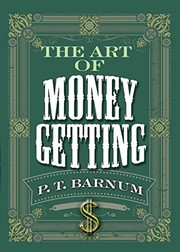
- Money is a terrible master but an excellent servant.From his 1880 book The Art of Money Getting. Barnum believed that wealth was a tool, not a goal, and that the pursuit of money for its own sake was a recipe for misery. He gave away much of his fortune to his hometown of Bridgeport, Connecticut.
- The noblest art is that of making others happy.Barnum didn't see himself as a huckster but as an entertainer. He filled his museum with curiosities, performances, and spectacles because he believed that giving people joy was a legitimate and honorable profession. The criticism never bothered him: the crowds spoke louder.
- Whatever you do, do it with all your might.Barnum's philosophy on work and life. He believed half-measures produced half-results. When he entered a business, whether it was running a museum, managing a singer (Jenny Lind), or launching a circus, he committed completely and outworked everyone.
- Every crowd has a silver lining.Barnum's cheerful inversion of the proverb. He saw opportunity in every gathering of people and built his entire business around the insight that audiences want to be amazed. He didn't wait for demand — he created it with posters, parades, and stunts that made people curious.

Sources4
- P.T. Barnum — Wikipedia
- Founders Podcast, Episode #137 — P.T. Barnum — Founders Podcast
- The Life of P.T. Barnum, Written by Himself (Open Library record) — Internet Archive
- The Art of Money Getting (Open Library record) — Internet Archive