J.P. Morgan
John Pierpont Morgan (17 April 1837 – 31 March 1913), born in Hartford, Connecticut, was the son of international banker Junius Spencer Morgan. Trained in London and Frankfurt, he returned to New York and rose through Drexel, Morgan & Co. into the dominant American private banker of the Gilded Age. He reorganized bankrupt railroads — the 'morganization' of an industry — financed industrial consolidation from U.S. Steel to General Electric, personally rescued the banking system during the 1907 panic by acting as America's central bank, and built the family firm into the House of Morgan. A founder less of a product than of modern American finance itself, he died in 1913 as the last of the great private bankers.
Contents
- 1837Born 17 April in Hartford, Connecticut, to Junius Spencer Morgan and Juliet Pierpont.
- 1854Sent to school in Switzerland and trained in banking in London and Frankfurt as Junius molded him for the family calling.
- 1857Returns to New York and begins his Wall Street career as an accountant, soon dealing in bills of exchange and railroad securities.
- 1871Partners with Philadelphia banker Anthony Drexel to form Drexel, Morgan & Co., the firm that becomes J.P. Morgan & Co.
- 1890Takes over the firm after Junius's death, becoming the leading banker of American corporate consolidation.
- 1895Rescues the U.S. Treasury from a gold-reserve crisis, lending $62 million in gold to back the dollar.
- 1901Forms U.S. Steel, the first billion-dollar corporation, buying out Andrew Carnegie for $480 million and consolidating the steel industry.
- 1907Leads the private rescue of the banking system during the Panic of 1907, personally organizing funds to save trust companies and the Stock Exchange, effectively acting as the central bank.
- 1913Dies 31 March in Rome; the Pujo Committee's 'money trust' hearings the prior year and his passing mark the end of the era of the private banker.
- Order and stability can be a founder's real product. Morgan saw finance as imposing order on chaos: he reorganized bankrupt railroads into coherent systems ('morganization') and personally stabilized the 1907 panic — his product was confidence and structure rather than any single good.
- Details are a founder's job, even after the firm is famous. Pierpont reported, 'I can sit down at any clerk's desk, take up his work where he left it and go on with it. I don't like being at any man's mercy' — retaining the founder's command of operational minutiae.
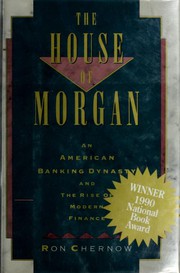
- Momentum and crises will serve a well-positioned, well-capitalized firm. Episode #139 notes the recurring pattern that 'Morgan benefits from financial crises' — panics brought him the distressed assets and reorganization mandates that made the House of Morgan.
- A founder must guard reputation as capital. Junius's injunction to Pierpont — 'Never, under any circumstances, do an action which could be called in question if known to the world' — became the house rule, treating integrity and discretion as the firm's core asset.
Nothing verified yet — no recommendations on record.
Sources5
- J.P. Morgan — Wikipedia
- Founders Podcast, Episode #139 — The House of Morgan — Founders Podcast
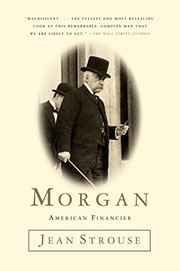
- Morgan: American Financier (Open Library record) — Internet Archive
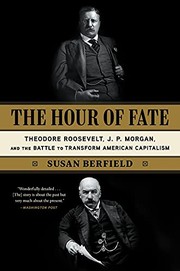
- The Hour of Fate (Open Library record) — Internet Archive
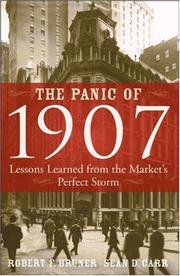
- The Panic of 1907 (Open Library record) — Internet Archive