Joseph Pulitzer
Joseph Pulitzer built newspaper businesses that joined mass readership, political influence and public campaigns. Born in Makó, Hungary, in 1847, he came to the United States as a young man and served in the Union Army. He later reached St. Louis, learned English and entered journalism at the German-language Westliche Post. A controlling interest in that paper in 1872 gave him an early role as a publisher. His durable St. Louis business took shape through purchases and a merger. In December 1878 he bought the Evening Dispatch at auction and combined it with John A. Dillon's Evening Post. The resulting Post-Dispatch became wholly his in 1879. In 1883 he bought the struggling New York World from Jay Gould. His first edition set out a paper that would be affordable, lively and committed to exposing abuse. Its product mixed investigations and public causes with illustrations, entertainment and promotions. In 1885 the World helped close the funding gap for the Statue of Liberty's pedestal by inviting small donations and printing donors' names. Success did not make those methods harmless. The circulation battle with William Randolph Hearst after 1895 drove both papers toward more extreme and less accurate coverage. Their reporting around the Spanish-American War became a lasting example of yellow journalism. In 1899 newsboys refused to distribute the World and Journal over increased wholesale prices. The World's own business records show management worrying about damage to circulation and the need to restore public trust. An affordable paper could still impose costs on the children who sold it. Pulitzer's health and organization also shaped the business. In 1890 the World announced his withdrawal from the editorship as his eyesight failed. Editors managed the office, but he continued to direct the papers from a distance. Columbia's archives preserve the letters, memoranda and coded messages through which this remote owner remained involved. The record combines strong editorial ambition with frequent changes of orders and authority. Pulitzer tried to give journalism a stronger professional base. He negotiated with Columbia to establish a school, defended specialized education in his 1904 essay The College of Journalism and set out funding and prizes in his will. The will made accuracy and public benefit tests for reporting awards; it also allowed an award to be withheld when work fell below the required standard. He died in 1911. Columbia's school opened in 1912, and the first Pulitzer Prizes followed in 1917. This legacy belongs beside the record of his newspapers: an important public institution built by a publisher whose own pursuit of readers had exposed the need for firmer limits.
Contents
Career highlights
- 1872Obtained a controlling interest in the Westliche Post in St. Louis.
- 1878Bought the St. Louis Evening Dispatch at auction on December 9 and merged it with the Evening Post.
- 1879The paper became the Post-Dispatch; Pulitzer bought John A. Dillon's half later that year.
- 1883Purchased the New York World; his first edition as owner appeared on May 11.
- 1885The World's public appeal helped raise the remaining money for the Statue of Liberty's pedestal.
- 1890Withdrew from the editorship of the World as his health and eyesight worsened.
- 1899Newsboys struck against the World and Hearst’s Journal over increased prices.
- 1903Renewed his plan for a journalism school with Columbia under President Nicholas Murray Butler.
- 1904Published The College of Journalism and signed the will that set out school funding and journalism prizes.
- 1911Died on October 29 aboard his yacht in Charleston harbor.
- 1912Columbia's journalism school opened on September 30, after his death.
- 1917The first Pulitzer Prizes were awarded.
Lessons for founders
- Define the reader and the promise. Pulitzer's first World editorial joined a low price, lively presentation and a public purpose. State what your product will do for the people you want to reach.
- Let people take part in a useful goal. The pedestal campaign welcomed small gifts and named contributors. A public cause can give readers a useful role beyond buying the product.
- Set limits before an audience race. The contest with Hearst helped reward extreme and inaccurate stories. Decide which standards must hold when growth is under pressure.
- Check who bears the cost of growth. The newsboys' strike shows the strain in the distribution model. Review the effects of price changes on the people who bring your product to customers.
- Make authority clear when you work at a distance. The archives preserve Pulitzer's remote direction and a manager's frustration with changing orders. Give office leaders a stable scope and clear decisions.
- Build standards into the institution. Pulitzer's will specified accuracy, public benefit and the option to withhold a prize. Turn a stated purpose into rules that can guide decisions after the founder is gone.
On the Founders podcast
2×Read about them
3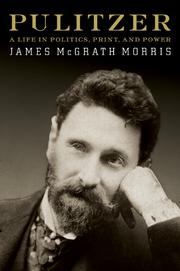
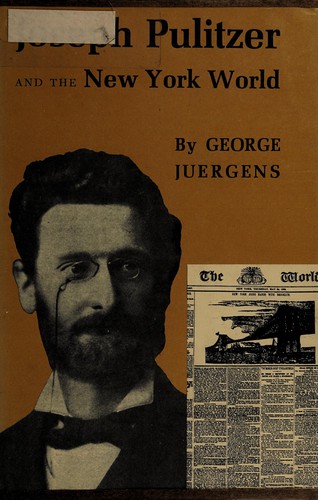
Essays
3- 1904The College of JournalismHis case for a school of journalism, published in The North American Review, May 1904, pages 641–680. The link gives the original journal record.
- 1904Extracts from the Will of Joseph PulitzerThe April 16 will sets out support for journalism education, award standards and the advisory board’s powers.
- 1883First World editorial under Pulitzer’s ownershipColumbia reproduces his May 11 editorial statement about price, news and service to the public.
Books on their shelf
Nothing verified yet — no recommendations on record.
Sources
15
- Biography of Joseph Pulitzer — Seymour Topping — The Pulitzer Prizes
- Joseph Pulitzer and The World: St. Louis Post Dispatch — Columbia University Libraries
- Joseph Pulitzer and The World: The World — Columbia University Libraries
- Joseph Pulitzer and The World: Statue of Liberty — Columbia University Libraries
- Joseph Pulitzer and The World: Health Problems — Columbia University Libraries
- Our History — Columbia Journalism School
- Newsies: Topics in Chronicling America — Library of Congress
- Joseph Pulitzer and The World: Newsboys' Strike — Columbia University Libraries
- Extracts from the Will of Joseph Pulitzer — The Pulitzer Prizes
- History of The Pulitzer Prizes — The Pulitzer Prizes
- Joseph Pulitzer and The World: School of Journalism — Columbia University Libraries
- The College of Journalism — The North American Review / JSTOR
- Joseph Pulitzer and The World: Pulitzer Biographies — Columbia University Libraries
- Chautauqua Lecture Series: Pulitzer: A Life in Politics, Print, and Power — Pulitzer on the Road
- Joseph Pulitzer, episodes 135 and 422 — Founders