EL
Estée Lauder
Estée Lauder Companies · 1908–2004
Born July 1, 1908 · Died April 24, 2004
Estée Lauder (born Josephine Esther Mentzer, 1 July 1908, Corona, Queens, to Hungarian and Czech Jewish immigrants) learned cream-making from her chemist uncle, John Schotz, and sold his formulas table-to-table in beauty shops. She married Joseph Lauter in 1930, divorced him in 1939, remarried in 1942, and in 1946 the couple founded Estée Lauder Cosmetics around four products, winning a Saks Fifth Avenue counter in 1947. She built the brand on free samples and tight control of distribution, then extended it into Youth Dew (1953), Aramis (1964), and Clinique (1968) before a 1995 IPO. Time named her the only woman on its 1998 list of the century’s 20 most influential business geniuses.
Contents
Career highlights
- 1908Born Josephine Esther Mentzer on 1 July in Corona, Queens, to Rose and Max Mentzer, Hungarian- and Czech-born Jewish immigrants; her exact birth year is disputed (see research notes).
- 1924Her maternal uncle, chemist John Schotz, opens New Way Laboratories in New York, formulating Six-In-One Cold Cream and Dr. Schotz’s Viennese Cream — she renames one blend Super Rich All-Purpose Creme and starts selling it to friends.
- 1927Approaches Florence Morris of the House of Ash Blondes beauty salon with her uncle’s creams, demonstrating them by hand on customers’ faces rather than describing them, and wins a place selling at the salon.
- 1930Marries Joseph Lauter on 15 January; the couple later restyle the family name from Lauter to Lauder.
- 1933Son Leonard Lauder is born on 19 March.
- 1939Divorces Joseph, citing his lack of drive for the cosmetics business she wanted to build.
- 1942Remarries Joseph; he takes over manufacturing while she runs sales, a partnership that lasts until his death in 1983.
- 1946The couple incorporate Estée Lauder Cosmetics at 501 Madison Avenue around four products — a cleansing oil, a Crème Pack, Super Rich All-Purpose Creme, and a skin lotion.
- 1947Wins a counter at Saks Fifth Avenue with an initial order of roughly $800, after building demand with free lipstick giveaways at a Waldorf-Astoria charity event; she pairs the counter with mailed gift-with-purchase cards to store charge-card holders.
- 1953Launches Youth-Dew, a bath oil priced at $8.50 so a woman could buy it for herself rather than wait for a gift; by the late 1950s it accounts for roughly 80% of company sales.
- 1958Son Leonard Lauder joins the company full-time after his Navy discharge, building its first dedicated sales force.
- 1964Launches Aramis, credited as the first prestige men’s fragrance widely distributed through department stores.
- 1968Launches Clinique, developed with daughter-in-law Evelyn Lauder, Vogue beauty editor Carol Phillips, and dermatologist Norman Orentreich, as the first allergy-tested, dermatologist-guided cosmetics line.
- 1978Becomes the first woman to receive the Chevalier grade of France’s Legion of Honour, on 16 January.
- 1995Estée Lauder Companies goes public on the NYSE on 16 November at $26 a share, selling 13.8 million shares and raising more than $450 million while the family retains roughly 93% of voting stock.
- 1998Time names her the only woman on its list of the 20th century’s 20 most influential business geniuses, alongside Henry Ford, Walt Disney, and Sam Walton.
- 2004Dies of cardiopulmonary arrest on 24 April at her Manhattan home, having received the Presidential Medal of Freedom earlier that year.
Lessons for founders
- Touch the customer; don’t just tell them. Lauder’s own line, quoted from her 1946 launch, was that she touched fifty faces a day — she demonstrated creams by applying them to a customer’s hand or face herself rather than describing them, a habit she kept up personally at store counters for decades.
- Make the free sample the acquisition channel, not a cost to minimize. At Saks in 1947 she had gift cards for free products mailed to the store’s own charge-card holders to pull them to her counter, and later gave away Youth-Dew as a gift-with-purchase before it became the bestseller that carried the company through the 1950s.
- Turn scarcity of distribution into positioning. She refused to sell through drugstores or mass retail, insisting on department-store counters she could control the look and staffing of, keeping the brand aspirational even as rivals like Revlon chased broader distribution and outspent her on advertising.
- When you can’t afford the ad, work the counter yourself. Through the 1940s and ’50s, with a fraction of Revlon’s marketing budget (Estée Lauder’s revenue was about $40 million against Revlon’s $314 million by 1968), she personally staffed new store openings and trained sales staff, treating in-person demonstration as her advertising.
- Make the founder’s persona part of the product. The shift from the family name Lauter to the more glamorous Lauder, and her insistence on an aspirational, faintly aristocratic public image, made ‘Estée’ a name customers were buying alongside the cream — indistinguishable from the brand itself.
- Extend into new categories as new brands, not just new products. Aramis (1964) opened a men’s fragrance category under its own name rather than as an Estée Lauder men’s line, and Clinique (1968) — built with a dermatologist and a magazine editor she recruited directly — opened a clinical, fragrance-free category as its own label.
- A business partnership can survive a personal rupture if the fit still works. She divorced Joseph Lauter in 1939 over his lack of business drive, then remarried him in 1942 once the company needed a manufacturing partner she trusted; he ran production while she ran sales for the next four decades.
- Keep control even after the outside money arrives. The 1995 IPO sold only 13.8 million shares at $26 each — a fraction of the company — leaving the Lauder family with roughly 65% of common stock and about 93% of voting stock, so going public didn’t mean giving up control.
- Treat a single rejection as a problem to route around. Before she had a real counter anywhere, she generated demand by giving away 80 lipsticks in metal cases at a Waldorf-Astoria charity event; the resulting customer requests were what got her into Saks Fifth Avenue in 1947.
On the Founders podcast3×
Read about them2
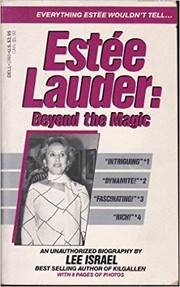
The unauthorized 1985 biography, published the same year as Lauder’s own memoir; Lauder reportedly tried to block it. Israel’s research (she later became notorious as a literary forger) documented discrepancies in Lauder’s public backstory, including her claimed birth date and her account of her uncle’s role in the original formulas — the fuller, less flattering picture the autobiography omits. source ↗
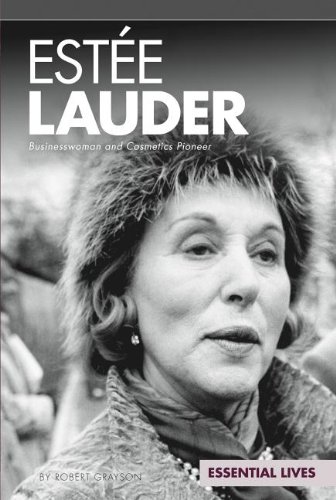
A young-adult overview (Essential Lives series, Abdo Publishing, 2013, aimed at grades 7–10) with timelines and a bibliography. Competent as a factual summary but not a substitute for either the memoir or Israel’s biography. source ↗
In their own words1
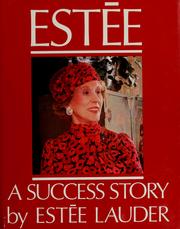
Her own 1985 memoir — 332 pages of, in the Internet Archive’s description, ‘personal reminiscence, business triumphs, and high society.’ Polished and self-mythologizing; useful for her voice and framing, not for a critical account. source ↗
What they recommend
Nothing verified yet — no recommendations on record.
Sources10
- Estée Lauder (businesswoman) — Wikipedia
- Estee Lauder (company history) — Cosmetics and Skin
- Estée Lauder: From One Woman’s Passion to Cosmetics Empire — American Business History Center
- Clinique — Wikipedia
- Aramis (fragrance) — Wikipedia
- Our Founder — The Estée Lauder Companies Inc.
- Estee Lauder Inc. — Encyclopedia.com
- Estée: a success story (catalog record) — Internet Archive
- Estée Lauder: Beyond the Magic (catalog record) — Internet Archive
- Estée Lauder: Businesswoman and Cosmetics Pioneer (listing) — AbeBooks