EF
Enzo Ferrari
Ferrari · 1898–1988
Born February 18, 1898 · Died August 14, 1988
Enzo Ferrari (18 February 1898 – 14 August 1988), born in Modena, lost his father and brother to a 1916 flu epidemic and was rejected by Fiat before driving for CMN and then Alfa Romeo from 1920. He founded Scuderia Ferrari in 1929 as Alfa's racing arm, split from Alfa in 1939 under a four-year non-compete, and in 1947 fielded the first car under his own name, the 125 S, from Maranello. Road cars mainly financed the race team, which won nine drivers' championships, survived a fatal 1957 Mille Miglia crash and a 1961 staff walkout, and outlasted a collapsed 1963 Ford buyout that sparked the Ford–Ferrari war at Le Mans. He sold half the company to Fiat in 1969 and died in Maranello in 1988.
Contents
Career highlights
- 1898Born 18 February in Modena to Alfredo Ferrari, a metal-workshop owner, and Adalgisa Bisbini.
- 1916His father Alfredo and older brother Alfredo Jr. both die during the flu epidemic that swept wartime Italy, leaving the eighteen-year-old Enzo effectively alone.
- 1919Rejected for a job by Fiat in Turin; hired instead as a test driver by CMN in Milan and makes his racing debut that November at the Targa Florio.
- 1920Joins Alfa Romeo's racing department as a driver.
- 1923Wins the Circuito del Savio at Ravenna on 17 June; the parents of fallen WWI ace Francesco Baracca, including Countess Paolina Baracca, give him their son's personal prancing-horse emblem for good luck.
- 1929Founds Scuderia Ferrari in Modena to run Alfa Romeos for gentleman racers, formalizing it as Alfa's semi-official competition arm.
- 1939Leaves Alfa Romeo in October after clashing with managing director Ugo Gobbato; the severance bars him from building or racing cars under his own name for four years, so he founds Auto Avio Costruzioni instead, fielding two 815s at the 1940 Mille Miglia.
- 1943Relocates the factory from Modena to Maranello ahead of Allied bombing raids; the Modena works are bombed twice regardless.
- 1947Debuts the 125 S, the first car built under the Ferrari name, on 11 May at Piacenza; it wins its first race two weeks later at the Rome Grand Prix.
- 1951Wins Ferrari's first Formula One World Championship Grand Prix on 14 July, when José Froilán González takes the British GP at Silverstone, ending Alfa Romeo's run atop the new championship.
- 1956Son Alfredo "Dino" Ferrari, who had proposed the 1.5-litre V6 engine that would later carry his name, dies on 30 June at 24 after a long illness.
- 1957A Ferrari driven by Alfonso de Portago crashes at Guidizzolo during the Mille Miglia on 12 May, killing de Portago, his co-driver, and nine spectators, five of them children; Ferrari is charged with manslaughter, and the open-road Mille Miglia is cancelled after that year.
- 1961Eight senior staff, including engineers Carlo Chiti and Giotto Bizzarrini and team manager Romolo Tavoni, resign en masse after Ferrari fires commercial director Girolamo Gardini over objections to wife Laura's growing influence at the factory; the group later founds rival firm ATS. Ferrari is acquitted of the Guidizzolo manslaughter charge the same year.
- 1963Negotiations to sell Ferrari to Ford collapse when Ford insists on controlling the racing budget; Henry Ford II responds by funding the GT40 program, which beats Ferrari at Le Mans four straight years starting in 1966.
- 1969Sells 50 percent of Ferrari to Fiat for capital and stability while keeping the racing division under his own authority.
- 1977Niki Lauda wins his second drivers' championship for Ferrari, having already won in 1975, before leaving for Brabham over friction with the team.
- 1988Dies on 14 August in Maranello at 90; four weeks later, on 11 September, Ferrari scores an emotional 1–2 finish at the Italian Grand Prix at Monza, the team's only win of the season.
Lessons for founders
- Let the product you love fund itself. From the 1947 125 S onward, Ferrari sold small runs of expensive road cars to wealthy customers largely to bankroll Scuderia Ferrari's Grand Prix and sports-car program, which rarely paid for itself. The road-car business existed to finance the racing, not the reverse.
- Make competition itself the product. Ferrari spent little on conventional advertising; the brand's value came from race results, starting with the 125 S's debut wins in 1947 and building to nine drivers' championships by 1988. Track record, not marketing copy, sold the cars.
- Set your best talent against each other, on purpose. Ferrari was known for pairing rival engineers and drivers on the same team and letting them compete for his favor and equipment, a management style biographers trace across decades — and one strand of the tension that fed the 1961 staff walkout. He treated internal rivalry as leverage, not a problem to smooth over.
- Undersupply the market on purpose. Ferrari kept production runs small and vetted who was allowed to buy, deliberately holding output below demand so cars stayed scarce and desired. The precise line often quoted online — that he built 'one car less than the market demands' — has no verified primary source, but the underlying practice is documented across the biographies.
- Let myth do the work silence leaves behind. Ferrari rarely attended races in person after the 1930s and gave famously terse interviews from behind dark glasses in Maranello. That distance let the press and public build a legend around him that a more visible founder couldn't have sustained.
- A single public tragedy can end a program overnight. The 1957 Mille Miglia crash at Guidizzolo, in which a Ferrari driven by Alfonso de Portago killed himself, his co-driver, and nine spectators, led to a manslaughter charge against Ferrari (he was acquitted in 1961) and to the cancellation of the open-road Mille Miglia after that year — a reminder that a founder's product can create liabilities no racing success offsets.
- Guard control over the thing you started, even at the cost of the deal. In 1963 Ferrari walked away from a near-complete sale to Ford rather than let Ford approve the racing budget, a decision that cost him a fortune in the near term but kept the race team under his sole authority — and provoked Ford into building the GT40 program that beat Ferrari at Le Mans four years running from 1966.
- Sell equity before you're forced to sell control. By 1969, needing capital, Ferrari sold half the company to Fiat while explicitly retaining authority over racing — trading commercial ownership for financial security without repeating the surrender of control that had killed the Ford deal six years earlier.
- An unresolved succession leaves the company exposed. Ferrari's only legitimate son and presumed heir, Dino, died in 1956 at 24; his other son, Piero, born to his longtime mistress Lina Lardi, wasn't legally recognized until after Enzo's wife Laura died in 1978. The succession question that should have been settled decades earlier was still unresolved when Ferrari himself died in 1988.
On the Founders podcast3×
Read about them5
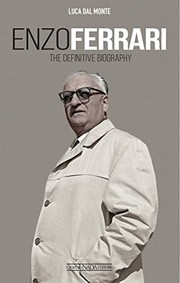
A nearly 1,000-page biography by a former Ferrari and Maserati communications chief, drawing on company and family archives; widely cited as the most exhaustively researched English-language account. Originally published in Italy in 2016 as Ferrari Rex (Giorgio Nada Editore), which won the Premio Selezione Bancarella Sport. source ↗
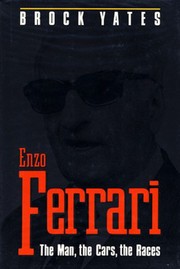
An American motoring journalist's 1991 biography that leans into Ferrari's contradictions — engineer, promoter, and controlling boss — built on decades covering the man and the company. source ↗
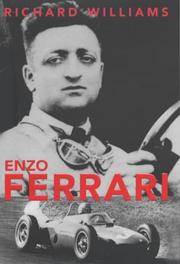
A biography by the Guardian's chief sports writer, first published in 2001, drawing on interviews with surviving Ferrari-era figures including driver John Surtees. source ↗
Ferrari's own account, written after Dino's 1956 death and first published in Italian as Le mie gioie terribili, then in English in 1963 by Hamish Hamilton (London) with a foreword by Stirling Moss. Predates the ISBN system, so no ISBN is listed here; later reprints circulate under the same title or as My Terrible Joys: The Enzo Ferrari Memoirs. Long on race-day anecdotes and driver assessments, short on personal disclosure. source ↗
What they recommend
Nothing verified yet — no recommendations on record.
Sources12
- Enzo Ferrari — Wikipedia
- Scuderia Ferrari — Wikipedia
- Alfredo Ferrari — Wikipedia
- Ferrari — Wikipedia
- Ferrari 125 S — Wikipedia
- 1951 British Grand Prix — Wikipedia
- 1988 Italian Grand Prix — Wikipedia
- Ferrari F40 — Wikipedia
- Palace REVOLT: How Enzo Ferrari's wife caused a Formula 1 walk-out in 1961 — PlanetF1
- Enzo Ferrari: Power, Politics, and the Making of an Automotive Empire — David Bull Publishing
- The Enzo Ferrari Memoirs: My Terrible Joys (editions listing) — AbeBooks
- Open Library — Internet Archive