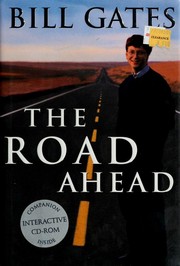
Bill Gates's first book, written with Nathan Myhrvold and journalist Peter Rinearson and published by Viking in November 1995 with a companion CD-ROM. Part memoir of the personal-computer industry and part forecast, it predicts the 'information highway' — networked commerce, pocket devices, digital content — while treating the internet as a precursor rather than the destination; Gates issued a heavily revised, web-centered edition a year later.
Read it as a primary source on forecasting by the industry's most powerful forecaster, published the same year he wrote the 'Internet Tidal Wave' memo. What he got right is substantial: the content revolution, friction-free capitalism, pocketable connected devices, technology reshaping education and the home. What he got wrong is the famous part — the first edition underweighted the internet so visibly that Gates rewrote the book around the web for the 1996 revision. The shelf note for this library calls it exactly that: 'a useful record of what the industry's most powerful forecaster got wrong.'
The founder's lesson is in the correction, not the error. Within six months of publication, the 'Internet Tidal Wave' memo (26 May 1995) turned the entire company toward the web, and the revised Road Ahead made the reversal public. Forecasting wrong is survivable; being identified with the wrong forecast is optional. The book also captures how a platform owner thinks from inside a transition — which assumptions he checked and which he didn't — and that is worth more than any of its individual predictions.