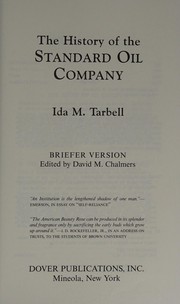
Ida Tarbell's landmark 1904 investigative work, originally serialised in McClure's Magazine, exposed the predatory tactics — railroad rebates, below-cost pricing, industrial espionage — through which John D. Rockefeller's Standard Oil built a monopoly controlling more than 90% of American oil refining. The book is considered a founding document of muckraking journalism and directly contributed to the Supreme Court's 1911 decision to break up Standard Oil under the Sherman Antitrust Act. Tarbell's father had been driven out of the oil business by Rockefeller, giving the work a personal dimension that sharpened its reporting without compromising its factual rigour.
David Senra covered this book on Founders (episode #22, "The History of the Standard Oil Company") and treats it as a companion piece to the Rockefeller biographies. Where Chernow's Titan gives the internal view of Rockefeller's psychology and Nevins's Study in Power gives the economic history, Tarbell's book provides the competitive landscape — the perspective of every competitor Rockefeller destroyed. For a founder, this is the most useful vantage point for understanding what it feels like to be on the other side of a relentlessly efficient operator.
The core lesson Senra extracts is that Rockefeller's advantage was not money or luck but information asymmetry: Standard Oil knew the railroad rates, the refinery costs, the market demand, and the competitor's shipping volumes better than anyone else in the industry, and used that knowledge to make surgical competitive moves that looked like brute force from the outside. Tarbell documents how Rockefeller systematically collected intelligence on every barrel shipped, every refinery built, every contract signed — a primitive but devastatingly effective data advantage that smaller competitors could not match. For a founder building in a network-effect or data-moat era, the lesson is that the best competitive advantage is knowing more than your competitors know about the business you're both in.