JD
John D. Rockefeller
Standard Oil · 1839–1937
Born July 8, 1839 · Died May 23, 1937
Founder of Standard Oil, who turned the chaotic, low-margin oil-refining trade of the 1860s into history's most dominant industrial monopoly. Son of a swindling, bigamous father and a devout Baptist mother, he apprenticed as a bookkeeper in Cleveland in 1855, entered oil refining in 1863, and built Standard Oil of Ohio in 1870 — absorbing 22 of 26 Cleveland rivals in the 1872 'Cleveland Massacre' and folding the industry into the 1882 Standard Oil Trust. The 1911 Supreme Court-ordered breakup made him the world's richest man; he then gave away roughly $530 million, founding the University of Chicago, the Rockefeller Institute, and the Rockefeller Foundation.
Contents
Career highlights
- 1839Born 8 July in Richford, New York, second of six children to Eliza Davison, a strict Baptist, and William Avery 'Devil Bill' Rockefeller, a traveling huckster who later posed as a deaf-mute peddler and, under the alias 'Dr. William Levingston,' as a cancer-curing physician and bigamist.
- 1853Family moved to the Cleveland, Ohio area as his father's income grew erratic and his absences lengthened; Eliza's discipline of thrift, work, and church tithing shaped him far more than his father's example did.
- 1855Took a ten-week bookkeeping course at Folsom's Commercial College that spring; after six weeks pounding Cleveland's streets for work, was hired as assistant bookkeeper at the produce house Hewitt & Tuttle on 26 September at 50 cents a day — he called it 'Job Day' and celebrated the anniversary every year for the rest of his life — and days later bought a ten-cent notebook, 'Ledger A,' in which he tracked every cent earned, spent, and given away.
- 1859Went into business for himself, forming the produce commission firm Clark & Rockefeller with Maurice Clark, seeded partly by a $1,000 loan from his estranged father at 10 percent interest.
- 1863Opened an oil refinery on Cleveland's 'The Flats' with chemist Samuel Andrews, entering the industry that would consume the rest of his career.
- 1865Bought out the Clark brothers at a private auction in February for $72,500, taking sole control of the refining business.
- 1870Incorporated Standard Oil of Ohio on 10 January with Henry Flagler, Samuel Andrews, his brother William Rockefeller, Stephen Harkness, and Oliver Jennings, capitalized at $1 million.
- 1872Used the secretly negotiated rail rebates of the South Improvement Company as leverage in the 'Cleveland Massacre,' absorbing 22 of Standard Oil's 26 Cleveland competitors within about four months — even after the scheme itself was publicly exposed and its charter revoked.
- 1882Formed the Standard Oil Trust on 2 January: 41 shareholders pooled their stock in 40 companies under nine trustees, a legal device his lawyers invented to run a national monopoly around state laws that barred owning out-of-state companies.
- 1890Helped found the University of Chicago with an initial $600,000 gift, the first installment of roughly $80 million he would give the school.
- 1901Founded the Rockefeller Institute for Medical Research in New York, later Rockefeller University.
- 1902Ida Tarbell began serializing her nineteen-part investigation of Standard Oil in McClure's Magazine, running through 1904 and later collected as The History of the Standard Oil Company — the account that made him the face of American monopoly for a generation of reformers; that same year he chartered the General Education Board with an initial $1 million gift.
- 1911The U.S. Supreme Court ruled 8–1 in Standard Oil Co. of New Jersey v. United States on 15 May that the trust was an unreasonable restraint of trade and ordered it broken into roughly three dozen independent companies; the value of his stock in the pieces made him, briefly, the richest man in the world.
- 1913Chartered the Rockefeller Foundation on 14 May 'to promote the well-being of mankind throughout the world,' backed by a planned $100 million endowment.
- 1914The Ludlow Massacre at a Colorado Fuel & Iron mine controlled by his son's holdings killed roughly twenty striking miners and family members on 20 April; the backlash led John D. Rockefeller Jr. to hire Ivy Lee, whose strategy — including a personally staged tour of the Colorado camps — is widely credited as the founding episode of modern corporate public relations.
- 1937Died 23 May in Ormond Beach, Florida, at 97, having given away roughly $530 million over his lifetime.
Lessons for founders
- Turn bookkeeping into a competitive weapon. From his first month as assistant bookkeeper at Hewitt & Tuttle in 1855 he kept 'Ledger A,' a ten-cent notebook recording every cent earned, spent, and given away — a habit of granular measurement he carried into Standard Oil, where he is remembered for quizzing a refinery foreman on the number of drops of solder used to seal five-gallon kerosene cans.
- Obsess over cost per unit, even after you dominate the market. Told that 40 drops of solder sealed each can, Rockefeller asked whether 38 would do; testing settled on 39, saving an estimated $2,500 in the first year and far more as exports scaled (Chernow, Titan, pp. 180–81). Across his career he is credited with cutting Standard Oil's unit refining costs by roughly half.
- Buy the bottleneck, not just the product. Standard Oil didn't stop at refining — it built its own barrel-making plants, bought tank cars, laid pipelines, and used its shipping volume to negotiate rail rebates, and through the South Improvement Company even drawbacks on competitors' shipments, that no independent refiner could match.
- Consolidate a fragmented, panicked industry — especially in a downturn. In the 1872 'Cleveland Massacre,' Standard Oil absorbed 22 of its 26 Cleveland competitors within four months, buying distressed refiners cheap once the South Improvement Company's rebate scheme had squeezed their margins; the same pattern repeated nationally through the 1870s.
- Reinvest earnings instead of extracting them early. Through the 1860s and 1870s Rockefeller plowed refining profits back into capacity, pipelines, and acquisitions rather than personal income, compounding a cost advantage years before he began drawing large dividends.
- Pay for the ability to deal with people — it is rarer than capital. "The ability to deal with people is as purchasable a commodity as sugar or coffee, and I pay more for that ability than for any other under the sun," he said, describing a hiring philosophy that brought in operators like Henry Flagler and John Archbold as much for temperament as for technical skill.
- Stay outwardly calm under sustained public attack. Through Ida Tarbell's 1902–04 McClure's exposé and the federal antitrust suit that followed, associates described him as unshakeable — golfing and gardening through the years the press vilified him, a composure biographers trace to his Baptist upbringing's emphasis on discipline over display.
- Treat philanthropy as an engineered enterprise, not ad hoc charity. Guided by adviser Frederick Gates, Rockefeller moved from personal tithing to institution-building — the Rockefeller Institute (1901), the General Education Board (1902), and the Rockefeller Foundation (1913), chartered 'to promote the well-being of mankind' with a planned $100 million endowment — applying the same systemization to giving that he had to refining.
- Manage your public image as deliberately as your balance sheet. After the 1914 Ludlow Massacre at a mine controlled by his son's holdings triggered nationwide outrage, the family hired Ivy Lee, whose strategy of proactive disclosure and a personally staged tour of the Colorado camps is widely credited as the founding episode of modern corporate public relations.
On the Founders podcast7×
Read about them5
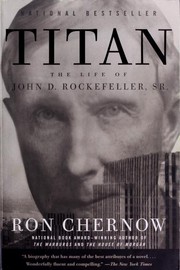
The definitive modern biography, drawing on Rockefeller family archives closed to earlier writers; the source for the solder-drop and 'purchasable ability' anecdotes used throughout this entry. source ↗
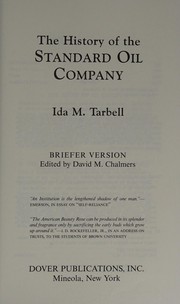
The hostile primary account: Tarbell's 1902–04 McClure's serial, expanded into this 1904 book, that made Standard Oil the face of American monopoly and helped force the 1911 breakup. Essential reading as the prosecution's case in print, not a neutral history. Caution: this ISBN is the 2003 Dover abridged 'briefer version' (Chalmers edition); the complete 1904 two-volume work has no ISBN. source ↗
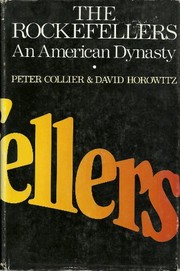
A multigenerational family biography rather than a study of John D. alone, useful for tracing how the fortune and the name were managed after him — including John Jr.'s handling of Ludlow. source ↗
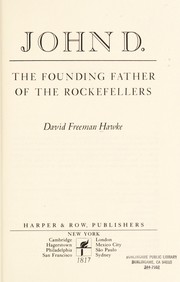
A shorter single-volume life, useful as a faster read than Chernow's 832 pages. Not to be confused with Allan Nevins's much longer two-volume Study in Power: John D. Rockefeller, Industrialist and Philanthropist (1953), which covers similar ground at greater length. source ↗
The standard scholarly biography. The original 1953 two-volume Scribner edition predates ISBNs; this ISBN is the 1959 Scribner one-volume abridgement. The file's Hawke entry references Nevins by name but the work was never shelved. source ↗
In their own words1

Rockefeller's own 1909 account, dictated late in life and heavy on genial anecdote; notable chiefly for what he chose to leave out — it contains almost nothing about the South Improvement Company or the Tarbell exposé. source ↗
What they recommend1
Taught Sunday school from it for decades and credited a Baptist minister's sermon — "get money, get it honestly, and then give it wisely" — as the origin of his financial philosophy.Rockefeller joined Cleveland's Erie Street Baptist Church as a teenager, became a trustee at 21, and taught Sunday school for decades; biographers treat his Baptist upbringing and churchgoing as the direct source of both his tithing discipline and his later philanthropic 'gospel of wealth.' source ↗
Sources13
- John D. Rockefeller — Wikipedia
- Standard Oil — Wikipedia
- Standard Oil Co. of New Jersey v. United States — Wikipedia
- Ida Tarbell — Wikipedia
- Ludlow Massacre — Wikipedia
- Ivy Lee — Wikipedia
- William Rockefeller Sr. — Wikipedia
- University of Chicago — Wikipedia
- John D. Rockefeller, Sr., 1839–1937 — Rockefeller Archive Center
- John D. Rockefeller — Encyclopedia.com
- Great Moments in Microeconomics: Rockefeller and the Solder Drops — EconLib
- Reader note on Titan quoting the 'purchasable ability' line — Goodreads
- Open Library — Internet Archive