Founder connections
- Demis HassabisRead and discussed criticallyHassabis says he read Penrose’s book and discusses their disagreement about whether consciousness needs quantum processes. This records reading and engagement with the argument, rather than unqualified agreement. His personal edition is unknown.Source
Summary
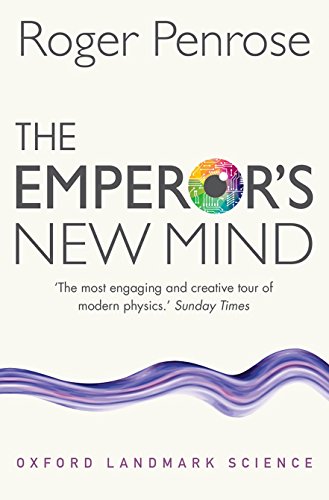
Roger Penrose examines the claim that the mind can be fully described by a computer program. He brings together arguments about algorithms, mathematical understanding, classical physics and quantum theory to challenge that account of human thought. Martin Gardner contributes the foreword.
The book builds a case rather than reporting a settled explanation of consciousness. The authorized Oxford preview includes later prefaces, the contents and the opening argument. Its copyright page identifies the 2016 Landmark Science paperback used by this registry.
Why read it Our view
Write down which part of Penrose’s argument you accept and which needs more evidence. A serious disagreement about computation and understanding can help define a research question; it does not by itself establish a limit on what an AI product can do.