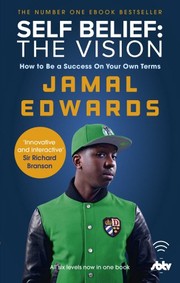
- Richard Branson — Listed in Richard Branson's own 'My Top 65 Books To Read In A Lifetime' published on Virgin.com source ↗
Jamal Edwards founded SB.TV from his bedroom in Acton, West London, at nineteen, turning a camera and a YouTube channel into the platform that launched British grime music to the mainstream. Self Belief: The Vision traces his journey from a young man told he was wasting his time to a media entrepreneur who signed artists before the labels knew they existed. It is less a technical business book and more a case study in conviction — the belief that your own vision is worth pursuing even when no external validation has arrived.
Richard Branson included Self Belief: The Vision on his list of 65 books to read in a lifetime, and the parallels between Edwards and Branson are obvious: both started young with no credentials, both built by doing rather than planning, both treated the brand as a portable asset that could move across categories. Edwards started filming his friends making music on a camcorder his mother bought him and uploaded the videos to YouTube at a time when the British music industry barely acknowledged grime existed. Within a few years, SB.TV was the gateway through which artists like Dave, Stormzy, and Ed Sheeran reached their first mass audiences.
Edwards' core argument is that self-belief is not a personality trait you are born with but a muscle you exercise by acting before you feel ready. He describes filming his early sets without permission, knocking on doors that no one answered, and posting content consistently even when the views were in double digits. For a founder in the early, invisible phase of building something — when the metrics are zero and no one is paying attention — Edwards provides a model: keep producing, keep publishing, keep knocking. Validation comes late.
The book also documents Edwards' insistence on owning his own distribution. SB.TV built its audience on YouTube but Edwards understood early that the platform was the middleman, not the destination. He pushed into events, merchandise, radio, and a record label — turning a YouTube channel into a vertically integrated media business. The lesson for founders: the platform you start on is a launch pad, not a home. Own the relationship with your audience directly, before the platform's incentives diverge from yours.