Founder connections
- Brian ArmstrongReading-list selectionIn his July19,2016 original post, Armstrong lists Good to Great as a book that changed his thinking and praises its data-based business lessons. He qualifies that inclusion does not mean agreement with every idea.Source
Summary
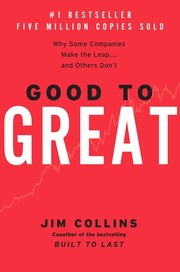
Jim Collins asks why some established companies move from good results to sustained strong performance while others do not. His team compared eleven companies that met its performance criteria with companies that did not make the same change.
The book presents ideas about leadership, choosing people, facing difficult facts and narrowing a company’s focus. Its flywheel describes progress built through many linked actions over time. These are findings from selected historical cases, offered as a way to think about building a company.
Why read it Our view
Read it to test how your choices fit together. The focus questions can help you name what your company can do well, what drives its economics and what work the team cares about. The flywheel asks how one useful result makes the next easier.
Use the cases as prompts for your own evidence. The study selected established companies, so a young business still has to test its own market, team and sources of growth.
Decisions from the book
Selling Kimberly-Clark’s paper mills
- Decision: Darwin Smith’s team had to choose between the long-standing paper-mill business and a focus on consumer products.
- Action: Smith sold the mills and put the proceeds behind competing in consumer products.
- Outcome: Collins reports that Kimberly-Clark became a leading paper-based consumer-products company over the next 25 years. He stresses that the sale was followed by years of further work.