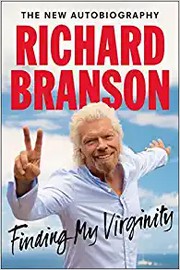
The sequel to Losing My Virginity, picking up in 1999 and covering Branson's life through the 2000s and 2010s. It spans Virgin's expansion into trains, mobile phones, banking, and health clubs, the founding of Virgin Galactic and the 2004 SpaceShipOne flight, his work with Nelson Mandela and The Elders, the sale of Virgin Music, and the personal side of becoming a father and grandfather. The title signals that the entrepreneurial energy of the first book did not fade with age — he kept finding new ways to start things.
Where Losing My Virginity is about starting, Finding My Virginity is about sustaining. Branson was in his fifties and sixties during this period, already rich and globally famous, with every reason to slow down. Instead he launched Virgin Mobile, Virgin Blue (later Virgin Australia), Virgin Galactic, and Virgin Money — entered regulated industries against established competitors, at a scale that made his early bets look small. The book shows how a founder who has already won handles the second half of a career: the same instincts, refined by experience and backstopped by resources, deployed into harder problems.
For founders, the most instructive section is the Virgin Galactic arc. Branson invested in the idea of commercial spaceflight long before the technology was proven, during years when critics called it a vanity project. He sustained that bet through two fatal accidents (the 2007 Mojave explosion and the 2014 SpaceShipTwo crash), years of delays, and relentless public skepticism. The lesson is that long-horizon bets require a founder who can absorb bad news without losing conviction — and that the patience to wait for a technology to mature is as valuable as the instinct to jump first into a market.