- Akio Morita: "Morita on creating what customers can't yet ask for: he built products 'without market research,' trusting that great products create their own demand." source ↗
- David Senra — Covered on episode #102 (2019) for Morita’s founder-led approach to building Sony. source ↗
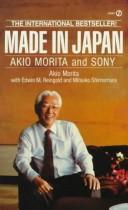
Made in Japan is Akio Morita's 1986 autobiography, co-written with Edwin M. Reingold and Mitsuko Shimomura, recounting his path from a family sake-brewing dynasty to co-founding Sony in the rubble of postwar Tokyo. It traces Sony's rise from a small transistor-radio maker to a global electronics leader, and lays out Morita's philosophy of management, product design, and international business.
David Senra has covered this book multiple times on Founders (notably episode #386), and frames Morita as a founder who won by refusing to let market research define what to build. Morita's most quoted line — that Sony's job was to create markets, not survey them, because "the public does not know what is possible" — is one Senra returns to again and again as a rebuttal to founders who over-index on customer surveys instead of conviction about where technology is heading.
Senra also draws out Morita's obsession with brand and global perception: Morita insisted on putting the Sony name directly on products at a time when Japanese manufacturers routinely white-labeled goods for Western retailers, betting the company's long-term identity over short-term orders. He walked away from a large bulk order from Bulova because Bulova wanted to strip the Sony name off the radios — a decision Morita described as one of the proudest of his career precisely because it was expensive in the moment. For founders, this is a lesson in protecting brand equity even when it costs revenue today.
The book's chapter "On Management" is the other pillar founders take from it: Morita's insistence on treating employees as a lifelong community rather than disposable labor, rotating people across functions so they understood the whole business, and prioritizing long-run trust over quarterly optimization. Senra frames this as Morita building an organization designed to compound in decades, not quarters — a founder mindset applied to company culture, not just to product bets.