Thomas Peterffy
Thomas Peterffy built a trading business by turning repeated judgments into computer programs. He emigrated from Hungary to the United States in 1965. Early programming work led him into financial markets. By 1977, he had saved enough to buy a seat on the American Stock Exchange and trade options for his own account. He brought computer-generated estimates of fair prices to a floor where orders still passed through people. The first useful machine was not a complete replacement for a trader. It was a way to give that trader better information. Peterffy kept working on the chain between price calculation, the trading floor and the record of positions held. Timber Hill was formed in 1982. The following year, the firm developed handheld computers for its floor traders. A pricing model mattered only if people could receive and use its output while the market moved. The system grew beyond a single exchange. By 1986, Peterffy had an integrated system for making markets in stocks, options and futures. The network and transaction-processing capacity later supported another business: executing trades for customers. Interactive Brokers was formed in 1993 as electronic exchanges were opening around the world. The group went public in 2007. His story also shows why an efficient model needs checks on risk. In his 2023 speech on listed options, Peterffy describes a large early loss and the importance of hedging positions. Fast calculations do not remove exposure to a sudden change in price. The business had to connect its decisions with what it already owned or owed. In 2019, Milan Galik became chief executive. Peterffy remained chairman, the role listed in the company’s executive record when checked on October 29, 2026. His career offers a concrete sequence for founders: understand a task, improve one part, connect the parts, then consider whether the resulting system can serve customers outside the original business.
Which books are linked to Thomas Peterffy?
These are examples from the documented shelf. Each label describes the connection; a book on the shelf is not always a recommendation.
- Automate This: How Algorithms Took Over Our Markets, Our Jobs, and the World by Christopher Steiner — Founder praise for passages about his firm. Source
Contents
Career highlights
- 1965Emigrates from Hungary to the United States.
- 1977Buys an American Stock Exchange seat and begins trading equity options as an individual market maker.
- 1982Forms Timber Hill.
- 1983Develops handheld computers for traders on exchange floors.
- 1993Forms Interactive Brokers, adding electronic brokerage to the existing trading infrastructure.
- 2007Interactive Brokers Group becomes a public company.
- 2019Milan Galik becomes CEO; Peterffy continues as chairman.
Lessons for founders
- Improve the full path from a calculation to an action. A fair price on paper was a start. Handheld devices and linked systems made those prices usable during trading. Check where useful information gets delayed or lost.
- Build risk checks into the operating system. His options speech recounts a painful early loss and a move toward hedged trading. Check the exposure created by a decision as well as its expected return.
- Look for a second use for infrastructure you already built. The transaction network used for market making became a base for brokerage. Check whether an internal capability solves a customer problem.
- Keep the cost goal tied to the customer’s task. Interactive Brokers states its aim in terms of liquidity, price, speed and trading tools. Define which cost or delay the customer should see fall.
- Make a clear change of operating leader. Galik took the CEO role while Peterffy stayed chairman. Separate the two roles in a succession plan and name who runs daily operations.
On the Founders podcast
1×Read about them
3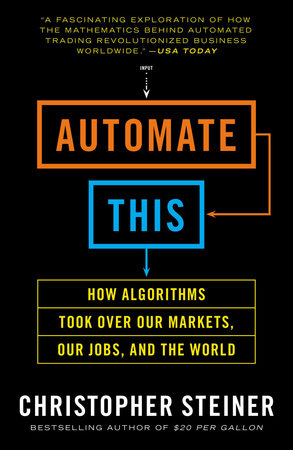
Essays
1Books on their shelf
1Sources
12
- Executive Profiles — Interactive Brokers
- About the Interactive Brokers Group — history — Interactive Brokers
- The Making of a Market Maker — Colossus
- Thomas Peterffy — 2022 Lifetime Achievement Award — Museum of American Finance
- Remarks on 50 Years of Listed Options Trading — The Option Strategist
- 2014 Annual Report — letter to shareholders — Interactive Brokers Group
- Automate This — publisher record — Penguin Random House Higher Education
- Thomas Peterffy: The $80 Billion Founder Who Automates Everything — Founders
- Expanded book research — www.oreilly.com
- Expanded book research — obnb.uk
- Expanded book research — www.linkedin.com
- Expanded book research — bristoluniversitypress.co.uk