Sam Walton
Founder of Walmart and Sam’s Club. Sam Walton (born 29 March 1918 in Kingfisher, Oklahoma) grew up milking cows and delivering papers through the Depression, studied economics at the University of Missouri, and trained at J.C. Penney before Army service. In 1945 he bought a Ben Franklin variety-store franchise in Newport, Arkansas, for $25,000 — $5,000 of his own and $20,000 borrowed from his father-in-law — and grew it into the state’s top-performing Ben Franklin, only to lose the lease in 1950 because he had failed to negotiate a renewal option. He rebuilt in Bentonville, and on 2 July 1962 opened the first Wal-Mart Discount City in Rogers, Arkansas, the same year Kmart, Target, and Woolco all launched. Betting on rural towns the big chains ignored, backed by a self-built distribution network and a 1970 IPO, he built Walmart into the world’s largest retailer, adding Sam’s Club in 1983 and the Supercenter format in 1988. Forbes named him America’s richest man in 1985; he received the Presidential Medal of Freedom weeks before his death from cancer in 1992. His memoir, Made in America, was published the following year.
Contents
- 1918Born 29 March in Kingfisher, Oklahoma, to a farm-mortgage appraiser father whose work kept the family moving through small Missouri towns.
- 1930Milked and delivered the family cow’s surplus milk and threw newspaper routes to help support the household through the Depression.
- 1940Graduated from the University of Missouri with a degree in economics and joined J.C. Penney as a management trainee in Des Moines, Iowa, for $75 a month.
- 1942Entered the U.S. Army Intelligence Corps, serving stateside through 1945 and reaching the rank of captain.
- 1945Bought a Ben Franklin variety-store franchise in Newport, Arkansas, for $25,000 — $5,000 in savings plus $20,000 borrowed from his father-in-law, L.S. Robson — and grew its sales from $80,000 to $225,000 within three years.
- 1950Lost the Newport store when landlord P.K. Holmes refused to renew the lease and handed the site to his own son — Walton had never negotiated a renewal option, a mistake he called the low point of his career.
- 1950Moved to Bentonville, Arkansas, and opened Walton’s 5&10 on the town square, again as a Ben Franklin franchise, this time with a proper lease.
- 1962Opened the first Wal-Mart Discount City on 2 July in Rogers, Arkansas — the same year Kmart, Target, and Woolco each opened their first stores.
- 1970Took Wal-Mart Stores public on 1 October at $16.50 a share, financing the distribution centers and store growth that let the company outrun better-funded rivals.
- 1971Extended profit-sharing from managers to every eligible hourly associate, a decision he later said he regretted not making from the start.
- 1983Opened the first Sam’s Wholesale Club in Midwest City, Oklahoma, after studying Sol Price’s Price Club in San Diego and, by his own account, copying its warehouse-membership format.
- 1985Named by Forbes as the richest man in America, a title he found uncomfortable enough that he kept driving his own pickup truck.
- 1988Opened Walmart’s first Supercenter, in Washington, Missouri, combining full grocery with general merchandise under one roof.
- 1991Opened Walmart’s first store outside the United States, in Mexico City, and passed Sears to become the country’s largest retailer.
- 1992Received the Presidential Medal of Freedom from President George H.W. Bush in March; died of multiple myeloma on 5 April in Little Rock, Arkansas, at age 74.
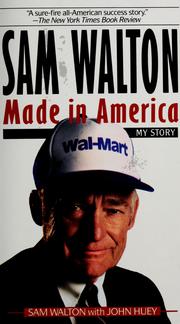
- 1992Made in America: My Story, written with journalist John Huey during his final year of illness, was completed shortly before his death.
- 1993Made in America was published posthumously and became a business-shelf staple, later cited as a formative influence by founders including Jeff Bezos.
- Buy it low, sell it low, and make it up on volume and turns. Walton’s central arithmetic, laid out repeatedly in Made in America: cutting margin on an item to sell more of it beats holding margin and selling less, as long as inventory turns fast enough. Everyday low pricing only worked because he applied this discipline store by store, not as slogan but as spreadsheet.
- Logistics is the real moat, not the storefront. Because Walton insisted on saturating small rural towns beyond the reach of existing wholesalers, he was forced to build his own distribution centers and a private trucking fleet starting in the 1970s. The hub-and-spoke network that resulted — stores clustered within a day’s drive of a warehouse — became the cost advantage competitors couldn’t replicate even when they copied the stores.
- Visit competitors’ stores obsessively, and steal without embarrassment. Walton toured Kmarts and regional discounters with a notebook, and by his own account studied Sol Price’s Price Club in San Diego in 1983 closely enough to copy its warehouse-membership format outright. In Made in America he wrote: “I guess I’ve stolen — I actually prefer the word ‘borrowed’ — as many ideas from Sol Price as from anybody else in the business.”
- A missed lease clause can cost you the business. In 1950 Walton lost his profitable Newport, Arkansas store because he had signed a five-year lease with no renewal option; the landlord simply handed the site to his own son once Walton had proven the location out. He called it the worst business mistake of his life and never signed another lease without a renewal right again.
- Make hourly employees owners, not just staff. Walmart’s original 1970 profit-sharing plan covered only managers; in 1971 Walton extended it to every associate who had worked a year and 20-plus hours a week, paid out in company stock on departure. Many long-tenured hourly associates retired as stock-fueled millionaires, and Walton called it one of the best decisions he ever made.
- Go where the big chains aren’t looking. In 1962, the same year Kmart, Target, and Woolco each opened, Walton bet that towns of 5,000–25,000 people — too small for his competitors to bother with — could support a discount store if the price and selection were right. Rural saturation, not head-to-head competition in big cities, is what let Walmart outgrow chains with far more capital.
- Run the business from the store floor, not the head office. Walton flew himself — in a series of secondhand planes he owned over the years — to visit stores, scout new sites from the air, and talk directly with associates and customers, then brought what he learned back to Saturday morning meetings in Bentonville where managers compared numbers and ideas openly.
- Correct course in public and keep the mood cheap and loud. Walton treated the weekly Saturday morning meeting, and the store visit before it, as a live feedback loop: bad ideas got dropped fast, good ones got copied company-wide within weeks, and cheerleading — including the Walmart cheer he picked up from a South Korean garment factory tour — was used deliberately to keep a low-margin business’s morale from sagging.
- Commit to your business.Believe in it more than anybody else; passion and daily effort are contagious.
- Share your profits with all your associates, and treat them as partners.Give people a stake in the outcome so they act like owners.
- Motivate your partners.Use goals, recognition, and competition alongside ownership to keep people engaged.
- Communicate everything you possibly can to your partners.Information builds understanding; understanding builds care and commitment.
- Appreciate everything your associates do for the business.Sincere, specific praise is free and worth a fortune.
- Celebrate your success.Have fun, show enthusiasm, and use celebrations to build culture and confidence.
- Listen to everyone in your company.Design mechanisms so ideas from the front line bubble up and responsibility pushes down.
- Exceed your customers’ expectations.Give them a little more than they expect, fix mistakes, and stand behind everything you do.
- Control your expenses better than your competition.Efficiency is a constant source of advantage; waste can kill even brilliant businesses.
- Swim upstream.Ignore conventional wisdom when it points everyone to the same place; build where others are not.

Nothing verified yet — no recommendations on record.
Sources12
- Sam Walton - Walmart Corporate — Walmart
- 10 Rules for Building a Better Business — Walmart
- Sam Walton | Biography & Facts — Encyclopaedia Britannica
- Sam Walton - Wikipedia — Wikipedia
- Walton, Samuel Moore | Encyclopedia of Oklahoma History and Culture — Oklahoma Historical Society
- Sam Walton (1918–1992) — Encyclopedia of Arkansas
- Biography: Sam Walton — PBS NewsHour
- Sol Price, in Sam Walton’s memory — Fortune
- Sam Walton, Made in America: My Story — Penguin Random House
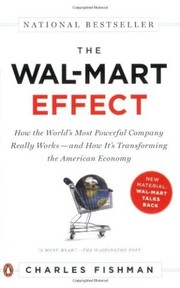
- The Wal-Mart Effect by Charles Fishman — Penguin Random House
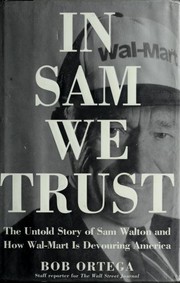
- In Sam We Trust — Publishers Weekly
- Sam Walton: The Inside Story of America’s Richest Man — Publishers Weekly