Kelly Johnson
Clarence L. “Kelly” Johnson built and led Skunk Works, the small aircraft development organization inside Lockheed. He joined an existing aircraft company in 1933 after earning a master's degree at the University of Michigan. His early work combined analysis with tests. When he challenged the stability of Lockheed's proposed Electra airliner, his employers sent him back to the university wind tunnel. The changes he developed helped solve the problem and established his place in the engineering team. Johnson's work grew from commercial aircraft into urgent military programs. In 1938 he helped adapt the Model 14 into the Hudson for Britain and became Lockheed's chief research engineer. In 1943 he assembled engineers and shop workers to build the XP-80 jet prototype. This group became Skunk Works. It worked within Lockheed but had unusual freedom to organize people and get decisions made. Its importance lay in bringing design, construction and testing close together under clear responsibility. The U-2 and the Blackbird aircraft family extended that approach into Cold War reconnaissance. The CIA commissioned the U-2 in 1954. As Soviet defenses improved, the agency sought a successor with greater speed and a smaller radar signature. Johnson's group developed the A-12, selected in 1959 after competition with Convair. Heat at high speed forced the team to develop ways to build with titanium. The related SR-71 first flew in 1964. These were large team achievements, supported by customers, suppliers and test pilots, even when Johnson became their public face. The record also sets limits on the legend. The A-12 required repeated design changes and cost more than the original estimate. Johnson's drive could make him a difficult boss, and his colleagues' contributions should not disappear behind his name. His 14 operating rules joined small teams and broad authority with records, cost forecasts, agreed requirements, testing and supplier quality. Freedom came with duties. Johnson retired as a Lockheed senior vice president in 1975 and remained an adviser. His own account, Kelly: More Than My Share of It All, gives one view of the career. His lasting value for company builders is the organization he made: a technically capable group with a clear task, direct access to its customer and authority to carry work through to a working aircraft.
Contents
Career highlights
- 1932Earned a bachelor's degree in aeronautical engineering at the University of Michigan.
- 1933Earned a master's degree, joined Lockheed and worked on the Electra's stability problem.
- 1938Helped develop the Hudson for Britain and became Lockheed chief research engineer.
- 1943Formed the Advanced Development Projects team that became Skunk Works to build the XP-80.
- 1944The XP-80 prototype made its first flight on January 8.
- 1954The CIA retained Lockheed to build the U-2 reconnaissance aircraft.
- 1959A government selection panel chose Lockheed's A-12 proposal after competition with Convair.
- 1962The A-12 flew for the first time.
- 1964The related SR-71 Blackbird made its first flight.
- 1975Retired as a Lockheed senior vice president and continued as a Skunk Works adviser.
Lessons for founders
- Give the project leader real authority. Johnson built Skunk Works with senior support and control over its work. Make the person who must deliver able to make the main decisions.
- Use tests to settle technical doubts. The Electra problem was resolved in the wind tunnel. Build a way to check an important claim before it becomes a promise to a customer.
- Keep the builders close to the design. Skunk Works joined engineering and shop work. Shorten the path between a design choice, a build problem and the person who can resolve it.
- Forecast the work that remains. The A-12 outgrew its original price estimate. A strong team still needs current cost forecasts when the technical work changes.
- Make problems safe to report. Ben Rich recalled that Johnson expected immediate notice of mistakes and proposals to correct them. Ask for the problem early, then decide how to fix it.
- Credit the whole team. The Blackbird story includes many engineers, suppliers and pilots. Study their work as well as the leader's decisions.
Kelly's 14 Rules (paraphrased)
- Give the manager broad program authority and direct access to senior leadership.
- Keep both customer and contractor project offices small and strong.
- Restrict participation to a small, capable team.
- Use simple drawings and flexible procedures for design changes.
- Limit reports while preserving thorough records of important work.
- Review spending, commitments and forecast completion costs each month.
- Give the contractor responsibility for sound supplier bids.
- Assign basic inspections to suppliers and avoid repeated checks.
- Let the contractor perform early flight tests of its aircraft.
- Agree requirements before the contract, including justified exceptions.
- Provide funds on time so the contractor need not finance the customer.
- Build trust through close daily contact between customer and contractor.
- Control outside access with suitable security.
- Reward good work without tying pay to staff size.
On the Founders podcast
1×Read about them
1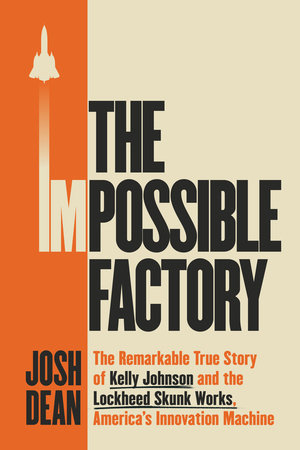
In their own words
1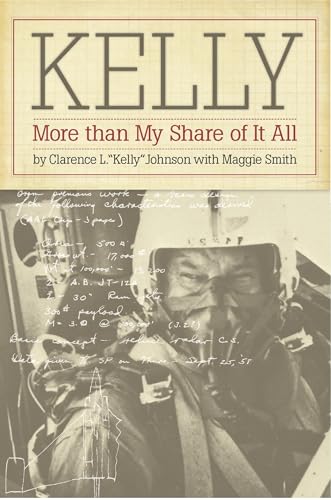
Essays
1Books on their shelf
Nothing verified yet — no recommendations on record.
Sources
8
- Clarence Leonard (Kelly) Johnson — Ben R. Rich — National Academy of Sciences
- Archangel: CIA’s Supersonic A-12 Reconnaissance Aircraft — David Robarge — CIA / Government Publishing Office
- Kelly Johnson: Architect of Air — Lockheed Martin
- Head Skunk — Peter Garrison — Smithsonian Air & Space
- Kelly's 14 Rules — Lockheed Martin
- Kelly: More Than My Share of It All — Smithsonian Books
- The Impossible Factory — Penguin Random House / Dutton
- Kelly Johnson: Skunk Works, episode 419 — Founders