HF
Henry Ford
Ford · 1863–1947
Born July 30, 1863 · Died April 7, 1947
Founder of Ford Motor Company. Born July 30, 1863 on a farm in Greenfield Township, Michigan; apprenticed as a Detroit machinist, then chief engineer at Edison Illuminating, where Thomas Edison told him in 1896 to keep building the car he’d built, the Quadricycle. Two failed startups preceded Ford Motor Company, incorporated June 1903 on $28,000 from 12 investors. He didn’t invent the automobile or the assembly line but industrialized both: the Model T (1908) and the Highland Park moving line (1913) made a luxury good a mass-market product, and the 1914 five-dollar day reset American wages. He ran an antisemitic campaign in his own newspaper through the 1920s and took a Nazi medal in 1938.
Contents
Career highlights
- 1863Born July 30 on the family farm in Greenfield Township, Michigan, to William and Mary Ford.
- 1876As a boy, took apart and reassembled neighbors’ pocket watches; that same year — the year his mother, Mary, died — he saw a steam-powered Nichols & Shepard road engine on a country road, ‘the first vehicle other than horse-drawn that I had ever seen.’
- 1879Left the farm for Detroit at sixteen and apprenticed as a machinist, first at James F. Flower & Brothers, then at the Detroit Dry Dock Company, moonlighting on watch repairs to cover the gap between his wages and his room and board.
- 1896As chief engineer of the Edison Illuminating Company (a post he’d held since 1893), built and test-drove the Quadricycle on June 4, then described it to Thomas Edison at a Brooklyn meeting that August; Edison banged his fist on the table and told him, ‘Young man, that’s the thing; you have it. Keep at it.’
- 1899Co-founded the Detroit Automobile Company with backing from lumber baron William H. Murphy; it collapsed by January 1901 over poor build quality and high prices.
- 1902After investor disputes pushed him out of the successor Henry Ford Company — reorganized as Cadillac once he left — built the 999 race car and hired cyclist Barney Oldfield to drive it; Oldfield’s October win at Grosse Pointe gave Ford the reputation he needed to raise money again.
- 1903Incorporated Ford Motor Company on June 16 with $28,000 in capital from twelve investors, including John and Horace Dodge; banker John S. Gray, not Ford, took the presidency.
- 1908Introduced the Model T on October 1 at $825, engineered to be simple enough for a farmer to repair.
- 1913Installed the moving assembly line at the Highland Park plant that October, cutting chassis assembly time from roughly 12.5 hours to about 93 minutes.
- 1914Announced the five-dollar, eight-hour day on January 5, roughly doubling prevailing wages — a move aimed as much at Ford’s own 370 percent annual worker turnover as at publicity.
- 1919After the Michigan Supreme Court sided with the Dodge brothers in their shareholder suit and ordered Ford to resume paying dividends, Ford bought out the Dodges and the company’s other minority shareholders, giving his family full ownership.
- 1920Began shifting production to the new River Rouge complex, an ‘ore to assembly’ plant that would eventually smelt its own steel, make its own glass, and draw on its own rubber plantation, freeing Ford from outside suppliers.
- 1927Model T production ended in May after 15 million units; that June, facing a libel suit, Ford publicly apologized for the antisemitic ‘International Jew’ campaign his newspaper, the Dearborn Independent, had run since 1920, and shut the paper down; in December he launched its replacement, the Model A.
- 1937On May 26, men from Ford’s Service Department beat United Auto Workers organizers, including Walter Reuther, on a pedestrian overpass outside the River Rouge plant, in what became known as the Battle of the Overpass.
- 1938Accepted the Grand Cross of the German Eagle, Nazi Germany’s highest honor for a foreigner, from German diplomats in Dearborn on his 75th birthday, July 30.
- 1941Signed Ford’s first contract with the UAW on June 20, ending years as the industry’s last holdout, reportedly at the urging of his wife, Clara.
- 1943Edsel Ford, Ford’s only child and the company’s president since 1918, died of stomach cancer on May 26 at age 49; Henry Ford, nearing 80, retook the presidency and did not fully cede control — to grandson Henry Ford II — until 1945.
Lessons for founders
- Redesign the process before you redesign the product. Ford’s real innovation wasn’t the Model T but the moving assembly line installed at Highland Park in October 1913, which cut chassis assembly from about 12.5 hours to roughly 93 minutes. The product had existed since 1908; the workflow bottleneck is what he fixed five years later.
- Cut price to grow the market, not the margin. The Model T’s price fell from $850 in 1908 toward $290 by the mid-1920s as Ford treated cost reduction as the core competitive weapon, betting volume would outrun shrinking per-unit profit. It worked until GM began outselling him by offering choice instead of only price.
- Pay enough to kill turnover, not just to look generous. The five-dollar day announced January 5, 1914 doubled the prevailing wage, but the real driver was a 370 percent annual turnover rate at Highland Park that was bleeding the company; the raise paid for itself by making retention cheaper than constant rehiring and retraining.
- Make your own workforce your customer base. Ford framed the five-dollar day explicitly as widening the market for his own product: workers who could suddenly afford the cars they built extended demand alongside supply, a logic distinct from ordinary wage generosity.
- Vertically integrate the inputs that can throttle you. The River Rouge complex, built out through the 1920s, mined its own iron and coal, smelted its own steel, and made its own glass and rubber, turning Ford from a customer of suppliers into an owner of the entire chain from ore to automobile.
- A winning product can calcify into stubbornness. Ford refused to meaningfully update the one-model, one-color Model T for nearly two decades while GM’s annual styling changes and financing plans ate his market share; by the time the Model A replaced it in December 1927, Ford had shut down production for months and lost the industry lead for good.
- Fighting a union costs more than negotiating with one. Ford’s Service Department beat UAW organizers on a Dearborn overpass in May 1937, drawing national outrage; four years later, on June 20, 1941, Ford signed the most generous first contract of any Detroit automaker, reportedly because his wife Clara threatened to leave him over further violence.
- A founder who can’t let a successor lead will eventually be forced to. Henry Ford kept his son Edsel as company president from 1918 but routinely overruled and undermined him through security chief Harry Bennett. When Edsel died in 1943, Henry retook the presidency himself at nearly eighty, and only handed real control to grandson Henry Ford II in 1945 after Clara and Edsel’s widow, Eleanor, threatened to sell their stock.
- Owning the press doesn’t excuse what you publish in it. Ford’s newspaper, the Dearborn Independent, ran an antisemitic ‘International Jew’ campaign from 1920 to 1927, distributed through every Ford dealership; he apologized publicly in 1927 under threat of a libel suit, then accepted Nazi Germany’s highest civilian honor in 1938.
Ford's Production Principles
- Whether you think you can, or you think you can't — you're right.Ford's most quoted maxim, from his autobiography My Life and Work (1922). He believed the mental frame preceded the outcome: 'Enthusiasm is the yeast that makes your hopes shine to the stars.'
- Quality means doing it right when no one is looking.Ford built the Model T to a standard, not a price. Each part was interchangeable and inspected, and every car was road-tested before delivery. His plant at Highland Park was designed around precision, not just speed.
- Any customer can have a car painted any color that he wants so long as it is black.The quote is apocryphal in wording but true in spirit: from 1914 to 1925, the Model T was produced only in black because black paint dried fastest, and speed was the entire philosophy. Ford reduced chassis assembly time from 12.5 hours to 93 minutes.
- History is more or less bunk.Ford's radical anti-traditionalism. He refused to study the past of his industry and started every problem from scratch. When told something had been tried before, his response was typically: 'Then we'll do it differently.'
- Paying high wages is the best cost-cutting move a business can make.In January 1914, Ford doubled wages to $5 a day, a radical move that cut the workday from nine hours to eight and attracted the best labor in the Midwest. Critics called it socialism; Ford called it good business: his own workers could now afford his cars.
On the Founders podcast6×
Read about them5
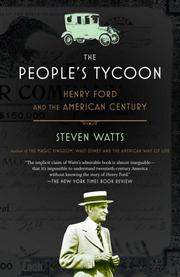
The standard modern biography — a full-life account that treats Ford’s industrial achievements and his antisemitism and labor violence as inseparable parts of the same figure rather than a footnote. source ↗
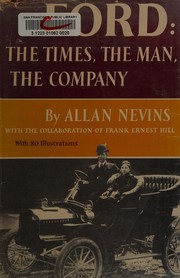
The first volume of Nevins and Hill’s three-volume corporate history, researched with full access to company archives; still the most detailed account of the founding decades, from the Quadricycle through the Model T. source ↗
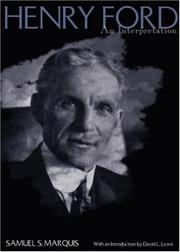
A skeptical 1923 account by the Episcopal minister Ford hired to run Ford Motor Company’s sociology department, then pushed out — one of the earliest insider books to question Ford’s self-mythology while he was still alive. source ↗
A 1952 essay-length account by libertarian economic journalist Garet Garrett, using Ford’s career to argue for laissez-faire capitalism — closer to a polemic about Ford’s philosophy than a conventional biography, and useful for that reason. Pre-dates the ISBN system; no verifiable ISBN found. source ↗
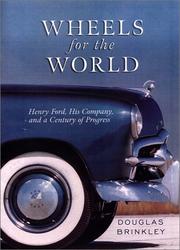
An 858-page corporate history written with full access to Ford’s archives for the company’s 2003 centennial, covering the full arc from the Quadricycle through the postwar decades, including Ford’s antisemitism and Ford-Werke’s use of forced labor. source ↗
In their own words3

Ford’s 1922 memoir, ghostwritten by journalist Samuel Crowther — the primary source for his own account of the Quadricycle, the assembly line, and his business philosophy. Public domain, with dozens of reprint editions and no single canonical ISBN. source ↗
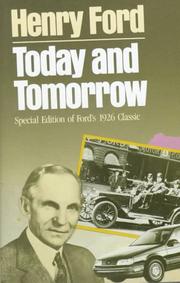
Ford’s 1926 follow-up, laying out the production and inventory philosophy behind the Rouge — the book Taiichi Ohno later credited as an influence on what became Toyota’s just-in-time system. source ↗
Ford’s 1929 authorized interview with Fay Leone Faurote — a book-by-founder, sibling of Today and Tomorrow already on the shelf. source ↗
What they recommend5

Named one of his great early influences and heroesFord was among the last generation of children educated on the McGuffey Readers; as an adult he collected 468 copies across 145 editions to preserve them. source ↗

Emerson’s individualist philosophy is documented as a formative influence on Ford’s worldview"If he talked more of one person than another, it was Emerson. Not only did he know Emerson by heart as an author, but he knew him by heart as a spirit. He taught me to know Emerson." source ↗
Named among the businessmen who credited Marden’s self-help bestseller as an inspirationFord is grouped with Edison, Harvey Firestone, and J. P. Morgan as readers who cited the 1894 bestseller, per Marden’s biographer Margaret Connolly. No direct Ford statement about the book has been located, so this rests on secondary attribution rather than Ford’s own words. source ↗

From My Life and Work ch. XVII, his account of the Burroughs friendship"To get back to John Burroughs. Of course I knew who he was and I had read nearly everything he had written..." source ↗
Named in a 1928 New York American interview as the source of his theory of reincarnation"I adopted the theory of reincarnation when I was 26. I got the idea from a book by Orlando Smith. Until I discovered this theory I was unsettled and dissatisfied—without a compass, so to speak." source ↗
Sources12
- Henry Ford — Wikipedia
- Ford’s Five-Dollar Day — The Henry Ford
- Henry Ford and Barney Oldfield with the ‘999’ Race Car, 1902-1903 — The Henry Ford
- Ford Motor Co., with 12 investors, is started in June 1903 — Automotive News
- Dodge v. Ford Motor Co. — Wikipedia
- Ford River Rouge complex — Wikipedia
- The 15 millionth Ford Model T (and end of production) — This Day In Automotive History
- Battle of the Overpass — Walter P. Reuther Library, Wayne State University
- Ford signs first contract with autoworkers’ union — History.com
- Henry Ford’s Apology — Reform Judaism
- Henry Ford Receiving the Grand Cross of the German Eagle from Nazi Officials, 1938 — Rare Historical Photos
- Open Library — Internet Archive